
When fighting was not an option, plant-eating dinosaurs had plenty of other ways to escape danger. Some - like the ostrich-mimic Gallimimus - simply ran. With long legs and a lightweight body, Gallimimus may have hit speeds of 60 kmh (37 mph) - faster than any predator that hunted it. Other dinosaurs relied on camouflage to disappear into their surroundings, on living in herds for safety in numbers, or on sound-based alarm calls that warned the rest of the group. A few even took to the skies. The ability to escape was just as important as the ability to fight.
Several duck-billed hadrosaurs had elaborate hollow head crests that probably worked as built-in trumpets. Parasaurolophus had a backward-pointing tube that could reach 1.8 metres (6 feet) long. Inside the crest was a network of nasal tubes that connected the nostrils to the throat. By blowing air through these tubes, Parasaurolophus could produce deep, resonant calls - computer reconstructions of the crest have actually produced sound files of what these calls might have sounded like, and the result is something like a deep, foghorn-style booming. Such calls would have travelled long distances through Cretaceous forests, perfect for warning the herd of approaching danger.
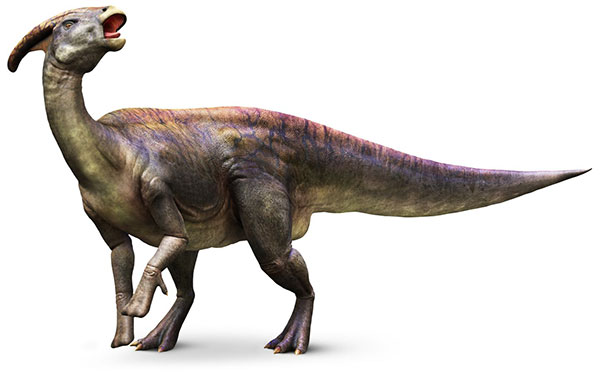
Parasaurolophus
Yes - although whether to call them "dinosaurs" or "birds" depends on where you draw the line. Archaeopteryx, the famous Late Jurassic fossil from Germany, looked like a small dinosaur in most ways - it had teeth, a long bony tail, and clawed wings - but it also had fully feathered wings capable of at least short-distance flight. Scientists now usually classify Archaeopteryx as both a dinosaur and an early bird. By the Late Cretaceous, many small theropods could fly or glide, including Microraptor - which had four feathered wings (one set on its arms, one on its legs) and probably glided between trees. Birds are technically still flying dinosaurs to this day.
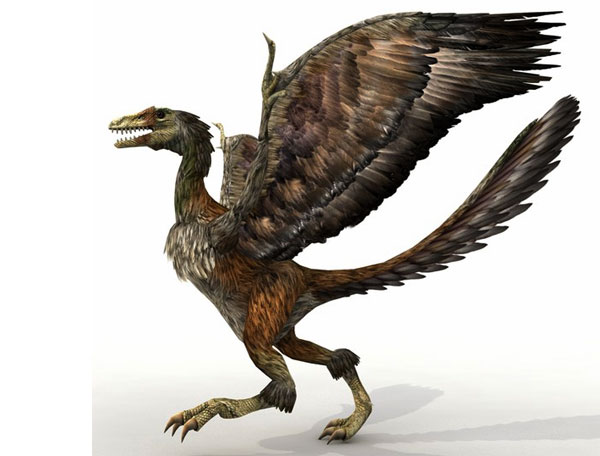
Archaeopteryx
Definitely. Many plant-eating dinosaurs lived in herds, and the fossil record clearly shows this. Mass bone-bed sites containing dozens of Triceratops, hundreds of Centrosaurus, or thousands of Maiasaura have been found across North America. A herd has many advantages over a lone animal: more eyes to spot predators, the option to mob attackers, and the simple maths that any individual is only one of many targets. Triceratops herds may have formed defensive rings around their young, with adult horns pointing outward - the same tactic used by modern musk oxen against wolves. Triceratops may also have been able to charge at around 25 kmh (15 mph) when defending itself.
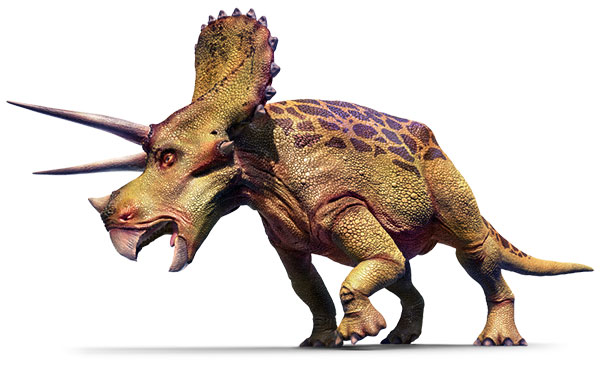
Triceratops
Almost certainly - and recent fossil discoveries are starting to confirm it. For decades, palaeontologists could only guess at dinosaur colours, but new techniques can now detect microscopic colour-producing cells called melanosomes preserved in fossil feathers. Studies have revealed that Microraptor was iridescent black like a modern raven, that Sinosauropteryx had reddish-brown stripes and a banded tail, and that the ankylosaur Borealopelta had countershading - reddish-brown on top, pale below. Countershading is a hallmark of animals that need to hide from sharp-eyed predators, suggesting Borealopelta's armour was not enough on its own - it also relied on disappearing into the background.
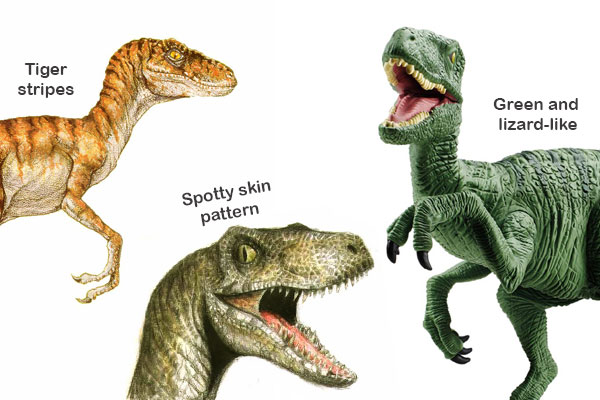
Velociraptor