
Predatory dinosaurs had to kill to survive, and over millions of years they evolved a remarkable arsenal of weapons and tactics. Small carnivores relied on speed and surprise. Mid-sized hunters used slashing claws and quick bites. The largest theropods overwhelmed their prey with sheer power - their massive jaws could crush bone. Some, like Deinonychus, may even have hunted in packs to bring down prey several times their size, including the unfortunate plant-eater Tenontosaurus shown here. Fossil evidence of healed wounds and bite marks shows that these prehistoric battles were brutal - and that prey did not always lose.
Yes - and they may be the most famous claws in dinosaur history. Deinonychus (meaning "terrible claw") had a large, curved, sickle-shaped claw on the second toe of each foot, held up off the ground when running so it stayed sharp. For decades palaeontologists believed this claw was used to slash open prey. More recent research suggests it was used more like the talons of a modern hawk - to grip and pin down struggling prey while the predator delivered killing bites with its jaws. The discovery of Deinonychus in the 1960s by the American palaeontologist John Ostrom helped spark the "Dinosaur Renaissance" - the realization that dinosaurs were active, warm-blooded, and bird-like, not slow swamp-dwellers.

Deinonychus Claw
Almost certainly - many theropods had the brain, eyes, and body design needed for stealth hunting. Like modern leopards or tigers, smart predators such as Neovenator probably moved quietly through cover, watching for a moment of weakness in a lone plant-eater such as Iguanodon. Stalkers may have targeted the youngest, oldest, or sickest individuals, or tried to separate one animal from the safety of the herd. Once close enough, the predator would burst forward in a final sprint - the same hunting pattern used by most big cats today.
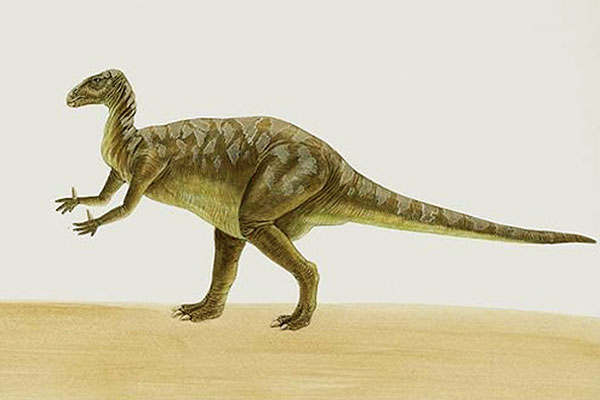
Iguanodon
The jaws. A theropod's skull was an evolutionary masterpiece - massive and immensely strong, yet lightened by large open windows (called fenestrae) that reduced weight without losing power. Allosaurus could open its jaws very wide and may have used its top jaw like a hatchet, swinging its head down to slash huge wounds into prey. Tyrannosaurus rex, by contrast, used pure crushing force - its bite is estimated at around 35,000 newtons (3.5 tonnes per square inch), the most powerful bite of any land animal ever known. That was strong enough to bite through a Triceratops's neck frill - a bite mark of this kind has been found on a fossil specimen.
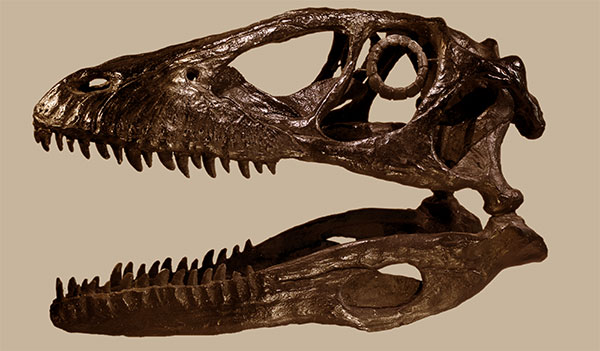
Allosaurus Skull
Predatory theropods such as Tyrannosaurus rex had teeth that curved backwards into the mouth. This shape served two purposes. First, when the predator bit down, the curve drove the teeth deeper as the prey struggled - the more the victim tried to pull away, the worse its wounds became. Second, the serrated edges of each tooth worked like a steak knife, slicing through flesh as the predator pulled back to feed. When a tooth broke, snapped off, or simply wore out, a new tooth was already growing in the jaw to take its place - a tyrannosaur could replace each tooth every few months throughout its life.
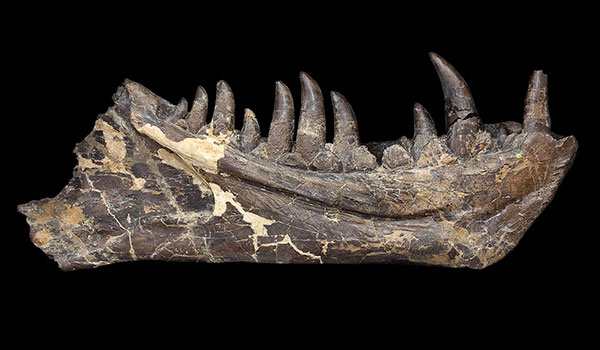
Tyrannosaurus Jaw