
Dinosaurs ruled the land for around 165 million years - from their first appearance roughly 231 million years ago in the Late Triassic, until the mass extinction at the end of the Cretaceous Period, around 66 million years ago. To put that into perspective, modern humans have only been around for about 300,000 years - less than one five-hundredth of the time dinosaurs ruled. During this enormous stretch, countless species came and went as climates shifted, continents drifted apart, and new types of dinosaurs evolved. The age of dinosaurs is part of a longer time span called the Mesozoic Era, often nicknamed the "Age of Reptiles."
Before the dinosaurs took over, the land was dominated by therapsids - a group of mammal-like reptiles that included plant-eaters, meat-eaters, and burrowing forms. Lystrosaurus, shown here, was a stocky, tusked herbivore about the size of a sheep that lived in the Early Triassic. It is one of the most successful survivors of the great Permian extinction (around 252 million years ago), which wiped out about 90 per cent of life on Earth. Most therapsids were gone by 200 million years ago, allowing the dinosaurs to rise. The descendants of the therapsids, however, did not disappear - they evolved into the first mammals.
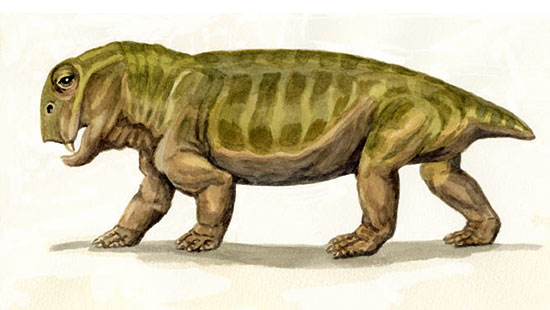
Lystrosaurus
All species eventually become extinct - it is the natural outcome of a constantly changing planet. A typical dinosaur species existed for around 2-3 million years before dying out or evolving into something new. Species disappear for many reasons: climate change, loss of habitat, competition from better-adapted rivals, disease, or sudden catastrophes such as volcanic eruptions or asteroid impacts. Plateosaurus, an early Late Triassic plant-eater, may have died out because of climate shifts that altered the plants and habitats it depended on. Five great mass extinctions have struck the Earth so far, and many scientists believe we are now entering a sixth - this time driven by human activity.
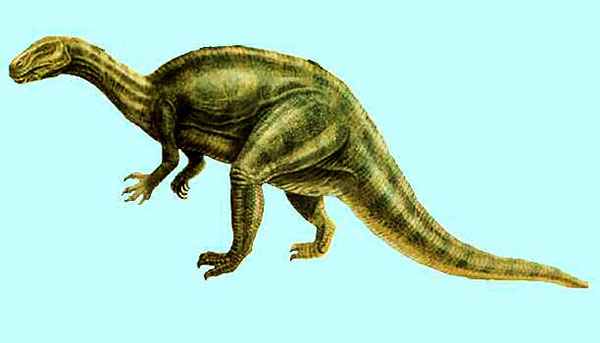
Plateosaurus
Yes - dinosaur bones often show signs of disease and injury. Since most dinosaur fossils are bones, the diseases palaeontologists can detect are those that affect the skeleton: arthritis, infections, fractures that healed, and bone tumours. The section of dinosaur backbone shown here contains a tumour that may have been caused by cancer. "Sue," the famous T. rex at Chicago's Field Museum, shows healed bite marks and a possible parasitic infection in the jaw. Although soft-tissue diseases rarely fossilize, it is very likely that dinosaurs suffered from infections, viruses, and parasites just like animals today.
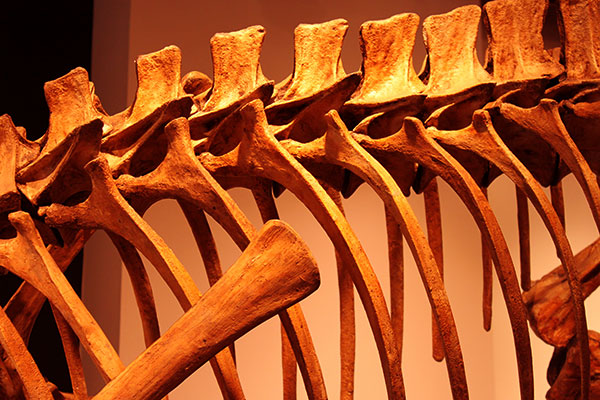
Section of backbone
Many species came and went during the dinosaurs' long reign, so not every dinosaur you've heard of lived at the same time. Stegosaurus, for example, died out around 80 million years before T. rex appeared - meaning T. rex is closer in time to us than to Stegosaurus. Even so, in any given area at any given time, tens or even hundreds of dinosaur species often shared the landscape. We know that Velociraptor and Protoceratops were contemporaries in Late Cretaceous Mongolia because their fossilized bodies have been found locked together in combat, buried by a sudden sandstorm around 75 million years ago.
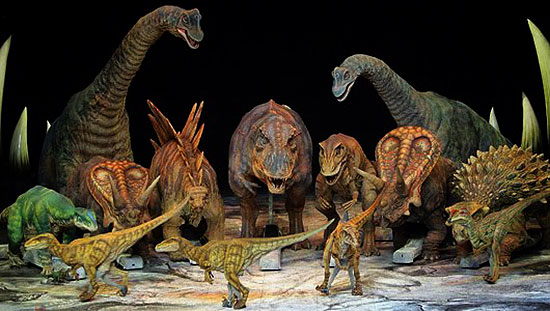
Group of Dinosaurs
Lifespans varied enormously by body size, just as they do with modern animals. Studies of growth rings in fossilized bones - similar to the rings inside tree trunks - have shown that Tyrannosaurus rex typically lived around 28-30 years, reaching full size by its late teens. Some of the largest sauropods, such as Apatosaurus, may have lived 70-100 years or more. Smaller species probably lived only a few years to a couple of decades. However, very few dinosaurs reached old age - most died young from predator attacks, accidents, starvation, or disease, just as most wild animals do today.
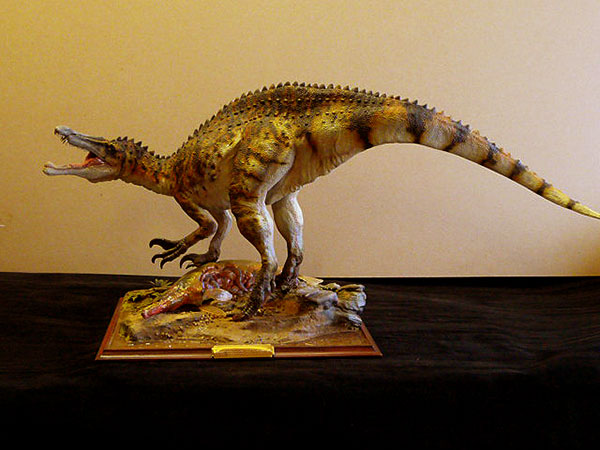
Model of Baryonyx
Earth itself formed about 4.5 billion years ago, and the first simple animal life appeared around 600 million years ago. The age when dinosaurs lived is called the Mesozoic Era, which lasted from 252 to 66 million years ago. Geologists divide the Mesozoic into three periods: the Triassic, the Jurassic, and the Cretaceous.
Mesozoic life