
A theropod is a member of the dinosaur group Theropoda - the lizard-hipped, mostly meat-eating, two-legged dinosaurs. Theropods include almost every famous predator of the Mesozoic, from Tyrannosaurus rex and Giganotosaurus to Velociraptor and the chicken-sized Compsognathus. They share a set of common features: powerful hind legs, three-toed feet with sharp claws, hollow bones, and (in most species) short forelimbs ending in clawed hands. Carnotaurus, shown here, was an unusual South American theropod with thick brow horns and tiny arms even shorter than those of T. rex. Modern birds are technically theropods too - the only group that survived the mass extinction 66 million years ago.
Theropod teeth were curved, blade-like, and finely serrated along the edges - shaped to slice through flesh like a steak knife. Tooth size was a rough guide to the size of the predator. A Megalosaurus tooth, like the 9 cm (3.5 in) specimen shown here, came from a 7-9 metre (23-30 foot) Jurassic hunter. The largest theropod teeth belong to Tyrannosaurus rex, whose massive banana-shaped teeth could exceed 30 cm (12 in) from root to tip - the longest teeth of any animal ever known. Teeth that broke or fell out during feeding were continuously replaced throughout the dinosaur's life.
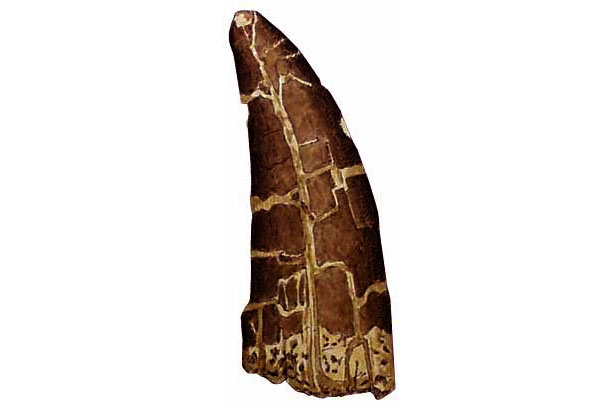
Megalosaurus Tooth
Bipedal means walking on two legs. All theropods were bipedal, balancing their bodies horizontally over their hips with a stiff tail acting as a counterweight. Some plant-eating dinosaurs, such as Iguanodon and the duck-bills, could also walk on two legs when needed. Bipedal animals are typically faster and more agile than four-legged ones of similar size, and bipedalism freed up the hands of theropods for grabbing, slashing, and (eventually, in birds) flying. Eoraptor, one of the earliest dinosaurs, was already bipedal - and so were T. rex and modern ostriches, which are some of the fastest two-legged animals alive today.
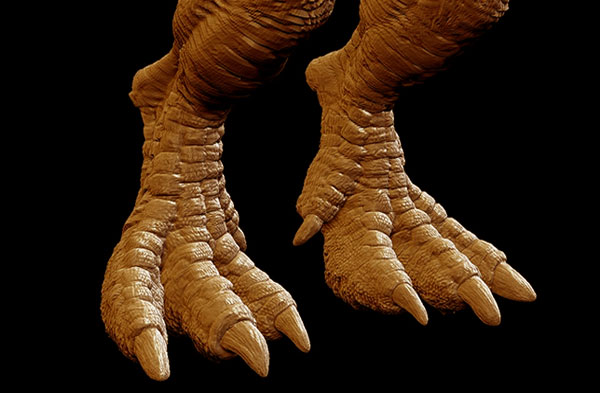
Tyrannosaurus clawed feet
Definitely - although it was not always easy. A large theropod such as Allosaurus would have had several advantages over a lumbering plant-eater like Stegosaurus: it was faster, more intelligent, and had killing tools - claws, jaws, and serrated teeth - that Stegosaurus could not match. However, Stegosaurus was not defenceless: its spiked tail (the "thagomizer") could deliver a deadly blow. Fossil evidence shows healed Allosaurus puncture wounds that match the size and shape of Stegosaurus spikes, proving these two giants really did fight - and that the plant-eater sometimes won.
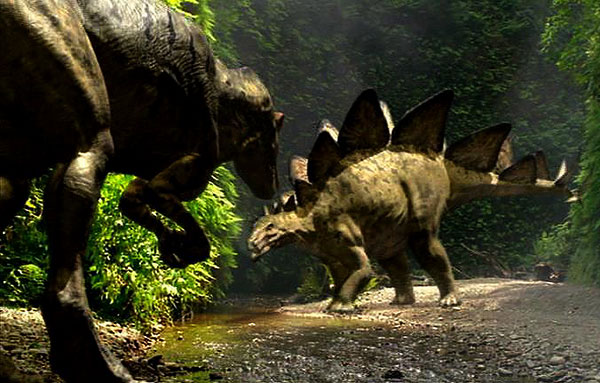
Stegosaurus and Allosaurus
In absolute size, the biggest brains belonged to the biggest theropods - Tyrannosaurus rex had a brain about the size of a large grapefruit. But brain size relative to body mass is a better guide to intelligence. By this measure, the troodontids - small, bird-like theropods such as Troodon - were the brightest dinosaurs known. Troodon also had large, forward-facing eyes that gave it binocular vision and probably allowed it to hunt at night. Recent research suggests modern crows and parrots, both descendants of theropods, are remarkably intelligent - hinting that their ancestors may have been smart problem-solvers too.

Troodon Brain
The largest theropods - T. rex, Giganotosaurus, Allosaurus - sat at the very top of their food chains and had no regular predators. Smaller carnivores like Santanaraptor were not so lucky and could fall prey to bigger theropods if they crossed paths. A lone Velociraptor would have been at serious risk from any larger predator nearby. Top predators sometimes also turned on their own kind: bite marks on T. rex bones match the teeth of other T. rex, suggesting they fought each other - and possibly cannibalized losers.
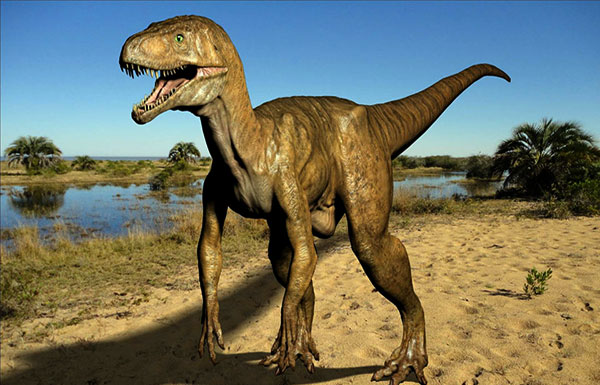
Santanaraptor
Palaeontologists work out theropod speed from bone shape, joint structure, and rare fossil trackways. Long, slender shin and foot bones, plus a stiff balancing tail, point to a fast runner. Albertosaurus probably reached around 25-30 kmh (15-19 mph), while smaller theropods like Gallimimus may have hit 60 kmh (37 mph). The largest theropods, such as adult T. rex, were probably slower than their teenage counterparts - modelling suggests an adult T. rex topped out around 20 kmh (12 mph), fast enough to catch large prey but not to sprint like a cheetah.
Theropod feet