
About 66 million years ago, a catastrophic event wiped out roughly 75 per cent of all life on Earth, including all non-bird dinosaurs, all the giant marine reptiles, and all the pterosaurs. This is known as the Cretaceous-Paleogene (K-Pg) mass extinction. Most scientists now agree that the main cause was a massive asteroid - roughly 10-15 km (6-9 miles) across - that slammed into what is now the Yucatán Peninsula in Mexico at around 70,000 km/h (43,000 mph). The impact released energy equivalent to roughly 10 billion Hiroshima atomic bombs. So much dust and sulphur was thrown into the atmosphere that the sky darkened for years, temperatures plummeted, and most plants died - taking the dinosaurs and most other large animals with them.
Long before the asteroid arrived, life on Earth was already under stress. Around the same time, enormous volcanic eruptions were taking place in what is now western India - an event called the Deccan Traps. Over hundreds of thousands of years, these eruptions covered an area roughly the size of France in lava and pumped massive amounts of carbon dioxide and sulphur dioxide into the atmosphere. The result was global climate chaos: rapid warming, then sudden cooling, ocean acidification, and acid rain. Some scientists argue the Deccan Traps were already weakening Cretaceous ecosystems before the asteroid finished the job. Others argue the asteroid alone was enough. The truth is probably a combination of the two.
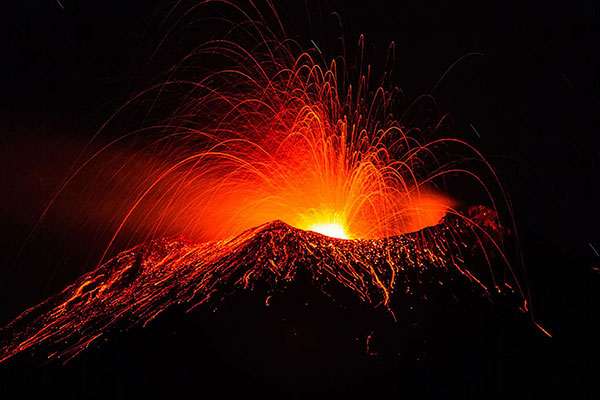
Erupting Volcano
An asteroid is a rocky or metallic object - smaller than a planet - that orbits the Sun. Most asteroids stay safely in the asteroid belt between Mars and Jupiter, but occasionally one is knocked off course and heads toward the inner solar system. Most that reach Earth are tiny and burn up harmlessly in the atmosphere as "shooting stars." But every few million years, a really big one strikes. The asteroid that ended the dinosaurs left behind the Chicxulub crater on the coast of Mexico - a buried impact site 180-200 km (110-125 miles) across. It was discovered in the late 1970s by geologists searching for oil, and the link to the extinction was confirmed in 1980 by physicist Luis Alvarez and his son Walter.
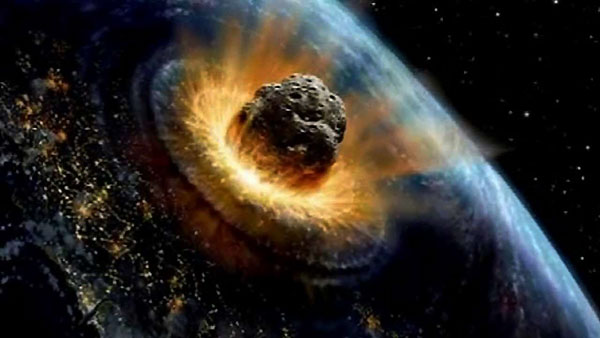
Asteroid impact
Yes - every species of pterosaur died at the K-Pg extinction. For 160 million years, pterosaurs had ruled the skies, from sparrow-sized forms to Quetzalcoatlus, the largest flying animal ever known with a wingspan of around 10-11 metres (33-36 feet). After the asteroid impact, no pterosaurs remained. They had probably already been declining for tens of millions of years as the early true birds spread across the world, possibly out-competing them for food and nesting sites. Reptiles never again took to the skies as winged flyers. The only flying vertebrates today are birds and bats - both of which evolved after the extinction.
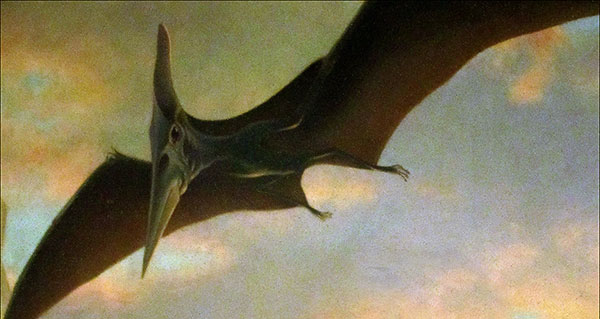
Pterodactylus
Tyrannosaurus rex was among the very last meat-eating dinosaurs to walk the Earth. T. rex fossils have been found in rocks dating right up to the K-Pg boundary, meaning some individuals were probably alive when the asteroid struck. Other Late Cretaceous theropods that lived right up to the end included Albertosaurus, Daspletosaurus, Dromaeosaurus, and small troodontids. After the impact, dead and dying animals would have been everywhere - food was probably the last thing T. rex worried about. The killer was the lack of plants once the sky darkened: with plants dying, plant-eaters starved, and predators that had depended on them quickly followed.
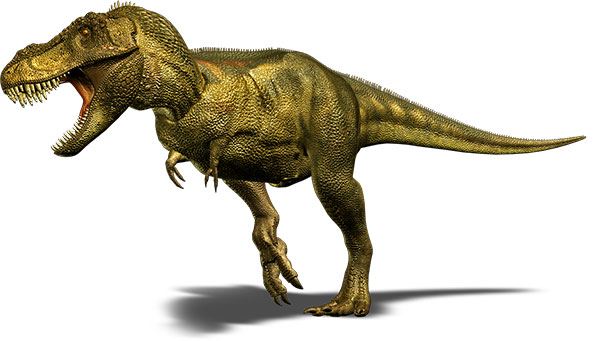
Tyrannosaurus rex
The seas suffered just as badly as the land. The giant marine reptiles - Mosasaurus, the plesiosaurs, and the ichthyosaurs (which had actually died out earlier) - all vanished. So did the ammonites, those spiral-shelled relatives of squid and octopus that had been abundant for hundreds of millions of years. Many plankton species at the base of the food chain disappeared too, causing ocean ecosystems to collapse from the bottom up. Fish, however, were mostly spared. Sharks, although severely diminished, also pulled through. Crocodiles and turtles in freshwater environments survived as well - possibly because they could go for long periods without food.
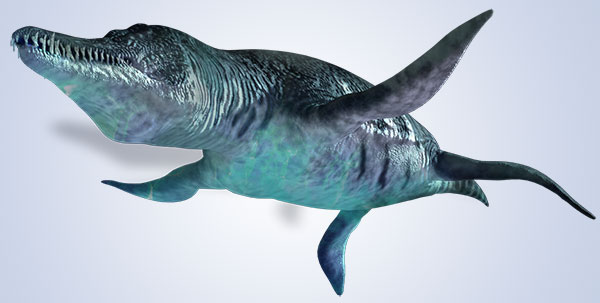
Mosasaurus
Triceratops, Ankylosaurus, Edmontosaurus, and several other plant-eaters were still alive in the final moments of the Cretaceous. Fossils of these dinosaurs have been found in rocks just below the iridium-rich layer that marks the K-Pg boundary. Some smaller plant-eaters, especially burrowing forms, may have briefly escaped the worst of the impact by sheltering underground. But once the plants died from lack of sunlight, there was no escape. Plant-eaters that survived for a few weeks or months on stored food slowly starved. By the time conditions improved, the great dinosaurs were gone.
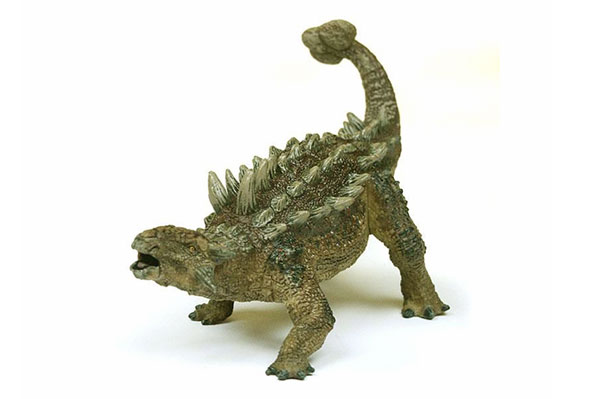
Ankylosaurus