

The ancient Egyptians were full of energy and life. They worked hard, then spent their free time with friends and family. They loved music, parties, fishing, hunting and sailing on the river. Almost everyone lived along the narrow fertile banks of the Nile, the longest river in the world. Every year the Nile flooded and spread a layer of rich black mud across the land. This made the soil perfect for farming. The Egyptians called this fertile strip beside the river the "Black Land", and the dry desert beyond it the "Red Land". Almost everything in everyday Egyptian life depended on the Nile, from the food people grew to the boats they travelled in.
Most ordinary Egyptians were farmers, and their year followed the rise and fall of the river. There were three seasons: Akhet, the flood season, when the fields were underwater and many farmers worked on building projects instead; Peret, the growing season, when crops were planted in the wet soil; and Shemu, the harvest season, when grain was gathered, stored and taxed. This steady rhythm of flood, planting and harvest shaped daily life for thousands of years.
Family Life: A happy family was very important to every Egyptian. Children were treasured, and parents were warm and affectionate towards them. 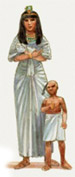 Wealthy and noble families often used servants to help raise and care for their children. Couples who could not have a baby of their own would pray to the gods for help, and adoption was also common. Most families were large, and grandparents, parents and children often lived close together.
Women in ancient Egypt had more freedom and legal rights than women in many other ancient lands. A woman could own property, run a business, buy and sell land, sign contracts and take a case to court in her own name. Even though women did most of the household tasks, such as raising children, preparing food and fetching water, many also earned money of their own by weaving cloth, dancing, singing, playing music or making perfume.
Boys usually learned a trade or craft from their fathers, while girls learned how to run a household from their mothers. Only a small number of boys, mostly from wealthy or noble families, went to special scribe schools from around the age of seven. There they spent years learning to read and write the difficult hieroglyphic and hieratic scripts, along with mathematics and record-keeping, so they could work as scribes and officials. Learning to write was hard work, and students copied texts over and over until they got them right.
Marriage: Egyptians usually married young, often in their early-to-mid teens for girls and a little older for boys. Marriages were frequently arranged by the two families, but love and affection clearly mattered, as we can see from tender poems and pictures of couples that have survived. There was no big temple wedding ceremony as we might expect today. A couple was considered married once they set up home together. Most men had a single wife, though a king or a very wealthy man might have more than one.
Food and Cooking: Egyptians cooked over an open fire or in simple clay ovens. Wood was scarce, so dried reeds, straw and animal dung were also used as fuel. Kitchens were stocked with storage jars, bowls, pots, pans, ladles, sieves and whisks. Ordinary families used clay pots, while the wealthy could afford vessels of bronze, silver or gold. Bread was the staple food, and most meals were built around it. People also ate plenty of vegetables, such as onions, garlic, leeks, beans, cucumbers and lettuce, along with fruit like figs, dates, grapes and melons. Fish from the Nile was a common food, while richer meats such as beef, goat, duck and goose were mostly eaten by the wealthy or saved for festivals. The most popular drink was a thick barley beer, which even children drank in a weak, watery form because it was safer than river water. Wealthy people also enjoyed wine made from grapes.
Bathing and Cleanliness: The Egyptians cared a great deal about being clean. Ordinary people bathed in the Nile, while the wealthy had a separate room at home where servants poured water over them. Instead of soap as we know it, they cleaned themselves with a paste made from oils mixed with a kind of natural salt or lime. They also rubbed scented oils into their skin to stay soft in the dry desert air and to protect against the fierce sun.
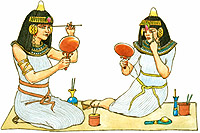 Make-up: Wearing make-up was very common in Egypt, for both men and women. The most famous was eye paint. A green paint was made from a mineral called malachite, and a striking black paint, known as kohl, was made from a grey lead ore called galena. Egyptians lined their eyes with thick black kohl, which they believed made them look beautiful, shielded their eyes from the sun's glare and helped keep flies away. They reddened their lips and cheeks, and used henna to colour their nails and hair. Women kept their make-up in special boxes. At parties, servants placed cones of scented grease on the guests' heads, which slowly melted and gave off a cooling perfume.
Hair and Wigs: Many Egyptians kept their natural hair short, or even shaved their heads, to stay cool and clean and to keep away head lice. Wigs were very popular with both men and women, especially at parties and important ceremonies. The finest wigs were made from human hair, with cheaper ones made from plant fibre. Wigs were not just for decoration; they also protected the head from the hot sun. People stored their valuable wigs in special boxes. Children often had their heads shaved except for one long lock of hair on the side, called the "sidelock of youth".
Jewellery: Ancient Egyptians loved beautiful jewellery, and both men and women wore it. They wore rings and amulets, which they believed protected them from harm and warded off evil spirits. Pierced earrings, armlets, bracelets and anklets were popular. The wealthy wore wide, beaded collars called wesekh, along with necklaces and pendants. Rich people's jewellery was made of gold, silver or electrum, a natural blend of gold and silver, and set with semi-precious stones such as turquoise, deep-blue lapis lazuli and reddish-orange carnelian. Ordinary people wore simpler jewellery made of copper or of faience, a bright blue-green glazed material made from crushed quartz sand.
Clothing: Egyptian clothes were designed to keep people cool in the scorching heat. Almost all clothing was made from linen, which was woven from the flax plant and ranged from rough and coarse to soft and fine. In the Old and Middle Kingdoms, men wore short wrapped kilts, and women wore straight, fitted dresses held up by shoulder straps. The kilts of rich men were often neatly pleated, and older men tended to wear longer ones. Young children frequently went without clothes in the hot summer months, while in the cooler winter everyone wrapped up in cloaks.
In the New Kingdom, clothing became grander. Noblemen wore a long robe over their kilt, and women wore long pleated dresses with a shawl. Queens dressed in especially gorgeous, decorated gowns. Most ordinary people went barefoot, wearing sandals made of woven reeds or leather only on special occasions. The king wore elaborate, decorated sandals, and sometimes fine gloves as well.
Houses and Furniture: Because wood was scarce, Egyptians built their houses from bricks of sun-dried Nile mud mixed with straw, a material much like adobe. 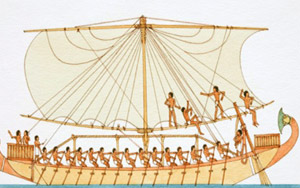 A wealthy family's home was larger, divided into a reception area, a central hall and private living quarters. Windows and doors were small and often covered with mats to keep out flies, dust and heat. The flat roof was a useful extra room, and on hot nights families often slept up there in the open air. Some town houses had two or three storeys, with the ground floor used for business or a workshop. Furniture was simple: low stools, beds, small chests for clothing, boxes for jewellery and make-up, pottery jars and oil lamps. Even the grandest homes had far less furniture than we use today. Waste and sewage were thrown into pits, the river or the streets.
Entertainment: The Egyptians knew how to enjoy themselves. They loved spending time with family, and popular pastimes included hunting, fishing, swimming and boating on the Nile. Wealthy families hosted lavish parties with plenty of food, beer and wine, where dancers and musicians performed. Egyptians adored music and played instruments such as the lute, harp, lyre, flute and drums. Board games were a favourite, especially Senet and Hounds and Jackals, which were played by adults and children alike. Children's toys included carved wooden animals, dolls, spinning tops, balls made of leather or reeds, and model horses on wheels. Throughout the year, great religious festivals filled the calendar, held in honour of the gods, with processions, feasting and music that everyone could share.
What was daily life like in ancient Egypt?
Daily life in ancient Egypt centred on the Nile River. Most people were farmers who worked the fertile black soil left behind by the river's yearly flood. Families lived in mud-brick houses, ate bread and drank barley beer, wore light linen clothing to cope with the heat, and spent free time fishing, hunting, playing board games such as Senet, and enjoying music and festivals.
What did ancient Egyptians eat and drink?
Bread was the staple food and barley beer was the most common drink, even for children in a weak, low-alcohol form. Egyptians also ate vegetables such as onions, garlic, leeks, beans and lettuce, plus fruit like figs, dates and grapes. Fish from the Nile was widely eaten, while meat such as beef, goat, duck and goose was mostly enjoyed by the wealthy. Rich families also drank wine.
What clothes did ancient Egyptians wear?
Ancient Egyptians wore clothing made from linen, woven from the flax plant, because it was light and cool in the desert heat. Men wore wrapped kilts and women wore straight, fitted dresses. In the New Kingdom, clothing became more elaborate, with long pleated robes and shawls. Most people went barefoot and wore sandals made of reeds or leather on special occasions.
What kind of houses did ancient Egyptians live in?
Ancient Egyptians built their houses from sun-dried mud bricks made from Nile mud and straw, a material similar to adobe. Wood was scarce, so it was used sparingly. Homes had small windows to keep out the heat and dust, and flat roofs where families often slept on hot summer nights. Wealthy families had larger homes with a reception area, a central hall and private rooms.
Why was the Nile River so important to daily life in ancient Egypt?
The Nile River was the lifeline of ancient Egypt. Its yearly flood spread rich black silt across the land, making farming possible in the middle of a desert. The Egyptians called this fertile strip the "Black Land" and the surrounding desert the "Red Land". The river also supplied drinking water, fish, reeds for building and a highway for boats carrying people and goods.
Try out the other sections
 Back to School
 Craft Ideas for Kids
 Benefits of Yoga for Kids
 Fun and Jokes
 Stories for Kids
 School Projects & Homework Help
 Hobbies
