

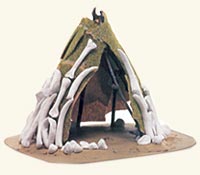
People have always needed protection from the weather. For most of human history, the Earth's climate has been much colder than it is today. Early humans lived in huts out in the open during summer but moved into caves when the harsh winter weather came. They built stone windbreaks across the entrances. Inside, there were inner huts made of branches and animal bones to provide further protection from the cold. Hunters following herds of game built temporary shelters of branches and leaves in the summer. Families lived in camps of huts made of branches and leaves in the summer. Families lived in camps of huts made of branches and animal skins. Farther north, where there were no caves and few trees, people built huts from mammoths' leg bones and tusks. Wherever they settled, however, it was very important to be near a supply of fresh water.
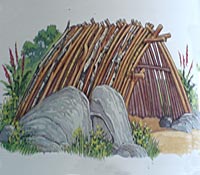
A PLACE TO SHELTER
At Terra Almata, southern France, hominids (early humans) lived in groups. They established camps made up of several simple shelters, to which they returned year after year. The huts were made of tree branches and weighted down with stones.
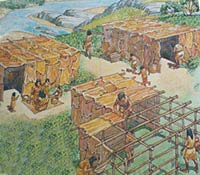
SKIN HUTS
Huts at Monte Verde, Chile, were made of wood covered with animal skins. They are the earliest evidence for human-made shelters in the Americas. The remains were preserved in peaty soil, along with other items, such as a wooden bowl and digging sticks.
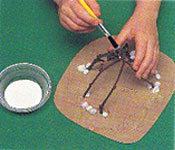
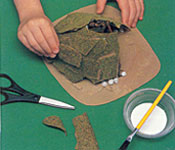
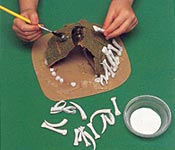
You will need :
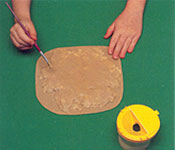
Self-hardening clay
Cutting board
Modeling tool
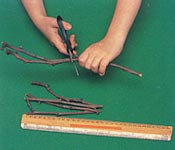
Twigs
Ruler
Scissors
Card
Brown and Green acrylic paint
Water pot
Paintbrushes
White glue
Glue brush
Fake grass or green fabric
Try out the other sections


 Father's Day
 Craft Ideas for Kids
 Benefits of Yoga for Kids
 Stories for Kids
 School Projects & Homework Help
 Hobbies
