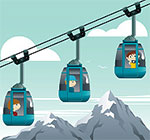
A cable train, or cable railway, is specially designed to travel up and down tracks that are very steeply inclined. Because an ordinary engine finds it hard to climb such steep slopes, the carriages are pulled along by strong moving cables. Cable railways are often used to carry people up hillsides and to move goods in mines and quarries.
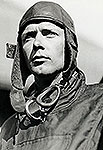
The first people to fly non-stop across the Atlantic Ocean were two British aviators, Captain John Alcock and Lieutenant Arthur Whitten Brown. On 14–15 June 1919, they flew a converted Vickers Vimy biplane from St John's, Newfoundland, to Clifden in Ireland. A few years later, in May 1927, the American pilot Charles Lindbergh became the first person to fly solo and non-stop across the Atlantic, in his aeroplane the Spirit of St. Louis, travelling from New York towards Paris. In 1932, Amelia Earhart became the first woman to fly solo across the Atlantic.
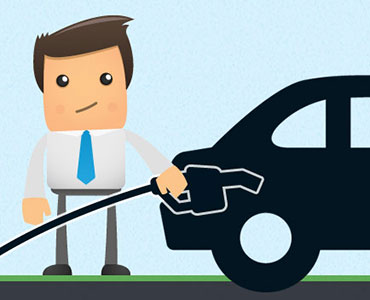
The most common car fuels are petrol (also called gasoline) and diesel, both of which are made from petroleum, a fossil fuel. There are also cleaner alternatives. Bio-fuels are made from organic matter such as plant and animal waste. Alcohol fuels like ethanol and methanol can be used too, though the engine must be built for them, and they can also be blended with petrol. Many cars now run on electricity, and hybrid cars use both electricity and a petrol engine. Scientists are also developing hydrogen-powered cars, in which hydrogen fuel cells make electricity to drive the car. As fossil fuels run low, it is likely that future cars will run mostly on electricity, bio-fuels and hydrogen.
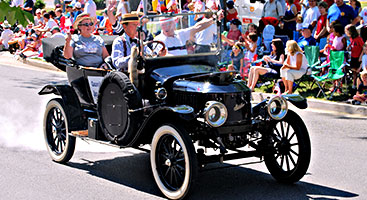
Yes, some of the earliest cars ever built ran on steam. It took a lot of experimenting to build a steam engine small enough to power a road vehicle. In 1769 Nicolas-Joseph Cugnot built a steam vehicle to haul cannons for the French army, and in 1801 Richard Trevithick built a steam carriage in England. The best-known steam car was the American 'Stanley Steamer', made from about 1896 to 1924. A steam car needed some time to build up steam before it could move, but once ready it drove off smoothly. In 1906 a Stanley steam car even set a world land-speed record of about 127 miles per hour.
The boundary that many people treat as the edge of space is called the Kármán line, at about 100 kilometres — roughly 62 miles, or around 328,000 feet — above sea level. Aeroplanes fly far below this. Most passenger jets cruise at about 30,000 to 40,000 feet. Some aircraft can climb to 50,000 feet or higher, but flying that high is usually not worthwhile for ordinary travel, so airliners stay lower.
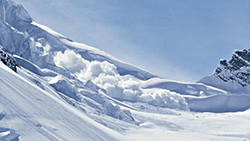
A snow avalanche is a natural event, like a storm or an earthquake, in which a large mass of snow suddenly rushes down a mountain slope. It usually begins when a patch of loose snow starts sliding. As it slides, it picks up more and more snow, growing wider, heavier and faster. Avalanches of dry, powdery snow are the fastest, because dry snow comes loose easily and can even throw up a cloud of snow dust into the air as it thunders down the mountain.
Fog is really a cloud that forms very close to the ground. Like a cloud, it is made of countless tiny droplets of water floating in the air. Normally, water vapour rises high into the sky and only cools enough to form water droplets — clouds — at a great height. But on cool nights, the vapour near the ground can cool and condense into droplets right at the Earth's surface, and this is what we call fog. The more moisture the air holds, the thicker the fog becomes.
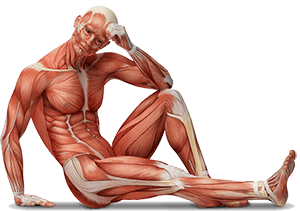
The main job of muscles is to create movement. Every movement in our body happens because muscles pull. Some movements are voluntary, which means we choose to do them — such as lifting an arm, walking or running. Others are involuntary, happening automatically without our thinking about them — such as the beating of the heart and the working of the digestive system. Either way, muscles provide the force that moves our body and our internal organs.
The main job of blood is to carry oxygen from the lungs to every part of the body, because all our body's tissues need oxygen to stay alive. Blood also carries nutrients from our food, along with hormones and other useful substances, to where they are needed. It helps control our body temperature and its water balance, and it helps wounds to clot and stop bleeding. Blood also contains white cells and antibodies that defend us against germs and disease.
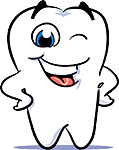
Teeth help us bite, tear and chew our food. We have four kinds of teeth. The incisors, at the front, are used to bite into food. The canines are sharp and pointed and help tear food. The pre-molars and molars, at the back, are broad and flat and grind the food into small pieces so we can swallow it. Teeth do more than just help us eat, though. Together with the jaws they give shape to our face and help us make expressions, and they work with the tongue and lips to help us speak clearly.
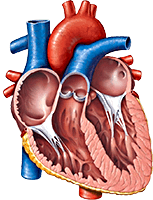
The heart is a muscle, a little larger than your fist, that works like a pump. Its job is to push blood all around the body. Blood returning from the body through the veins is low in oxygen. The heart sends this blood to the lungs to collect fresh oxygen, then pumps the oxygen-rich blood back out to the whole body through tubes called arteries. The heartbeat you can hear and feel is the sound of this pump at work. A human heart beats roughly 100,000 times a day.
When we breathe in, a large muscle below our lungs called the diaphragm moves down and flattens. This makes more room in the chest, so the lungs can expand and draw in air. The air travels down the windpipe into the lungs, where it reaches tiny air sacs called alveoli. Here the oxygen passes into tiny blood vessels called capillaries and is carried around the body. When we breathe out, the diaphragm relaxes and we push out waste carbon dioxide. Smoking damages the lungs so they cannot take in air properly, which is one good reason never to smoke.
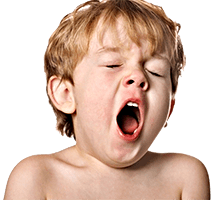
We usually yawn when we are tired or bored. When we are sleepy or bored, we tend to breathe more slowly, so the body takes in a little less oxygen than usual. A yawn is a big, deep breath that pulls in a large gulp of air, helping the body take in more oxygen and breathe out extra carbon dioxide. Yawning is also 'catching' — seeing someone else yawn often makes us yawn too.
Yes. If you place a hand on the left side of your chest, you can usually feel your heart beating. You can also feel the beats as a pulse at your wrist or neck, or hear them by putting an ear to someone's chest. We feel our heartbeat most clearly after exercise, or when we are excited, nervous or scared, because at those times the heart beats faster and harder.

Try out the other sections



 CLAT Aspirants
 Durga Puja
 Craft Ideas for Kids
 Benefits of Yoga for Kids
 Fun and Jokes
 Stories for Kids
 School Projects & Homework Help
 Hobbies