

Easy Quiz for Kids

The Ultimate Mahabharata Quiz 2026: Test Your Knowledge of the World's Longest Epic

Embark on an intellectual journey through humanity's most expansive literary masterpiece! With approximately 100,000 verses, the Mahabharata stands as the world's longest epic poem - a monumental work that weaves together history, philosophy, politics, ethics, and mythology into a single, unparalleled narrative tapestry.

Why Explore the Mahabharata Through This Quiz?

  • Literary Monument: Engage with a text 8 times longer than the Iliad and Odyssey combined
  • Philosophical Depth: Explore the Bhagavad Gita - a complete spiritual and ethical system
  • Cultural Literacy: Understand a cornerstone of Indian civilization and world literature
  • Contemporary Relevance: Discover timeless insights into duty, justice, and human nature
  • Academic Value: Perfect for students of literature, philosophy, and comparative mythology

Essential Mahabharata Facts:

  • 100,000+ Verses in the complete critical edition
  • 18 Parvas (Books) structure the monumental narrative
  • Bhagavad Gita: 700 verses forming a complete philosophical system
  • Complex Characters: Over 100 major characters with moral ambiguity
  • Historical Range: Composed between 400 BCE - 400 CE
  • Global Influence: Translated into all major world languages
Monvenience - Transact in Convenience

Challenge Your Understanding: The Comprehensive Mahabharata Knowledge Test

Navigate the complex moral landscape of the world's greatest epic.

This meticulously designed quiz doesn't just test facts - it challenges your understanding of the Mahabharata's intricate philosophical, ethical, and narrative dimensions. From the complex character psychology to the profound teachings of the Bhagavad Gita, each question is crafted to reveal deeper layers of this monumental work.

What This Quiz Assesses:

  • Character Complexity: Understand morally ambiguous figures and their motivations
  • Narrative Structure: Trace the epic's sprawling plot across 18 books
  • Philosophical Concepts: Grasp dharma, karma, moksha, and yogic teachings
  • Historical Context: Place the epic within ancient Indian civilization
  • Literary Analysis: Appreciate narrative techniques and symbolic meanings
  • Comparative Perspectives: Relate to other world epics and philosophical traditions

Designed for: Students, scholars, literature enthusiasts, philosophy students, and anyone seeking to understand one of humanity's greatest literary achievements.
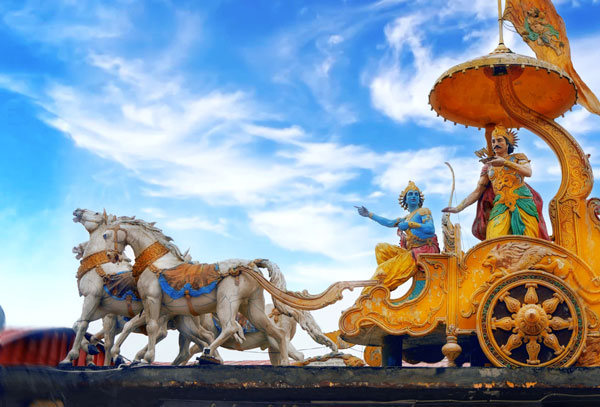

The Mahabharata Quiz - Test Your Knowledge of the World's Longest Epic shadow

Academic and Intellectual Benefits:

  • Critical Thinking: Analyze complex moral dilemmas and character motivations
  • Cultural Competence: Understand foundational texts of Indian civilization
  • Philosophical Literacy: Engage with concepts of dharma, karma, and yoga
  • Comparative Analysis: Connect with Greek, Mesopotamian, and other world epics
  • Ethical Reasoning: Consider questions of justice, duty, and righteous action
  • Literary Appreciation: Recognize narrative complexity and symbolic depth

The Mahabharata in Global Context:

While rooted in ancient Indian civilization, the Mahabharata addresses universal human concerns that transcend cultural boundaries. Its exploration of duty versus desire, the nature of righteous action, family loyalty, political ethics, and the search for meaning makes it remarkably relevant in today's globalized world. Scholars worldwide study it not just as literature but as philosophy, political theory, and psychological drama.

Comprehensive Mahabharata Question Preview

This quiz features 27 carefully crafted questions that progress from basic identification to complex philosophical analysis. Two new questions have been added for 2026 to expand your understanding of this epic masterpiece.

  1. How many verses (shlokas) does the complete Mahabharata contain? - Test your knowledge of the epic's monumental scale as the world's longest poem
  2. What is the Sanskrit name for the "Bhagavad Gita" and what does it literally mean? - Understand the philosophical core's original terminology and meaning
  3. Who is traditionally credited as the author of the Mahabharata? - Test your knowledge of the epic's origins and Vyasa's role
  4. Which kingdom did the Pandavas and Kauravas belong to? - Geographical and political context of the epic
  5. Who was the eldest Pandava brother? - Understanding family hierarchy and leadership
  6. What is the name of Arjuna's divine bow? - Recognizing symbolic weapons and their significance
  7. Who was the primary teacher of the Pandavas and Kauravas? - Educational and mentoring relationships
  8. What was the name of the blind king of Hastinapura? - Character identification and symbolic blindness
  9. Who was the mother of the Kauravas? - Maternal lineage and character relationships
  10. Which Pandava prince had the closest relationship with Lord Krishna? - Divine-human relationships and mentorship
  11. How many chapters comprise the Bhagavad Gita? - Structural knowledge of the philosophical core
  12. Who was the primary antagonist in the Mahabharata? - Understanding conflict and opposition
  13. What was the Pandavas' condition during the fateful dice game? - Symbolic conditions and their meanings
  14. Who served as Arjuna's charioteer during the Kurukshetra War? - Recognizing pivotal supporting roles
  15. What was Arjuna's moral dilemma before the war? - Understanding the Bhagavad Gita's context
  16. How did Bhishma meet his end in battle? - Character fates and narrative resolution
  17. Who conveyed the misleading news about Ashwatthama's death? - Strategic deception and its consequences
  18. Which Kaurava was renowned for mace warfare? - Specialized combat skills
  19. What contest led to Draupadi's marriage? - Marriage customs and narrative devices
  20. Who was Krishna's biological father? - Divine genealogy and human connections
  21. Which celestial weapon did Arjuna use against Karna? - Divine weaponry and its symbolic meanings
  22. Who performed severe austerities for a hundred sons? - Boons, curses, and their narrative functions
  23. Who narrated the epic to Lord Ganesha for transcription? - Composition and transmission methods
  24. Which character was not one of the main Pandavas? - Character classification and relationships
  25. Who was Karna's biological mother? - Secret lineages and their dramatic impact
  26. In which kingdom did Krishna rule? - Political geography of the epic
  27. How long did the Kurukshetra War last? - Timeline and narrative structure

Educational Outcomes:

  • Identify major characters and their complex interrelationships
  • Understand the philosophical teachings embedded in the narrative
  • Analyze moral dilemmas and ethical frameworks presented
  • Recognize symbolic elements and their deeper meanings
  • Connect the epic to broader historical and cultural contexts
  • Appreciate the literary structure and narrative techniques

The Bhagavad Gita Within the Mahabharata:

The Bhagavad Gita (often called the Gita) forms chapters 23-40 of the Bhishma Parva (Book 6). This 700-verse dialogue between Arjuna and Krishna represents the philosophical heart of the epic, addressing fundamental questions about:

  • Dharma: Duty, righteousness, and moral law
  • Karma Yoga: The yoga of selfless action
  • Jnana Yoga: The yoga of knowledge and wisdom
  • Bhakti Yoga: The yoga of devotion
  • Moksha: Liberation and spiritual freedom

Several quiz questions specifically test your understanding of this pivotal philosophical text within the larger epic.

The Mahabharata's 18 Parvas (Books):

  • Adi Parva: Introduction and early history
  • Sabha Parva: The assembly hall and dice game
  • Aranya Parva: Forest exile of the Pandavas
  • Virata Parva: Disguised life in Virata's kingdom
  • Udyoga Parva: Preparations for war
  • Bhishma Parva: Contains the Bhagavad Gita
  • Drona Parva: Drona's command and death
  • Karna Parva: Karna's command and death
  • Shalya Parva: Final day of battle
  • Sauptika Parva: Night massacre
  • Stri Parva: Women's lamentations
  • Shanti Parva: Yudhishthira's coronation and peace teachings
  • Anushasana Parva: Final instructions
  • Ashvamedhika Parva: Horse sacrifice
  • Ashramavasika Parva: Retirement to forest
  • Mausala Parva: Krishna's departure and Yadava destruction
  • Mahaprasthanika Parva: Great journey to heaven
  • Svargarohana Parva: Ascent to heaven

Comparative Epic Perspective:

The Mahabharata invites comparison with other world epics:

  • Homer's Iliad: Both explore war, honor, and divine intervention
  • Virgil's Aeneid: Both connect national identity with divine destiny
  • Milton's Paradise Lost: Both examine cosmic conflict and free will
  • Dante's Divine Comedy: Both structure spiritual journeys
  • Ramayana: Companion Indian epic with different narrative focus

Understanding these connections enriches appreciation of the Mahabharata's unique contributions to world literature.