

Mythological Story: Niobe
Niobe, Queen of Thebes, had every reason in the world to feel fortunate. Her husband Amphion had been gifted a magical lyre by the Muses, whose music alone had once raised the very stones of their palace into place. Her father, Tantalus, had dined among the gods themselves. And she was blessed, above all, with fourteen beautiful children — seven sons and seven daughters — a family larger and more magnificent than almost any other in the ancient world.
It was this last blessing that Niobe grew proudest of, and her pride, over time, swelled into something far more dangerous. One day, at a festival honouring the goddess Leto, mother of the twin gods Apollo and Artemis, Niobe made a boast that would echo through Greek mythology for centuries after: she declared that she, with her fourteen wonderful children, deserved more honour and worship than Leto, who had only two.
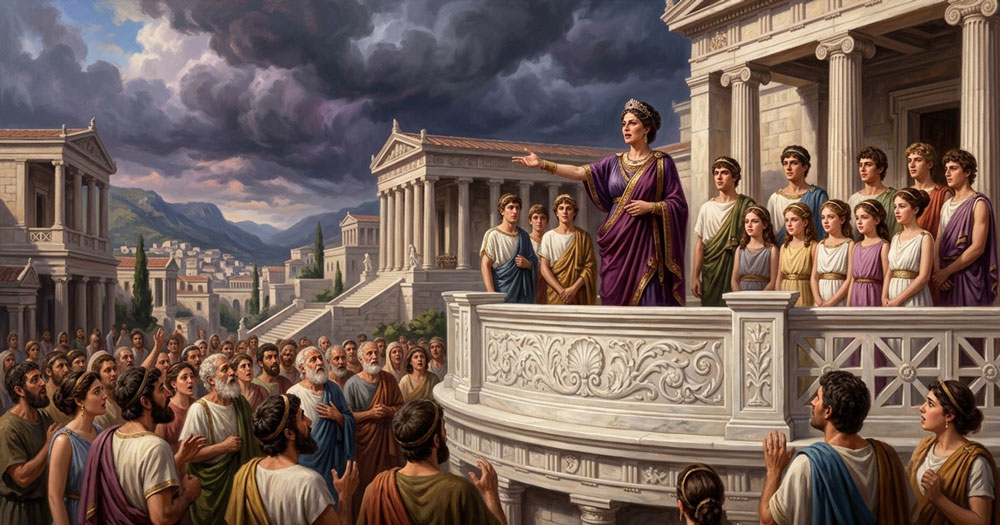
Word of this boast reached Leto swiftly, and the goddess was deeply wounded by it. In ancient Greek mythology, such open pride against the gods was known as hubris, and it rarely went unanswered. Leto called upon her two children, Apollo and Artemis, to defend her honour, and the twin gods, fiercely loyal to their mother, agreed at once.
What followed was one of the most sorrowful tales in all of Greek mythology, and the ancient poets told it as a solemn warning rather than an adventure: within the story, Niobe's pride brought the swiftest and heaviest of all divine punishments, and by its end she had lost everything she had once boasted about. Overcome with grief beyond bearing, Niobe is said to have wept until she turned to stone — and even then, according to the old storytellers, tears continued to fall from the stone in the form of a mountain spring, weeping still for what pride had cost her.
The ancient Greeks retold Niobe's story again and again, not for its sadness alone, but for the lesson carried inside it — that no matter how blessed or fortunate a person may be, boasting against the gods, or placing oneself above others, was considered the surest way to invite misfortune.
Who's Who in This Story
- Niobe — the proud Queen of Thebes, remembered as a warning against boastfulness
- Leto — the goddess whose honour Niobe insulted
- Apollo and Artemis — the twin god and goddess, children of Leto, who defended their mother's honour
Did You Know?
- The idea of "hubris" — dangerous pride, especially against the gods — appears throughout Greek mythology and Greek tragedy as one of the most serious flaws a person could have.
- A rock formation on Mount Sipylus in modern-day Turkey has been associated with the Niobe legend since ancient times, said to resemble a weeping woman.
- Niobe's story was a popular subject for ancient Greek and Roman sculpture, with several statues of her and her children surviving to this day.
Niobe's story has survived for thousands of years as one of Greek mythology's gentlest reminders that humility is a quiet strength, and that pride, left unchecked, can grow into someone's greatest weakness.