

World Legend: The Cid
Unlike many of the heroes found in legend and myth, the Cid was based on a real man: Rodrigo Diaz de Vivar, born in the city of Burgos in eleventh-century Spain. It was an age when Spain was divided between Christian kingdoms in the north and Moorish territories in the south, and it was against this backdrop of shifting alliances and battles that Rodrigo's legend was born.
Rodrigo earned the title "Cid," from an Arabic word meaning "lord" or "master," after a string of remarkable military victories, including triumphs over five Moorish kings in a single campaign. It was an extraordinary achievement, and stories of his skill and daring courage spread quickly across the kingdom, told and retold until fact and legend became difficult to separate.
As a young man, Rodrigo served King Sancho of Castile, and later King Alfonso, though his relationship with the crown was not always smooth. At one point he fell out of royal favour and was exiled from the kingdom altogether — yet rather than fading into obscurity, Rodrigo used this time to build his own band of loyal followers, fighting for whichever lord would have him and steadily building a reputation that no ruler in Spain could ignore.
The most celebrated chapter of the Cid's legend is his conquest of the city of Valencia. After a long siege, Rodrigo took the city and ruled it in the years that followed, defending it fiercely against repeated attempts to retake it. His reputation for fairness toward the people he governed, regardless of their faith, added to his legend as a leader respected even by those he had once fought against.
According to the most famous legend attached to his name, even Rodrigo's death did not end his usefulness to his people. As the story goes, when Valencia came under siege once more after his passing, his followers strapped his body upright onto his horse and rode out to face the enemy, whose soldiers fled in terror at the sight of the great warrior seemingly risen once again to defend his city.
Who's Who in This Story
- Rodrigo Diaz ("El Cid") — the real Spanish knight and military leader whose life inspired this legend
- King Alfonso — the Castilian king Rodrigo served, whose favour rose and fell during Rodrigo's lifetime
Did You Know?
- The Cid's story is told in one of the oldest surviving works of Spanish literature, an epic poem called the Cantar de mio Cid, written not long after his death.
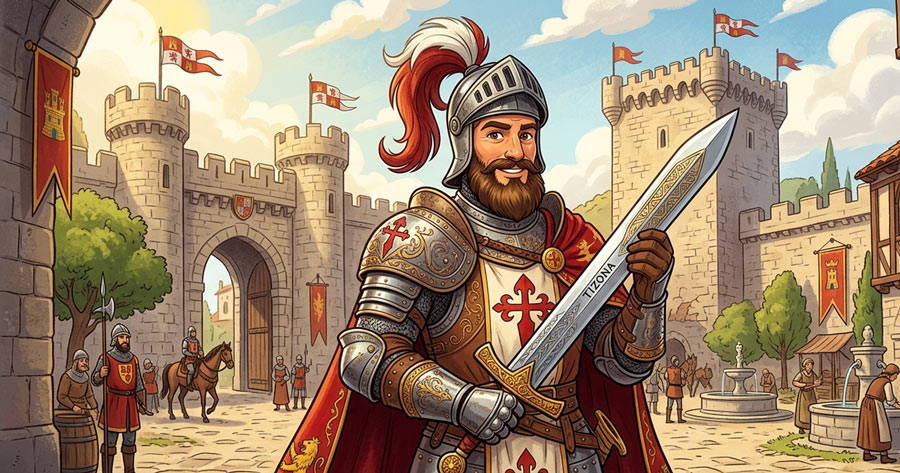
- The Cid's sword, named Tizona, is still preserved and displayed in a museum in Spain today.
- Rodrigo Diaz is remembered in Spain as a great national hero, and statues of him stand in several Spanish cities.
The Cid's legend endures because it grew from something real — a reminder that courage and fairness, more than any single victory, are what make a leader remembered for centuries.