
Ganesha and the Writing of the Mahabharata
The story of Lord Ganesha and the writing of the Mahabharata is a remarkable tale that highlights his wisdom, devotion, and role as the patron of learning. This divine collaboration with sage Ved Vyasa led to the creation of one of the greatest epics in Hindu mythology, symbolizing perseverance, sacrifice, and the pursuit of knowledge.
The Epic of the Mahabharata
The Mahabharata, one of the longest epic poems ever written, was authored by the sage Ved Vyasa. He possessed immense knowledge and insight into various aspects of life. Ved Vyasa wanted the epic to be written down, capturing every detail accurately, and decided to seek assistance from Lord Ganesha.
Ved Vyasa Seeks Ganesha’s Help
The Request
Ved Vyasa approached Lord Ganesha, who was revered as the deity of intellect and wisdom, and requested his help in transcribing the epic. Ganesha, recognizing the importance of the task, agreed to assist Ved Vyasa under one condition: that the sage would dictate the verses continuously without pausing.
The Counter-Condition
Ved Vyasa, in turn, posed a condition to Ganesha. He requested that Ganesha understand the verses completely before writing them down, ensuring accuracy and clarity in the transcription. Ganesha, known for his divine intellect, accepted Ved Vyasa's condition.
The Process of Transcription
Ved Vyasa’s Rapid Dictation
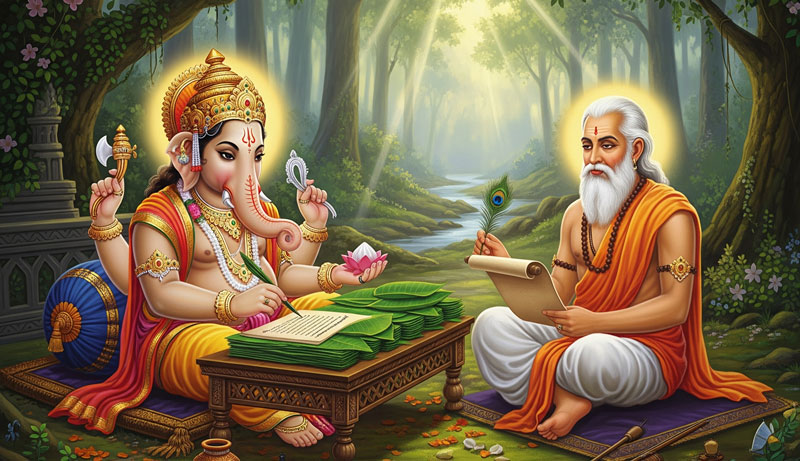
As the process of transcription began, Ved Vyasa recited the verses of the Mahabharata at a rapid pace. To keep up with the sage's speed, Ganesha would understand the meaning of each verse instantly before inscribing it onto the palm leaves.
Strategic Pauses and Questions
However, to give himself enough time to comprehend the verse, Ganesha occasionally interrupted Ved Vyasa by posing complex questions or adding conditions to the composition. Ved Vyasa, in turn, used these moments of pause to gather his thoughts and formulate the subsequent verses.
The Epic Takes Shape
This unique collaboration between Ved Vyasa and Ganesha continued for a prolonged period, with the epic gradually taking shape. As the Mahabharata unfolded, Ganesha inscribed the verses with absolute accuracy and completeness, ensuring that no detail was missed.
The Breaking of Ganesha’s Tusk
During the transcription process, there was an incident where Ganesha's pen broke. In a moment of quick thinking, Ganesha broke off one of his own tusks and continued writing without any interruption. This symbolizes Ganesha's unwavering commitment to completing the task at hand and his willingness to sacrifice for the pursuit of knowledge.
The Completion of the Mahabharata
The collaboration between Ved Vyasa and Ganesha resulted in the successful transcription of the Mahabharata, an epic that encompasses profound teachings, complex characters, and intricate plotlines. It remains one of the most treasured and revered scriptures in Hindu mythology.
The Significance of the Story
Ganesha’s Role in Knowledge
The story of Ganesha and the writing of the Mahabharata showcases Ganesha's intellect, agility, and devotion to knowledge. It emphasizes the importance of perseverance, cooperation, and the exchange of wisdom in the pursuit of noble endeavors.
A Patron of Learning and Literature
Furthermore, this tale highlights Ganesha's role as the patron of literature, learning, and intellect, affirming his status as the remover of obstacles in the path of knowledge seekers. It serves as a reminder of the significance of seeking guidance and assistance from higher powers in the quest for knowledge and enlightenment.
A Legacy of Wisdom
The story of Ganesha's involvement in the writing of the Mahabharata not only exemplifies the divine collaboration between gods and sages but also instills the value of continuous learning and the preservation of ancient wisdom for future generations.
 Back to School
 Craft Ideas for Kids
 Benefits of Yoga for Kids
 Fun and Jokes
 Stories for Kids
 School Projects & Homework Help
 Hobbies
