
Hanuman Befriends Rama: The Divine Alliance in the Ramayana
Introduction:
The meeting between Lord Rama and Hanuman is one of the most cherished episodes in the Hindu epic, the Ramayana. This encounter not only marks the beginning of a profound friendship but also sets the stage for the eventual triumph of dharma (righteousness) over adharma (unrighteousness). This article delves into the circumstances leading to their meeting, the significance of their alliance, and the enduring legacy of their bond.
Context: Rama's Quest and Sugriva's Exile
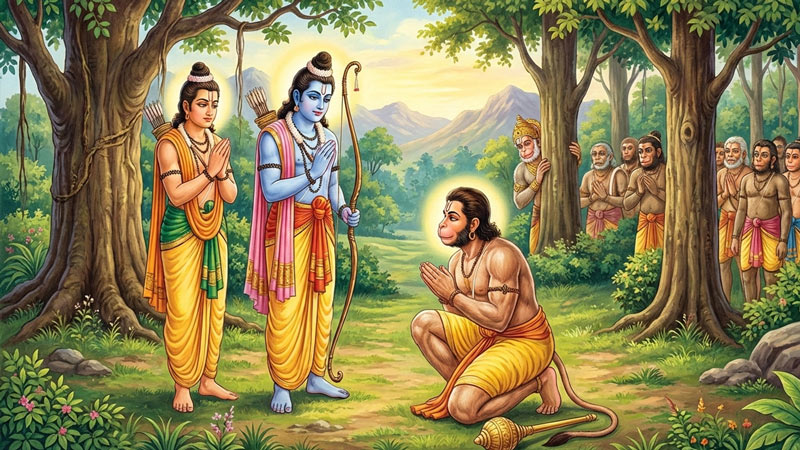
After the demon king Ravana abducted Sita, Rama's wife, Rama and his brother Lakshmana wandered through the forests in search of her. Their journey led them to the Rishyamukha mountains, where Sugriva, the exiled king of the Vanaras (a race of forest-dwelling beings), resided. Sugriva lived in fear of his brother Vali, who had usurped the throne and sought to kill him. When Sugriva spotted the two brothers, he feared they might be spies sent by Vali and decided to investigate.
Hanuman's Disguise and the Divine Encounter
Sugriva entrusted his minister, Hanuman, with the task of identifying the strangers. Hanuman, known for his wisdom and eloquence, approached Rama and Lakshmana disguised as a Brahmin ascetic. Upon meeting them, Hanuman was struck by their divine aura and realized their noble intentions. He revealed his true form and expressed his desire to assist them.
The Formation of a Sacred Bond
Rama shared his plight with Hanuman, who, moved by compassion and devotion, pledged his unwavering support. Recognizing Rama as the embodiment of dharma, Hanuman vowed to aid him in his quest to rescue Sita. This moment marked the beginning of a deep and enduring friendship, characterized by mutual respect and unwavering loyalty.
Alliance with Sugriva and the Path Forward
Hanuman introduced Rama and Lakshmana to Sugriva, facilitating an alliance between them. Rama agreed to help Sugriva reclaim his kingdom from Vali, and in return, Sugriva promised to assist Rama in finding Sita. This partnership proved instrumental in the events that followed, including the defeat of Vali, the mobilization of the Vanara army, and the eventual battle against Ravana in Lanka.
Symbolism and Legacy
The friendship between Rama and Hanuman transcends the narrative of the Ramayana, symbolizing the ideals of devotion, selfless service, and the power of faith. Hanuman's unwavering dedication to Rama serves as an enduring example of bhakti (devotion) and has inspired countless devotees over the centuries. Their bond exemplifies the profound connection between the divine and the devotee, emphasizing that true service stems from love and humility.
Conclusion
The meeting of Hanuman and Rama is more than a pivotal moment in an epic tale; it is a testament to the transformative power of devotion and the strength found in righteous alliances. Their friendship, rooted in mutual respect and shared purpose, continues to inspire and guide individuals on the path of dharma.
 Back to School
 Craft Ideas for Kids
 Benefits of Yoga for Kids
 Fun and Jokes
 Stories for Kids
 School Projects & Homework Help
 Hobbies
