
Hanuman's Destruction of Ashoka Vatika: A Tale of Devotion and Valor
Introduction:
In the epic Ramayana, Hanuman's journey to Lanka in search of Sita culminates in a dramatic episode where he destroys Ashoka Vatika, Ravana's prized garden. This act is not just a display of strength but also a profound expression of devotion, courage, and righteousness.
Hanuman's Mission to Lanka
Tasked with locating Sita, Hanuman leaps across the ocean to Lanka. Upon arrival, he discovers Sita in Ashoka Vatika, held captive by Ravana. After delivering Rama's message and assuring her of rescue, Hanuman seeks to assess Lanka's defenses and instill fear among its inhabitants.
The Destruction of Ashoka Vatika
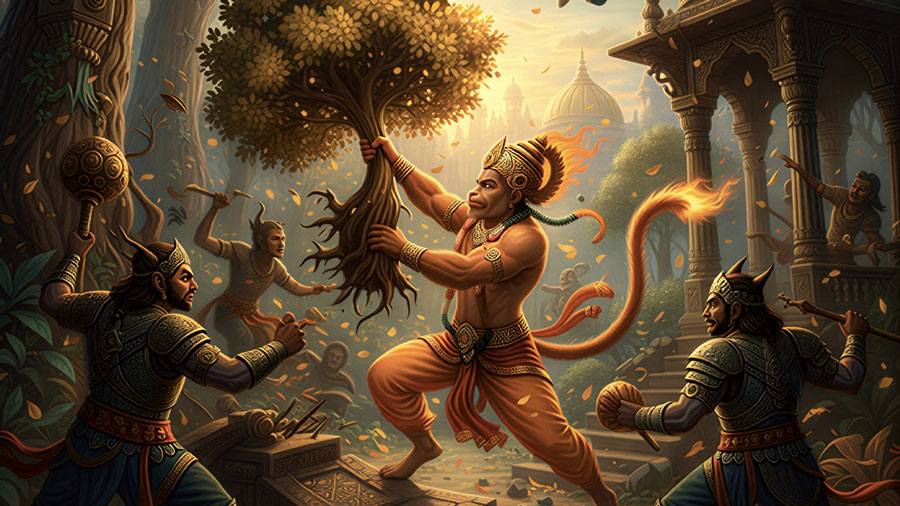
Hanuman begins by uprooting trees, destroying structures, and creating chaos within the garden. His actions are both strategic and symbolic, demonstrating the impending doom of Ravana's reign and the might of Rama's allies. This destruction serves as a warning to the demons of Lanka about the consequences of their actions.
Confrontation with Ravana's Forces
Alarmed by the devastation, Ravana dispatches his warriors to confront Hanuman. Despite being outnumbered, Hanuman defeats them with ease. Even Ravana's son, Akshayakumara, falls in battle against Hanuman's prowess. Eventually, Indrajit captures Hanuman using divine weapons, leading to his presentation before Ravana.
Hanuman's Trial and the Burning of Lanka
In Ravana's court, Hanuman boldly advises the demon king to release Sita and seek Rama's forgiveness. Enraged, Ravana orders Hanuman's tail to be set ablaze. Utilizing this punishment to his advantage, Hanuman escapes and sets fire to significant parts of Lanka, sparing only places of virtue like Ashoka Vatika and Vibhishana's residence. This act further demoralizes the demons and showcases Hanuman's ingenuity and strength.
Significance and Legacy
Hanuman's destruction of Ashoka Vatika is emblematic of his unwavering devotion to Rama and his commitment to dharma. It underscores the idea that true strength lies in righteousness and that evil, no matter how powerful, will ultimately face retribution. This episode continues to inspire devotees, highlighting the virtues of courage, loyalty, and faith.
Conclusion
The tale of Hanuman's actions in Ashoka Vatika serves as a powerful reminder of the triumph of good over evil. His deeds exemplify the impact one individual's devotion and valor can have in challenging injustice and restoring righteousness.
 Back to School
 Craft Ideas for Kids
 Benefits of Yoga for Kids
 Fun and Jokes
 Stories for Kids
 School Projects & Homework Help
 Hobbies
