
Hanuman Meets Ravana: A Tale of Courage and Righteousness
Introduction:
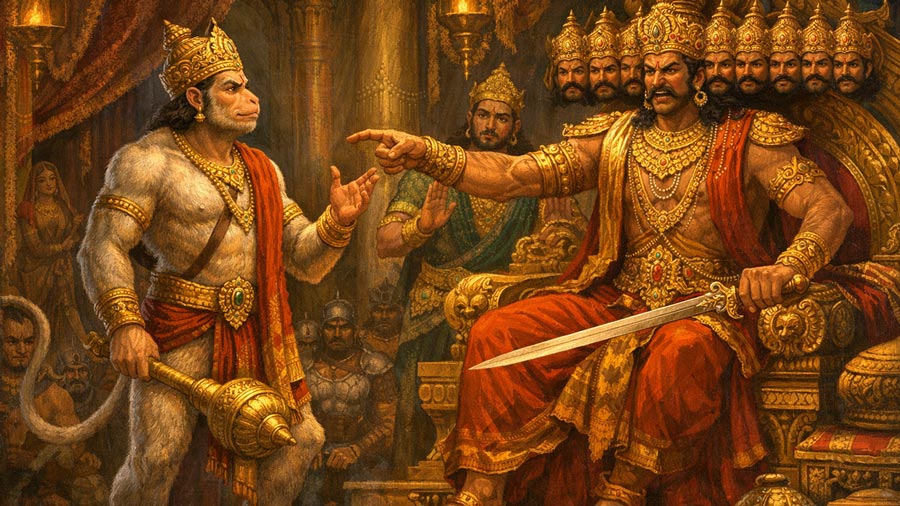
In the epic Ramayana, Hanuman's unwavering devotion to Lord Rama leads him to Lanka in search of Sita. His journey brings him face-to-face with Ravana, the mighty king of Lanka. This encounter is a testament to Hanuman's courage, diplomacy, and commitment to righteousness.
Hanuman's Mission in Lanka
After leaping across the ocean to Lanka, Hanuman discovers Sita in the Ashoka Vatika, held captive by Ravana. He delivers Rama's message, assuring her of rescue. To assess Lanka's defenses and deliver a warning, Hanuman allows himself to be captured and brought before Ravana's court.
The Confrontation with Ravana
In Ravana's opulent court, Hanuman stands fearlessly, introducing himself as Rama's messenger. He urges Ravana to release Sita and seek forgiveness, highlighting the consequences of his actions. Ravana, enraged by Hanuman's boldness, orders his execution.
Vibhishana's Intervention
Vibhishana, Ravana's younger brother, intervenes, reminding Ravana of the dharma that protects messengers. He advises against killing Hanuman, suggesting a lesser punishment. Ravana, though furious, heeds his brother's counsel and orders Hanuman's tail to be set ablaze instead.
Hanuman's Retaliation
As his tail burns, Hanuman escapes his bonds and uses the fire to set Lanka ablaze, sparing only virtuous places like the Ashoka Vatika and Vibhishana's residence. This act serves as a warning of the impending doom that awaits Ravana if he continues his unrighteous path.
Significance and Lessons
- Diplomacy and Courage: Hanuman's approach emphasizes the power of words and righteousness over violence.
- Adherence to Dharma: Vibhishana's intervention showcases the importance of upholding moral laws, even in challenging situations.
- Consequences of Arrogance: Ravana's refusal to heed warnings leads to devastation, highlighting the perils of pride and unrighteousness.
Conclusion
The encounter between Hanuman and Ravana is a powerful narrative of courage, diplomacy, and moral integrity. It teaches that righteousness and adherence to dharma ultimately triumph over arrogance and evil.
 Back to School
 Craft Ideas for Kids
 Benefits of Yoga for Kids
 Fun and Jokes
 Stories for Kids
 School Projects & Homework Help
 Hobbies
