

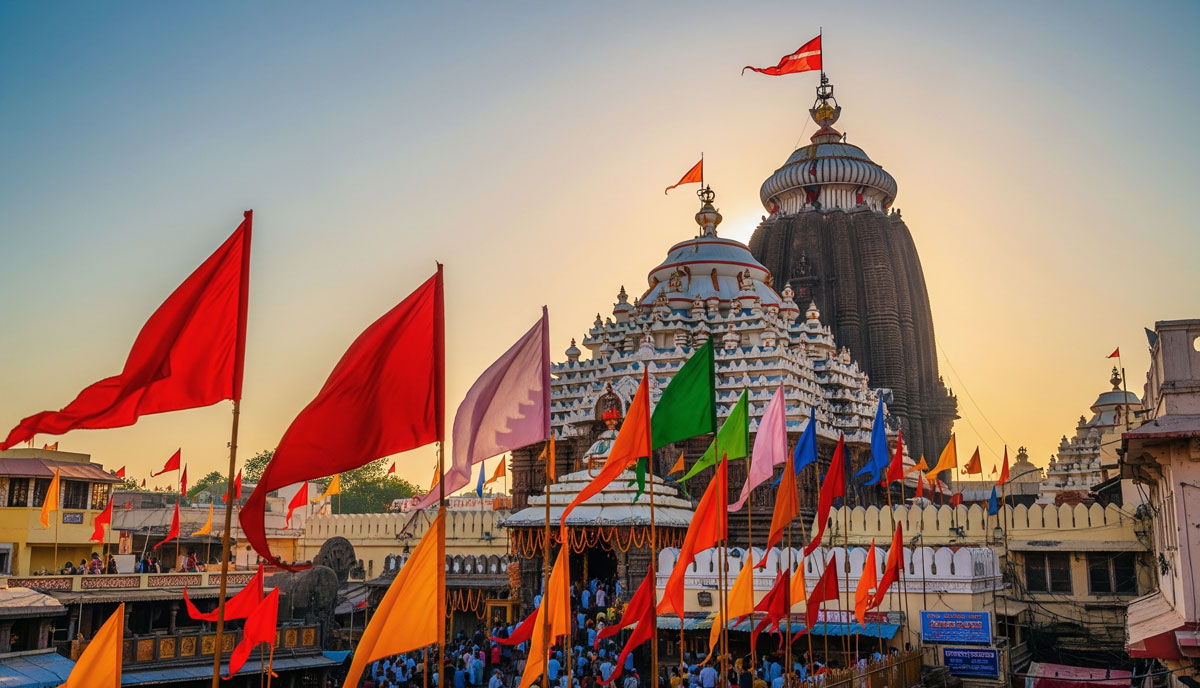
The sacred Jagannath Temple in Puri, Odisha - home of the divine triad
In the ancient scriptures of India, particularly the Skanda Purana and Niladri Mahodaya, lies the mystical origin story of Lord Jagannath, the wooden deity worshipped as a form of Lord Vishnu/Krishna along with his siblings Balabhadra (Balarama) and Subhadra. This sacred narrative explains the unique appearance of the deities and the world-famous Rath Yatra festival of Puri.
The King's Divine Vision
Legend tells of King Indradyumna, a pious ruler of the ancient Malava kingdom, who learned of an extraordinary blue neem wood log floating in the sea near Puri. The Skanda Purana's Utkala Khanda describes how the king received a divine vision in his dream:
Vishwakarma's Divine Craftsmanship
When the king retrieved the radiant log, Lord Vishnu appeared before him and instructed him to have the divine architect Vishwakarma carve the deities. The god arrived disguised as an old carpenter with a curious condition:
"I shall work behind closed doors for 21 days. If anyone disturbs me before completion, I will leave the deities in their unfinished form." The king agreed, but after 14 days of hearing no sounds from the chamber, Queen Gundicha grew anxious.
The Mystical Significance
The unique form of Lord Jagannath holds deep spiritual symbolism described in various scriptures:
1. The Eyes of the Universe
Jagannath's enormous round eyes represent his all-seeing nature. The Brahma Purana states: "His eyes never blink, witnessing all of creation simultaneously."
2. The Limbless Form
His lack of hands signifies he needs no physical instruments to help devotees, while the absence of feet symbolizes he is permanently seated in his temple, ever-accessible to worshippers.
3. The Wooden Body
The neem wood represents how the divine exists even in ordinary materials. The Padma Purana explains: "The Lord manifests where devotees call him, whether in stone, metal or wood."
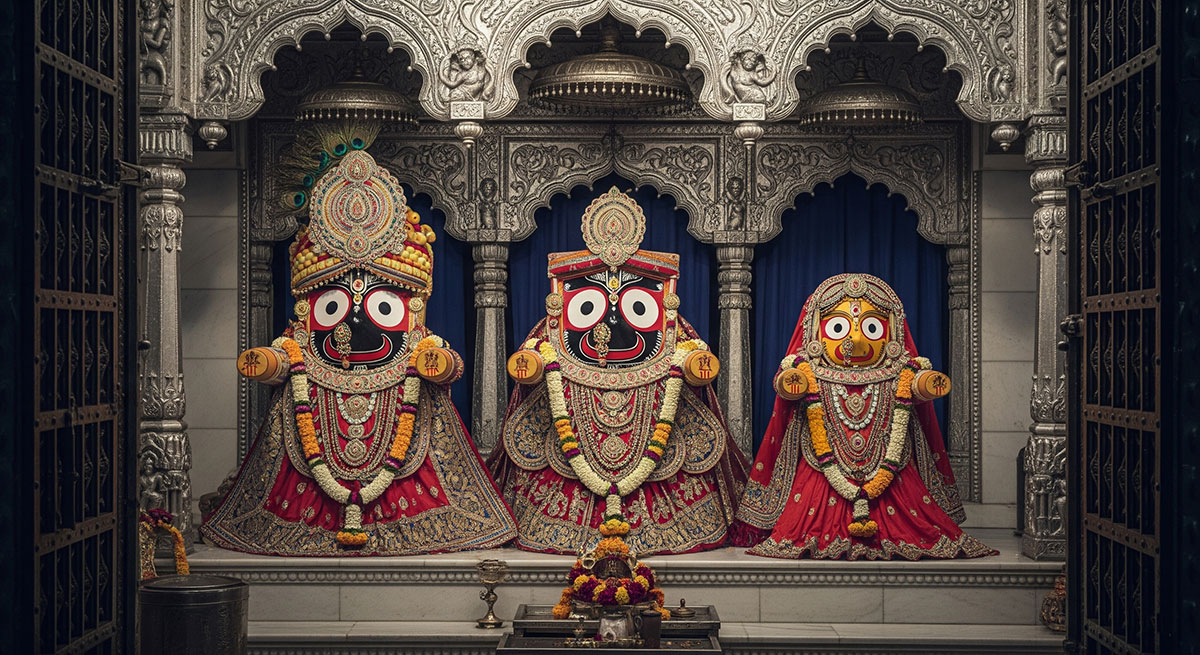
The holy triad - Jagannath (center), Balabhadra (left) and Subhadra (right)
Origin of the Rath Yatra
The Kapila Samhita describes how the annual chariot festival began when Subhadra expressed desire to see the city. The siblings travel annually to their aunt Gundicha's temple (the queen who opened the carving chamber).
The three colossal chariots are rebuilt annually from specific types of wood, with Jagannath's chariot always having 18 wheels (representing the 18 chapters of the Bhagavad Gita).
Eternal Significance
This sacred narrative teaches profound spiritual truths - that the divine manifests in unexpected forms, that spiritual vision sees beyond physical appearances, and that God periodically comes down to humanity's level during festivals. The Jagannath tradition continues vibrantly today, with the wooden deities ceremonially replaced every 12-19 years in a ritual called Navakalevara, maintaining the ancient practice described in the scriptures.
 Mother's Day
 Craft Ideas for Kids
 Benefits of Yoga for Kids
 Stories for Kids
 School Projects & Homework Help
 Hobbies
