
Christmas in Ireland
Nollaig Shona Duit: candles in the window, St Stephen's Day and Women's Christmas


Christmas in Ireland, Nollaig, runs from 8 December to 6 January and is one of the most family-centred Christmases in Europe. Emigrants come home, a candle is lit in the window on Christmas Eve to welcome the Holy Family, and many families attend midnight Mass. Christmas Day centres on presents and a dinner of turkey and ham, followed by St Stephen's Day, a second public holiday of visiting, sport and the Wren Boys' processions. The season closes on 6 January with Nollaig na mBan, Women's Christmas.
How the Irish celebrate Christmas
Advent wreaths and calendars mark the run-up to Christmas, but in Ireland the season has traditionally begun on 8 December, the feast of the Immaculate Conception. It was the day when families from the country came up to Dublin and the towns for their Christmas shopping, and when many homes put up the tree and the crib, the nativity scene that still holds pride of place in many Irish homes. The figure of the infant Jesus is added on Christmas Day. Houses are decorated with holly and ivy, and towns and cities switch on their Christmas lights.
For many Irish families Christmas is a homecoming. Emigrants fly back from abroad in the days before Christmas, airports fill with reunions, and Christmas Eve is a big night for meeting old friends in the local pub. In late November, The Late Late Toy Show, a special edition of RTÉ's long-running chat show first broadcast in 1975, is often the most-watched programme of the year on Irish television and signals the start of the season for much of the country.
The candle in the window
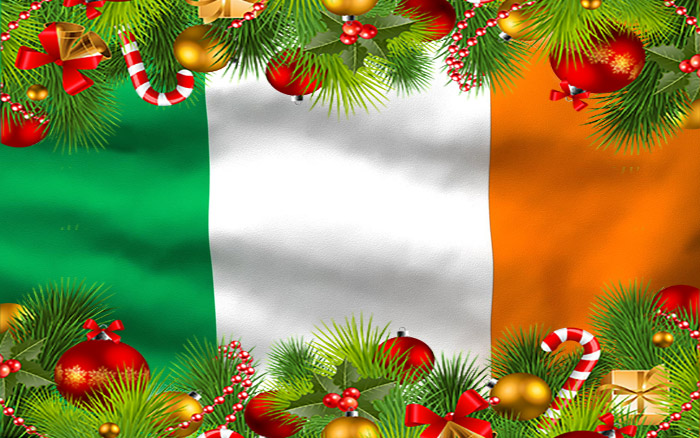
Ireland's best-loved Christmas custom is the candle in the window. On Christmas Eve, a candle is lit in a front window, traditionally by the youngest member of the household, and left to burn through the night. It is a welcome to Mary and Joseph, who found no room at the inn, and a sign that any traveller in need will find shelter. Tradition also links it to the time of the Penal Laws, when Catholic worship was suppressed and a lit window was said to tell a hidden priest that a house was safe for Mass. Today many homes use electric candles, and the light is also kept as a sign of remembrance for emigrants and absent family.
Christmas Eve and Christmas Day
Christmas Eve is busy: last-minute shopping, the lighting of the candle and, for many, midnight Mass or an earlier vigil Mass. In Dublin, the Christmas Eve busk on Grafton Street, begun by the musician Glen Hansard in 2010 and joined by some of Ireland's best-known performers, raises money for the Dublin Simon Community's work with homeless people. Following Hansard's death in July 2026, the charity has said the busk continues. Before bed, a mince pie and a drink are left out for Santa, Daidí na Nollag.
On Christmas Day, presents are opened in the morning, and many families go to Mass. Hardy swimmers take a Christmas morning dip in the sea, most famously at the Forty Foot in Sandycove, south of Dublin, often raising money for charity. The day centres on Christmas dinner, usually roast turkey served with a baked ham, followed by Christmas pudding. Christmas Day is a quiet day: shops close and pubs are traditionally shut.
St Stephen's Day and the Wren Boys
St Stephen's Day, 26 December, is a public holiday in Ireland and the Irish name for the day known in Britain as Boxing Day. It is a day for visiting relatives and neighbours, long walks and sport, especially football and horse racing, with the Leopardstown Christmas Festival in Dublin beginning on St Stephen's Day.
It is also Lá an Dreoilín, Wren Day. Groups of Wren Boys, dressed in suits of straw, masks and colourful old clothes, go from house to house and through the streets playing music, singing and dancing. In the past they hunted a real wren and carried it on a holly bush; today a fake or toy wren is used. The tradition is strongest in Dingle, County Kerry, where the wren parades take over the town, and the money collected traditionally goes to charity or to pay for a local dance.
In 2026, St Stephen's Day falls on a Saturday. Unlike in the UK, the holiday does not automatically move to the Monday: under Irish law, those entitled to it receive a paid day off within a month, an extra day of annual leave or an extra day's pay instead.
Nollaig na mBan: Women's Christmas
The Irish Christmas ends on 6 January, the feast of the Epiphany, also called Little Christmas (Nollaig Bheag). It is better known as Nollaig na mBan, Women's Christmas. Traditionally, the men of the house took over the cooking and chores for the day so that the women, who had done most of the work of Christmas, could rest and visit each other for tea, cake and conversation. The custom never died out in Cork and Kerry and has had a revival across Ireland, where many women now mark it with a meal or night out. Christmas decorations traditionally come down on this day.
Christmas around Ireland
| Place | Christmas highlights |
|---|---|
| Dublin | Christmas lights on Grafton Street and Henry Street; the Christmas Eve busk on Grafton Street; the Christmas Day swim at the Forty Foot, Sandycove; Leopardstown races |
| Kerry | Wren Boys in Dingle on St Stephen's Day; Nollaig na mBan |
| Cork | Spiced beef for Christmas; Nollaig na mBan in West Cork |
| Galway | Christmas market in Eyre Square |
| Waterford | The Winterval festival |
| Northern Ireland | Belfast's City Hall market and the Black Santa sit-out at St Anne's Cathedral |
Northern Ireland, part of the United Kingdom, shares most of these customs alongside British ones such as Boxing Day and the King's Christmas message; read more about Christmas in the UK.
Traditional Irish Christmas food
| Food | What it is | When or where |
|---|---|---|
| Roast turkey and baked ham | Served together as the main course | Christmas Day |
| Stuffing and roast potatoes | Breadcrumb, onion and herb stuffing; potatoes roast and often mashed too | Christmas Day |
| Brussels sprouts, carrots and parsnips | The standard vegetables | Christmas Day |
| Spiced beef | Beef cured with spices and saltpetre, then boiled and pressed | Cork, through the season |
| Christmas pudding | Steamed fruit pudding with brandy butter or custard | Christmas Day |
| Christmas cake | Rich fruit cake soaked in whiskey or brandy, with marzipan and icing | Made weeks ahead; eaten all season |
| Mince pies | Pastry tarts of spiced dried fruit | All season; one is left out for Santa |
| Trifle | Layers of sponge, jelly, custard and cream | Christmas and St Stephen's Day |
| Turkey sandwiches | Leftovers | St Stephen's Day |
Irish Christmas season dates 2026
| Date | Occasion | What happens |
|---|---|---|
| First Sunday of Advent | Advent wreaths and calendars begin | |
| Feast of the Immaculate Conception | Traditional day for Christmas shopping and for putting up the crib and tree | |
| Christmas Eve | Candle in the window; midnight Mass; the Grafton Street busk | |
| Christmas Day | Public holiday; presents, dinner and the Christmas swim | |
| St Stephen's Day (Wren Day) | Public holiday; Wren Boys; racing at Leopardstown begins | |
| New Year's Eve | Countdown celebrations, including in Dublin | |
| New Year's Day | Public holiday | |
| Nollaig na mBan (Little Christmas) | Women's Christmas; decorations come down |
Video: Christmas in Ireland
Christmas in Ireland: frequently asked questions
How is Christmas celebrated in Ireland?
In Ireland, Christmas is a family and religious festival. Homes put up a crib (nativity scene) and a tree, often from 8 December, and on Christmas Eve a candle is lit in the window and many attend midnight Mass. Christmas Day brings presents, a dinner of turkey and ham and a Christmas pudding, and St Stephen's Day on 26 December is a second holiday of visiting, sport and, in some places, the Wren Boys. The season ends with Nollaig na mBan on 6 January.
Why do the Irish put a candle in the window at Christmas?
The Christmas candle in the window is a sign of welcome to Mary and Joseph, who found no room at the inn, and to any stranger in need. It is traditionally lit on Christmas Eve, often by the youngest member of the family. Tradition also links it to the Penal Laws era, when a lit window was said to tell a hidden priest that the house was safe.
What is St Stephen's Day in Ireland?
St Stephen's Day, 26 December, is a public holiday in Ireland. It is a day for visiting family and friends, walks, football and horse racing, with the Leopardstown Christmas racing festival in Dublin beginning that day. In parts of the country, especially Dingle in County Kerry, Wren Boys in straw costumes and masks parade from house to house with music, collecting money for charity.
Who are the Wren Boys?
The Wren Boys are groups who go from house to house on St Stephen's Day, Lá an Dreoilín (Wren Day), dressed in straw suits, masks and colourful old clothes, playing music and singing. In the past they carried a dead wren on a holly bush; today a fake or toy wren is used. The custom is strongest in Dingle, County Kerry, and the money collected usually goes to charity or a local dance.
What is Nollaig na mBan?
Nollaig na mBan, Women's Christmas, falls on 6 January, the feast of the Epiphany, and is also called Little Christmas. Traditionally the men of the house took over the cooking and chores so that women could rest and gather with friends after the work of Christmas. It is strongest in Cork and Kerry, and today many women mark it with a meal or a night out. Christmas decorations traditionally come down on this day.
What do the Irish eat at Christmas?
A traditional Irish Christmas dinner is roast turkey with a baked ham, stuffing, roast and mashed potatoes, Brussels sprouts, carrots, parsnips, cranberry sauce and gravy. Dessert is Christmas pudding with brandy butter or custard, or trifle, and Christmas cake and mince pies are eaten through the season. In Cork, spiced beef is a Christmas speciality.
Is St Stephen's Day a public holiday in 2026?
Yes. St Stephen's Day is a public holiday in Ireland, but on 26 December 2026 it falls on a Saturday. Irish law does not automatically move it to the Monday: workers who are entitled to the holiday instead receive a paid day off within a month, an extra day of annual leave or an extra day's pay, as their employer decides.
How do you say Merry Christmas in Irish?
Merry Christmas in Irish is Nollaig Shona Duit when said to one person, and Nollaig Shona Daoibh when said to more than one. Nollaig means Christmas, and Daidí na Nollag is the Irish name for Santa Claus.
Usage terms
All images on this page are free to download for personal, non-commercial use, such as copying them at home or printing them as a reference. Please do not resell them, republish them on other websites or use them in advertising. Images © KidsGen.com.
Christmas in nearby countries
 CLAT Aspirants
 Diwali
 Thanksgiving
 Christmas
 Craft Ideas for Kids
 Fun and Jokes
 School Projects & Homework Help
 Hobbies

CLAT Preparation for Students
Class 12 Accounts Mock Papers
Thanksgiving Greetings
Chritmas Greeting Cards
Christmas Around the World
New Year 2027
Hanukkah Cards
7 Continents of the World
Moral Stories
Fairy Tales and Fables
Classic Stories
Betal Pachisi
Singhasan Battisi
Indian Mythology stories
School Projects
Quiz on Famous Footballers
Unsolved Mysteries
Pets & Pet Care
Wishes and Greetings in Many Languages