
Sita's Abduction - The Turning Point of the Ramayana
Introduction:
The abduction of Sita by Ravana is one of the most important events in the Ramayana. This moment sets the stage for the great battle between good and evil.
The story of Sita's abduction is one of the most crucial and tragic moments in the Ramayana. It marks the beginning of the battle between good and evil, setting in motion the events that would lead to the eventual war in Lanka. This event not only tests the strength of characters like Rama, Sita, and Lakshmana but also highlights the destructive force of desire and revenge.
Mareecha Becomes the Golden Deer
It begins when Ravana, the demon king of Lanka, becomes enamored by the beauty of Sita, the wife of Rama. Having heard of her unparalleled beauty, Ravana is consumed by greed and desire. Unable to forget her, he devises a cunning plan to abduct her. Ravana turns to his uncle, Mareecha, a powerful demon capable of shape-shifting. Despite Mareecha's warnings about the dangers of provoking Rama, Ravana's determination to abduct Sita leads him to threaten Mareecha into helping him. Reluctantly, Mareecha agrees to transform into a golden deer, knowing the trouble this would cause.
Sita's Wish and Rama's Pursuit
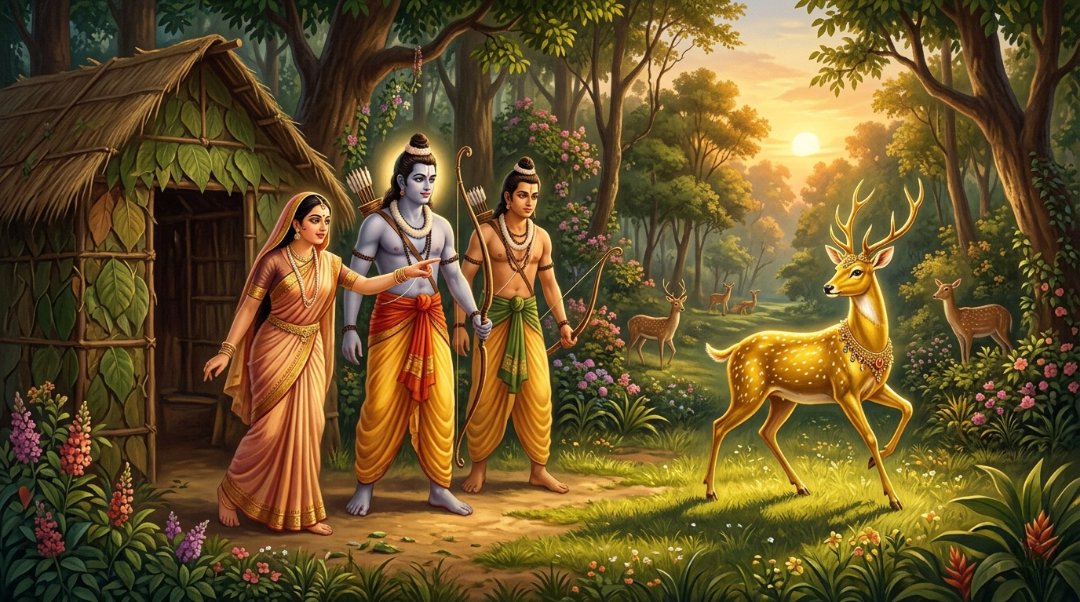
The golden deer appears near the hut where Rama, Sita, and Lakshmana are residing. Captivated by its beauty, Sita insists that Rama capture it for her. Despite Lakshmana's warnings that the deer might be a trap, Sita's desire overpowers her judgment. Rama, ever the devoted husband, agrees to pursue the deer, leaving Sita and Lakshmana behind.
The Deceptive Cry
As Rama follows the deer deeper into the forest, the situation becomes more dire. When Rama shoots the deer, it reverts to its true form, and in a final act of desperation, Mareecha cries out for help in Rama's voice. Hearing this, Sita becomes alarmed, thinking Rama is in danger, and urges Lakshmana to go to his aid.
Lakshmana Leaves Sita
However, Lakshmana is reluctant to leave Sita alone, as he had been instructed by Rama to stay by her side. But Sita's insistence moves him, and he agrees to search for Rama, drawing a protective line around their hut. He tells Sita not to cross it, as no harm will come to her if she stays within the boundaries.
Ravana's Trick and Sita's Abduction
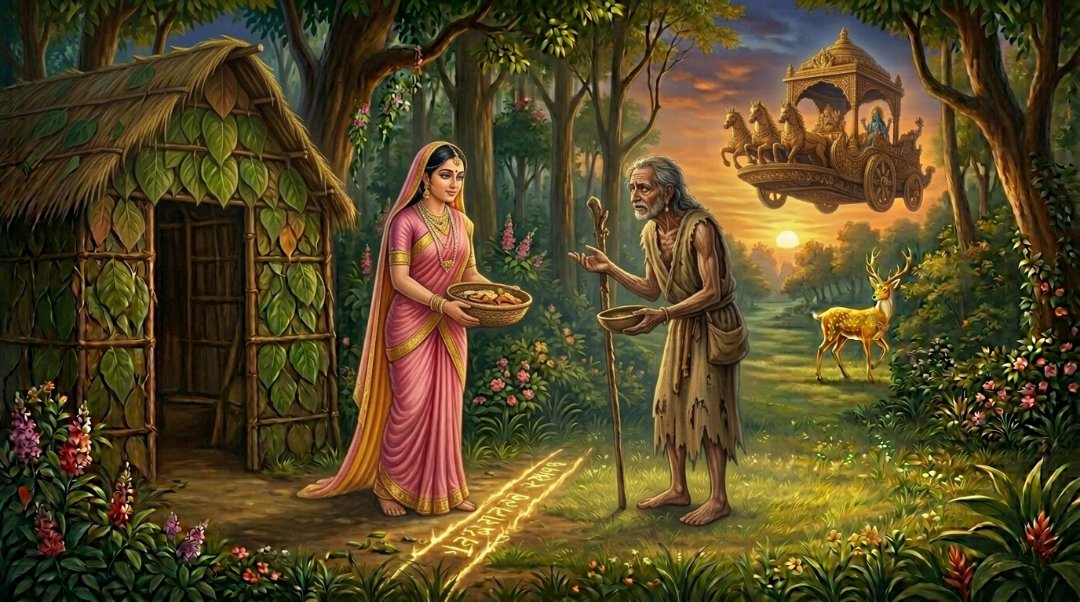
As Lakshmana leaves, Ravana, who has been watching, disguises himself as a helpless old hermit. He approaches the hut, begging for food and water. Using his deception, he convinces Sita to step outside the protective line to offer him some alms. The moment she does, Ravana reveals his true identity, and in a flash, he seizes her. Despite her desperate cries, Ravana forcibly drags Sita away and transports her to his flying chariot, heading to Lanka.
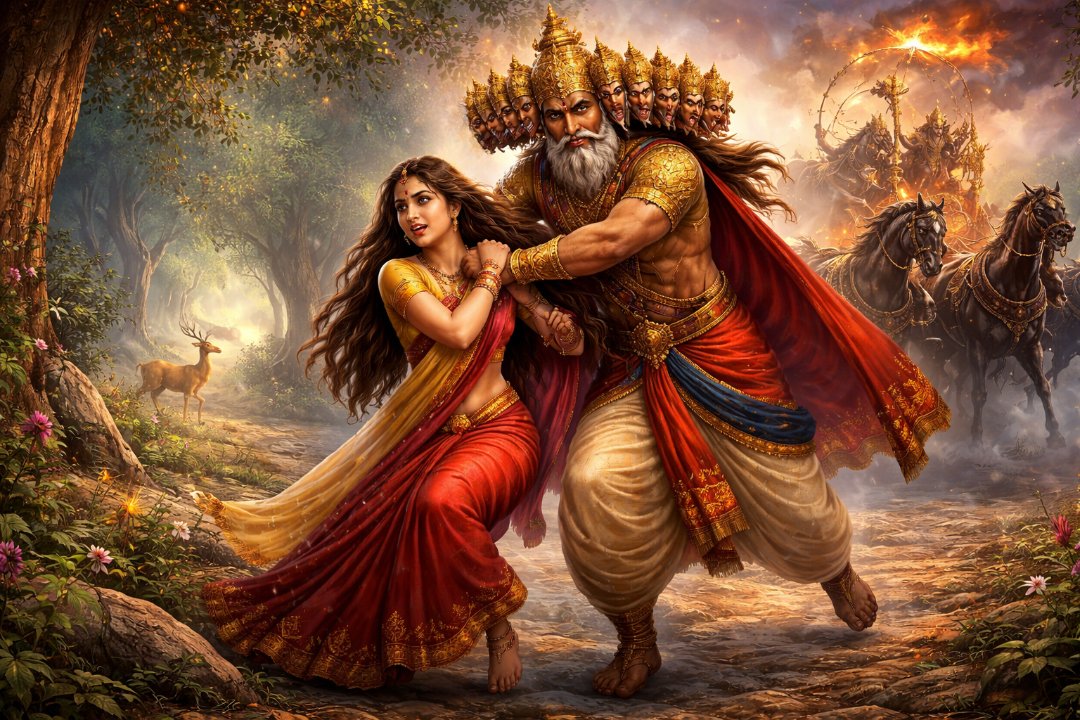
Sita's abduction is not only the theft of a woman but the beginning of a larger, cosmic struggle between good and evil. It also represents the vulnerable and often painful position of women in ancient mythologies, where their virtue and beauty often attract powerful and destructive forces. This event begins the chain of trials and battles that Rama, aided by allies like Hanuman, would face in his quest to rescue Sita and defeat Ravana.
Lessons from the Story
This story teaches us:
- Deception can lead to great consequences
- Trust and caution are important
- Evil may appear in disguise
- Good ultimately triumphs over evil
SHARE NOW


 Back to School
 Craft Ideas for Kids
 Benefits of Yoga for Kids
 Fun and Jokes
 Stories for Kids
 School Projects & Homework Help
 Hobbies
