STEP 1 - Prepare the main hull
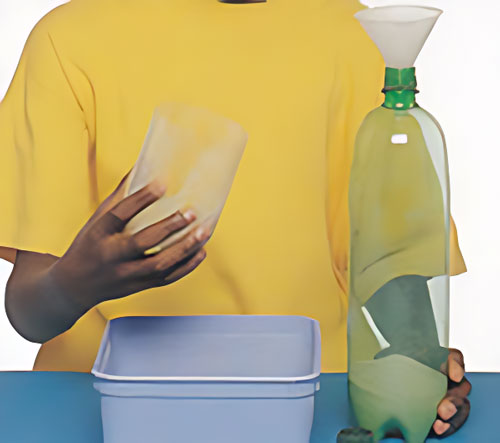
Fill a large plastic bottle with sand using a funnel. Add sand until the bottle just sinks when tested in a tank of water - do small adjustments to find the correct amount.

School project • Easy hands-on science demo


Explore how real submarines dive and rise with this fun, hands-on school project! Using simple materials like plastic bottles, sand, and straws, kids can build a working model that demonstrates buoyancy and ballast control. Perfect for classroom demos, science fairs, or at-home experiments, this activity makes a complex science concept easy to understand and exciting to try.

Author: KidsGen Editorial Team | Published: | Updated:
A submarine dives by making itself heavier; it surfaces by making itself lighter. This project shows the same idea using a simple model with side tanks that can be flooded and emptied. It's perfect for classroom demonstrations and science fairs.
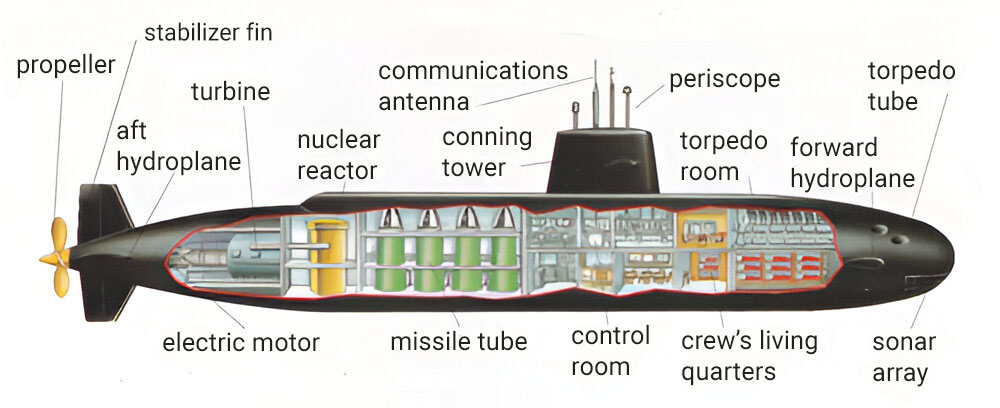
A modern submarine, such as this nuclear ballistic missile submarine, is almost as long as a football field - 100yd. It has an engine and propeller at the stern, and is operated by a crew of 140. Steam drives the turbines that turn the propeller. A submarine's hull is strong, but few submarines can go below 1,600ft.
Fill a large plastic bottle with sand using a funnel. Add sand until the bottle just sinks when tested in a tank of water - do small adjustments to find the correct amount.
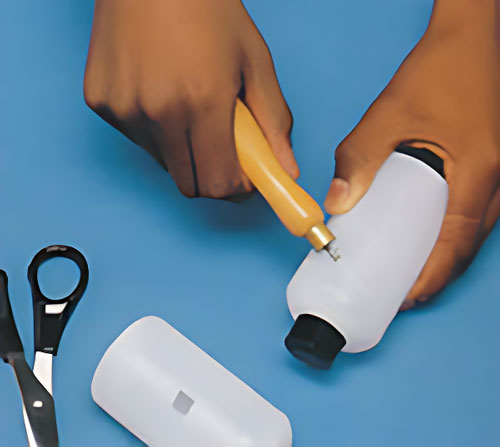
Make a large hole in one side of two small plastic bottles. On the opposite side make a small hole big enough to insert a plastic straw.
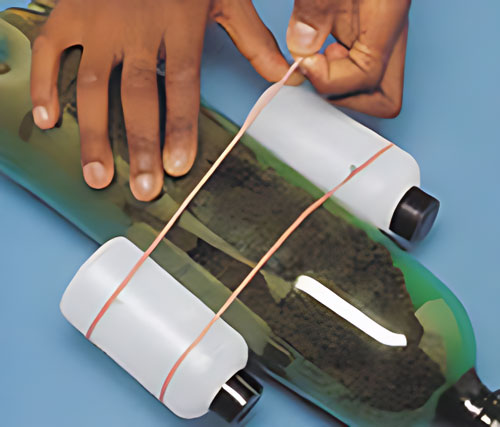
Attach the two small bottles to both sides of the large bottle using rubber bands. Twist so the small hole on each points upward.
Push a plastic straw into each small hole so a little protrudes. Seal the base with non-hardening modelling material to make a watertight joint.
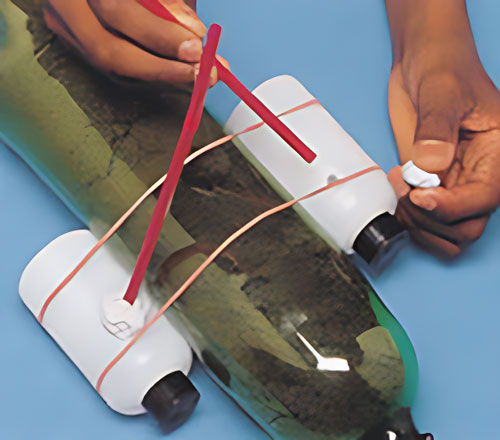
Fit a small bulldog clip about halfway down each straw. The clip will squash the straw and stop the air being forced out by the surrounding water.
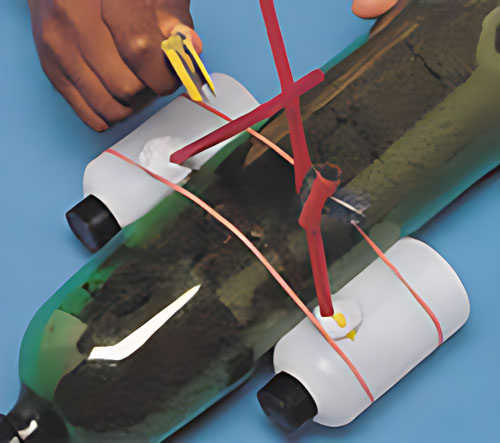
Put your model in a tank of water. With the clips on it should float. Remove the clips to let water flood the tanks - the model will sink. To make it surface, blow slowly into both straws to force water out; once surfaced reapply clips to hold it floating.

To make the submarine surface again, blow slowly into both straws at once. The air will force the water out of the buoyancy tanks, and the submarine will rise to the surface.
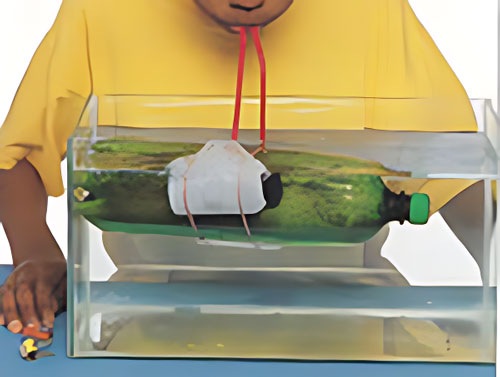
When your model submarine has resurfaced, keep blowing slowly into the tanks. Replace each bulldog clip and your model submarine will remain floating on the surface.

Estimated time: ~30–60 minutes
Buoyancy control: flooding and emptying side tanks changes overall weight - the same principle used by real submarines.

 CLAT Aspirants
 Durga Puja
 Craft Ideas for Kids
 Benefits of Yoga for Kids
 Fun and Jokes
 Stories for Kids
 School Projects & Homework Help
 Hobbies