
Story Summary
This classic Indian folktale explains the nature of the Sun, Wind, and Moon through a lesson on filial piety and selfishness.
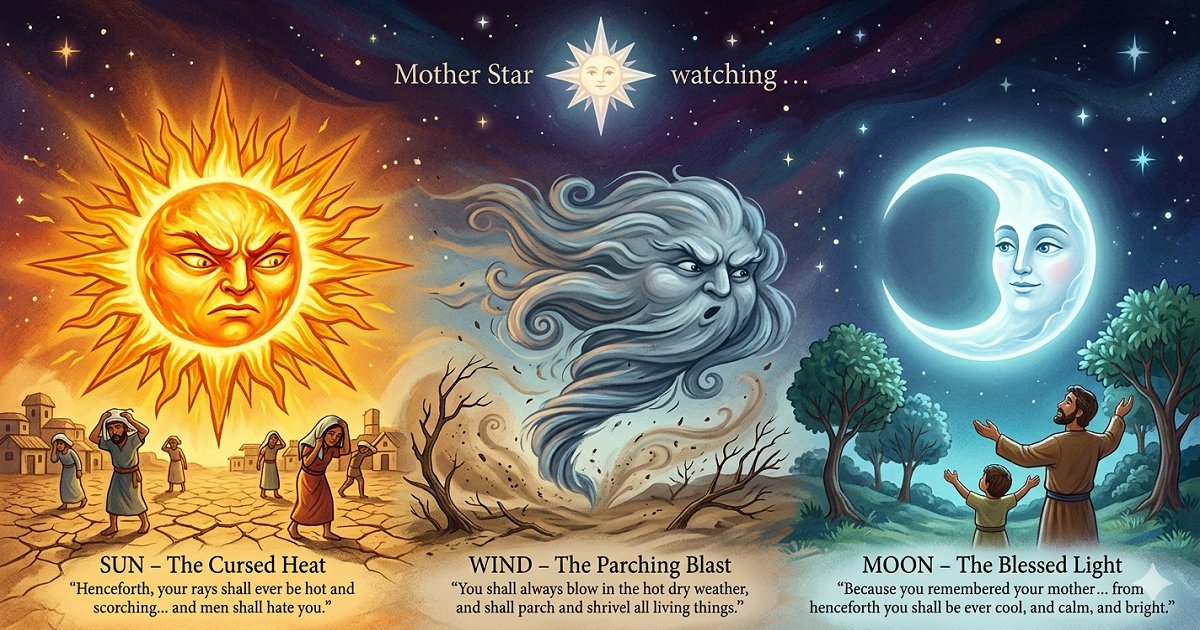
Full Story
One day Sun, Moon, and Wind went out to dine with their uncle and aunts Thunder and Lightning. Their mother (one of the most distant Stars you see far up in the sky) waited alone for her children's return.
Now both Sun and Wind were greedy and selfish. They enjoyed the great feast that had been prepared for them, without a thought of saving any of it to take home to their mother-but the gentle Moon did not forget her. Of every dainty dish that was brought round, she placed a small portion under one of her beautiful long finger-nails, that Star might also have a share in the treat.
On their return, their mother, who had kept watch for them all night long with her little bright eye, said, "Well, children, what have you brought home for me?" Then Sun (who was eldest) said, "I have brought nothing home for you. I went out to enjoy myself with my friends-not to fetch a dinner for my mother!" And Wind said, "Neither have I brought anything home for you, mother. You could hardly expect me to bring a collection of good things for you, when I merely went out for my own pleasure." But Moon said, "Mother, fetch a plate, see what I have brought you." And shaking her hands she showered down such a choice dinner as never was seen before.
Then Star turned to Sun and spoke thus, "Because you went out to amuse yourself with your friends, and feasted and enjoyed yourself, without any thought of your mother at home-you shall be cursed. Henceforth, your rays shall ever be hot and scorching, and shall burn all that they touch. And men shall hate you, and cover their heads when you appear."
(And that is why the Sun is so hot to this day.)
Then she turned to Wind and said, "You also who forgot your mother in the midst of your selfish pleasures-hear your doom. You shall always blow in the hot dry weather, and shall parch and shrivel all living things. And men shall detest and avoid you from this very time."
(And that is why the Wind in the hot weather is still so disagreeable.)
But to Moon she said, "Daughter, because you remembered your mother, and kept for her a share in your own enjoyment, from henceforth you shall be ever cool, and calm, and bright. No noxious glare shall accompany your pure rays, and men shall always call you 'blessed.'"
(And that is why the moon's light is so soft, and cool, and beautiful even to this day.)
Key Characters
- Moon: The generous daughter
- Sun: The selfish eldest
- Wind: The thoughtless one
- The Star (Mother): The patient judge
- Thunder & Lightning: The hospitable hosts
Moral of the Story
Gratitude and thoughtfulness toward those who love us - even in our happiest moments - is the greatest of virtues. Selfishness and forgetting those who wait for us brings its own punishment, while a small act of kindness for a parent shines forever.
Why Kids Love This Story
- It answers a real question - Every child has looked up and wondered: why is the Sun so hot? Why is the Moon so soft? This story hands them a magical, memorable answer - and that feels like receiving a secret about the universe.
- The underdog wins beautifully - Moon does not argue or demand recognition. She simply does the right thing quietly. When her reward comes, it is more glorious than anything her brothers got from their selfish feast. Children find deep satisfaction in this.
- A mother who just waits - The Star's vigil - waiting with her "little bright eye" all through the night - is an image children immediately feel. It connects the story to their own experience of a parent waiting up for them.
- Fairness, instantly delivered - The consequences are clear, swift and perfectly matched to the behaviour. Sun and Wind did exactly what they said they did - and got exactly what they deserved. Young readers love this kind of poetic justice.
- Everyday nature explained - Hot summer wind? Blazing afternoon Sun? The soft glow of moonrise? This story transforms familiar daily experiences into living mythology - children will never look at a clear night sky the same way again.
- A moral that never preaches - There is no lecture, no pointed lesson. The story just shows what happened - and children draw the meaning entirely on their own. That discovery feels like their own insight, and that makes it stick.
FAQs About the Story
Why is the Sun so hot according to the story?
In the story, the Star (their mother) cursed the Sun because he selfishly feasted without saving any food for her. As punishment, his rays became scorching and burning, making men cover their heads and hate the heat. The story is a "pourquoi tale" — a folk narrative that explains why things in nature are the way they are.
Why is the Moon's light so soft and beautiful?
Unlike her brothers, Moon remembered her mother and tucked portions of every dish under her fingernails to bring home. The Star blessed her in return, saying her light would forever be cool, calm and beautiful, and that all people would call her "blessed." This is why moonlight is gentle and soothing compared to the harsh glare of the Sun.
What is the moral of this story?
The story teaches that gratitude and thoughtfulness toward those who love us — especially parents — is always rewarded. Selfishness and forgetting family in moments of pleasure has lasting consequences. The moral is delivered entirely through the story's events, making it easy for young children to understand and remember.
Who were Thunder and Lightning in the story?
Thunder and Lightning are described as the uncle and aunt of Sun, Moon and Wind. They hosted the dinner feast that sets the whole story in motion. Though they have no direct role in the moral, they represent the kind of social occasion — a party, a celebration — where it is easiest to forget those who are waiting at home.
What type of folk tale is this?
This is a "pourquoi tale" (from the French word for "why") — a folk story that explains why something in the natural world is the way it is. Pourquoi tales are found in almost every culture worldwide and are among the oldest forms of storytelling. This particular tale originates from Indian folk literature and is suitable for children aged 5 and above.