
Story Summary
In an old Mizo village, people believed that the longer a child's name, the greater their fortune. Two brothers live side by side: one called Semu, the other saddled with a name fourteen words long. When Semu falls into the well, his short name travels fast enough to save him. When his long-named brother falls in, every link in the chain of communication must repeat the full name - and by the time help arrives, it is too late. The village changed its tradition that day.
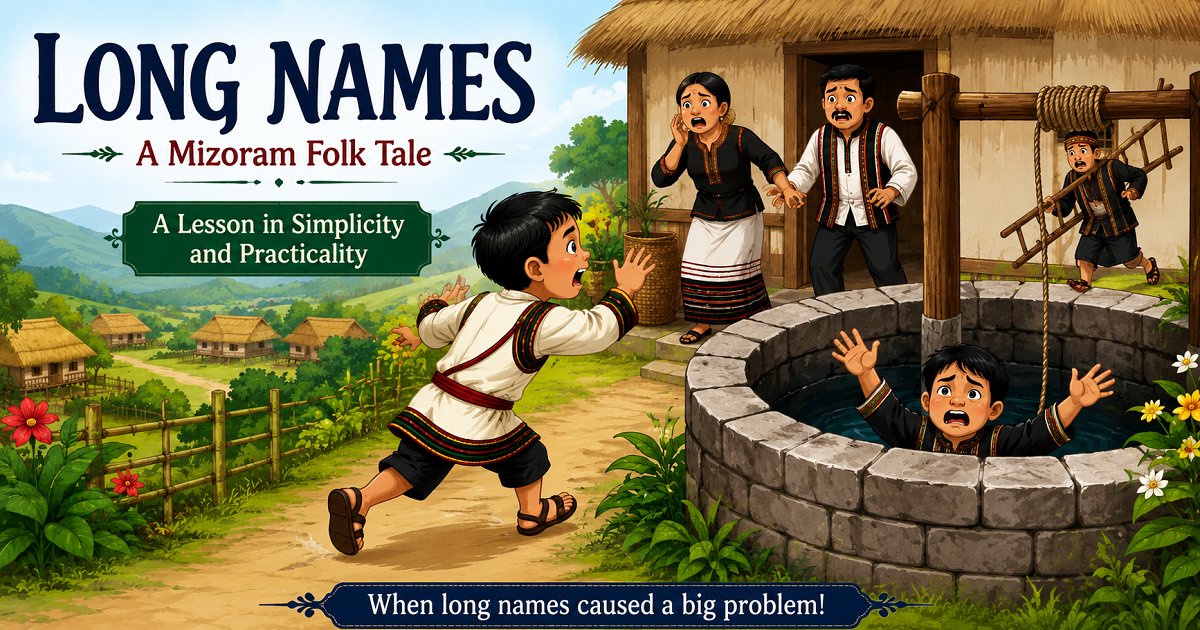
Full Story
One sunny afternoon, the two brothers were playing together in the garden near the family well. They chased each other, laughed, and leaned over the edge to peer into the water below - as children will. Then, without warning, Semu lost his footing and fell in with a splash.
His long-named brother ran immediately to their mother, breathless with panic.
"Mother! Semu has fallen into the well! Please do something!"
"What? Semu has fallen into the well?" cried the mother. "Let me call your father!" She ran to her husband, shouting the same four words: "Semu has fallen into the well!"
"Semu has fallen into the well?" the father cried, and sprinted to the gardener: "Semu has fallen into the well!"
The gardener snatched up a ladder, descended swiftly, lifted the soaking boy in his arms, and carried him safely out. Semu was saved. The family breathed with relief. The name had moved fast enough.
A few days passed. The boys were playing near the same well again. And then - as if fate had not yet finished its lesson - the long-named brother slipped and tumbled in.
Semu ran to his mother as fast as his legs would carry him, and gasped out the message:
"Mother! Tala Bini Bendo Toko Miki Sembu Chima Chimena Kit Kit Kuki Mizi Pizi Hala has fallen into the well! Please do something!"
"What?" cried the mother. "Tala Bini Bendo Toko Miki Sembu Chima Chimena Kit Kit Kuki Mizi Pizi Hala has fallen into the well? Let me call your father!" She ran to her husband, and repeated every syllable in full.
"Tala Bini Bendo Toko Miki Sembu Chima Chimena Kit Kit Kuki Mizi Pizi Hala has fallen into the well?" the father cried, and ran to the gardener to repeat it all again.
By the time the full name had been spoken, listened to, understood, and passed from mother to father to gardener - with every careful syllable - it was too late.
The poor boy had drowned.
And the whole village knew why.
From that day forward, the people of the village gave their children short, simple names. The tradition of long names - begun with such hope and love - was quietly, sadly, set aside.
Key Characters
- Semu: The short-named brother.
- Tala Bini Bendo Toko...: The long-named brother
- The Mother: She acts with love and speed
- The Gardener: The man who saves Semu with ease and arrives too late for his brother.
Moral of the Story
Tradition must be weighed against consequence. What we give our children in the name of blessing should not, in practice, become a burden. The greatest fortunes are won not by grand gestures, but by clarity, swiftness, and wisdom in the moments that matter most.
Why Kids Love This Story
- The name itself - Tala Bini Bendo Toko Miki Sembu Chima Chimena Kit Kit Kuki Mizi Pizi Hala is a tongue-twister, a challenge, and a delight - children love to memorise it and say it as fast as possible.
- Perfect parallel structure - The same event happens twice, with one difference. Children instantly grasp the logic - and feel the dread building on the second read-through.
- A window into Northeast India - Most children in India and beyond know very little about Mizoram. This story opens a door into its culture, landscape, and oral tradition.
- The lesson feels earned - Nobody lectures. Nobody explains. The story simply shows what happened - and trusts the reader to understand. That respect for the child's intelligence makes the lesson land harder.
- Genuine stakes - Unlike many folk tales, this one has real consequences. The ending is bittersweet and memorable, not tidy and reassuring - which is exactly why it stays with you.
- Sparks conversation - "Would you change a tradition to save someone?" is a question children engage with deeply, and this story makes it vivid and real.
FAQs About the Story
Where does this folk tale come from?
This is a traditional oral folk tale from the Mizo people of Mizoram, a state in northeast India. Mizo folk literature - known as thlasi - is rich with cautionary tales, origin stories, and moral parables passed down through generations of communal storytelling long before being written down.
Why is Semu saved but his brother is not?
When Semu falls in, his short name travels from person to person almost instantly. When his brother falls in, each link in the chain of communication must repeat all fourteen words in full - losing precious seconds each time. By the time the gardener is reached, the delay has proved fatal. Same situation, same family, same well - but one name made the difference.
What age group is this story best for?
Suitable for children aged 5 and above. Younger children enjoy the comic repetition of the long name aloud, while older children and adults appreciate the story's logic, its genuine emotional weight, and the cultural context of Mizoram. Its parallel structure makes it excellent for English comprehension exercises in primary school.