
Story Summary
A hardworking farmer in Haryana grows a watermelon so enormous that he cannot bear to sell it at market. He decides it deserves to go to the king himself. That same night, the king - wandering his kingdom in disguise - stumbles upon the watermelon and tests the farmer with a sharp question. The farmer's blunt, honest reply sets up a delightful twist the next morning at court - one that earns him not only the king's admiration but a generous royal reward.
Full Story
In a small village in Haryana, there lived a hardworking farmer. One season, he had grown a watermelon so enormous in his garden that nothing like it had ever been seen in the region. The farmer was immensely proud. Each morning he would stand over it and think: It is one of a kind! I shall take it to the market and sell it for a fine price.
But the very next moment he would think: No - the market is no place for my watermelon. I shall put it in an exhibition!
Finally, after much deliberation, the farmer made up his mind. He would take the watermelon to the king. I cannot wait for tomorrow!
he said to himself with a smile. The king will surely love my gift - and reward me with whatever I wish for!
With these happy thoughts warming his heart, the farmer went contentedly to sleep.
Now, the king had a longstanding habit. Every night he would disguise himself as a common man and walk quietly through his kingdom to see for himself whether his subjects were safe and well. That very night, dressed in a simple cotton dhoti, he passed by the farmer's house - and stopped dead in his tracks. The massive watermelon gleaming in the moonlight in the farmer's garden had caught his eye. He was so enchanted by the magnificent fruit that he knocked on the farmer's door.
The farmer, roused from sleep, opened the door with a frown. Who are you, and what do you want at this hour of the night?
he demanded. I am a poor man,
said the king calmly, and I wish to buy your watermelon.
THE WATERMELON? NO!
said the farmer, blocking the doorway. Then what in the world are you going to do with it?
asked the king. I am going to present it to the king,
replied the farmer proudly. But what if the king doesn't like it?
the stranger asked. The farmer drew himself up and snorted: Then may he go to the devil!
The disguised king quietly smiled, wished the farmer goodnight, and continued on his walk.
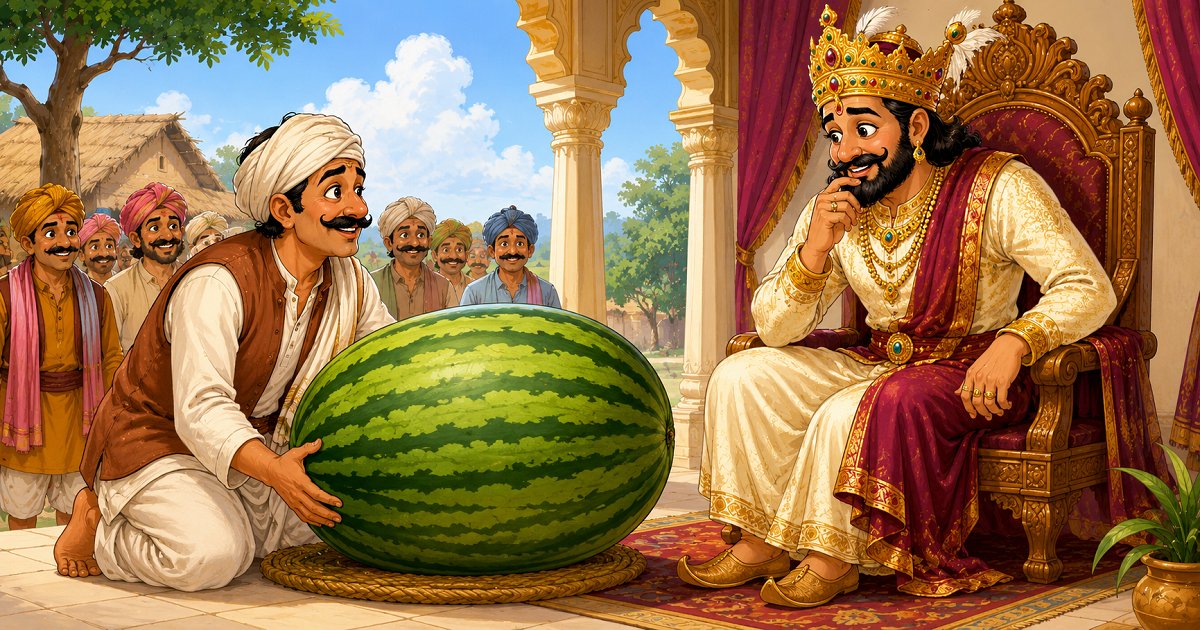
The next morning, the farmer carefully loaded the watermelon onto his cart and made his way to the royal court. He carried it with both hands into the grand hall and laid it before the throne. As he lifted his eyes to salute the king - he froze. He recognised the face instantly. It was the same man who had knocked on his door the night before. The farmer's blood ran cold.
But he was a man of composure. He gathered himself, bowed deeply, and said: I have brought you a watermelon, Your Majesty! It is the largest in all the land. You will most certainly like it!
The king leaned forward on his throne, eyes glinting with amusement. Hmm. But what if I do not like it?
There was a hush in the court. The farmer met the king's gaze steadily and said, very softly: Well... in that case... Your Majesty already knows my answer.
The court erupted. The king burst into laughter and rose from his throne. I accept your present, O farmer!
he declared warmly. It is the finest gift I have ever received.
And the farmer was richly rewarded - not only for his magnificent watermelon, but for his unshakeable wit, his honest character, and the rare courage to be the same man before a king as he was at his own doorstep at midnight.
Moral of the Story
The story teaches that honesty, hard work, and consistency of character are always rewarded. The farmer impresses the king not with wealth or flattery but with his genuine pride in his work and his courage to be the same person in public as he was at midnight. Wit and integrity, the story tells us, are worth more than gold.
Key Characters
- The Farmer: Earthy, good-hearted hero. He is proud of his work, speaks without pretence.
- The King: A wise, curious ruler who tests his subjects in disguise.
- The Watermelon: More than a fruit, it is a symbol of the farmer's pride, dedication, and the fruits of honest labour.
Why Kids Love This Story
- Children love the moment the farmer recognises the king - and the suspense of what he will say next is delicious.
- The farmer is poor and uneducated, yet he outsmarts everyone in the royal court with a single sentence.
- A secret identity is always thrilling - children love guessing if the farmer already knows who the stranger is.
- Every child knows the feeling of being proud of something they've made or grown. The farmer's love for his watermelon is universal.
- The story is built on quick exchanges that are easy and fun to act out or read aloud in class.
- The farmer's honesty is rewarded - reinforcing children's deep instinct that fairness and integrity matter.
FAQs About the Story
What is The Farmer's Present story about?
A hardworking farmer in Haryana grows a giant watermelon and decides to present it to the king. The night before, the king - disguised as a poor man - visits and asks what the farmer will do if the king dislikes his gift. The farmer boldly says the king can "go to the devil." At court the next day, the farmer cleverly refers back to this answer, making the king laugh and earning a generous royal reward.
Where does The Farmer's Present folk tale come from?
This folk tale originates from Haryana, a state in northern India. Haryana has a strong oral storytelling tradition that celebrates the earthy wisdom and straight-talking humour of village life. Stories like this one reflect the Haryanvi cultural value of honest, plain speech regardless of one's audience.
Why did the king reward the farmer?
The king rewarded the farmer for two reasons: the exceptional watermelon itself, which represented the farmer's skill and dedication; and the farmer's brilliant wit in referencing his midnight answer at court - without repeating anything inappropriate. The king admired that the farmer was honest and consistent, the same man before royalty as he was at his own gate.