

Indian folk tales are traditional stories from India that have been told and retold for hundreds, sometimes thousands, of years. Long before they were ever written down, these folk tales from India were shared aloud - by grandparents at bedtime, by travelling storytellers, and by teachers passing wisdom to the next generation. Each story is short and clear, built around a single idea, and that is exactly why it has survived so long.
Why do stories this old still make sense today? Because the situations inside them have not changed. People still face choices, mistakes, trust, and consequences. A clever rabbit escapes danger. A greedy jackal loses everything. A wise king makes the right decision at the right moment. The setting may be an ancient Indian forest or palace, but the lesson lands just as clearly for a child reading in a classroom today.
This page is a guide to the major collections of Indian folk tales for kids. The stories come from famous sources such as the Panchatantra, the Hitopadesha, the Buddhist Jataka tales, and Singhasan Battisi, along with many regional moral stories. Each collection has its own flavour, but all of them share the same gift: a lesson a child can understand without it ever needing to be explained.
Parents and teachers around the world use these stories because they simply work. Children remember them, retell them, and slowly begin to apply the ideas in real life. If you would like to read traditional tales from other cultures too, see our wider folk tales collection of stories from around the world.
A folk tale is a traditional story with no single author, shaped over generations by the many people who told it. Indian folk tales share a few clear features. They are usually short and self-contained, so a whole story can be read in a few minutes. They rely on simple, recognisable characters - often animals such as the lion, the jackal, the crow, or the mouse - each standing for a human quality like pride, cunning, or loyalty. And they almost always close with a moral: a single idea about how to live wisely and well.
Indian storytelling is not one single tradition but several, each with its own character. The main types of folk tales from India gathered on this site are:
These stories are not long or complicated, and that is precisely why they work better than lectures. A child who is told to "be honest" may forget the instruction; a child who reads what happens to a dishonest character remembers the story. Indian folk tales for kids:
Each section below is a complete collection of folk tales from India. Pick the tradition that interests you and start reading - every story is free and ends with a clear lesson.
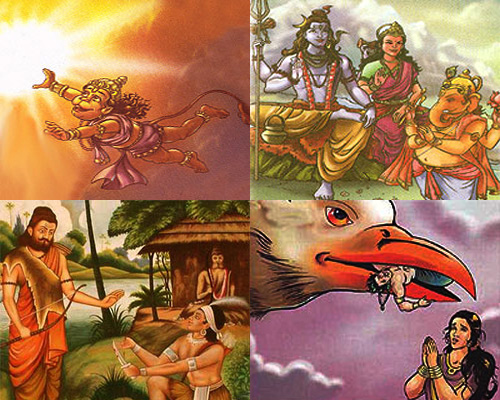
A collection of popular mythological stories that will take you to times of yore. Know more about deities you worship everyday.
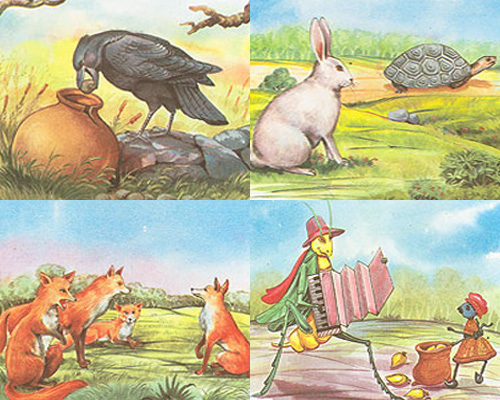
An exhaustible collection of pictorial moral stories for the young readers.
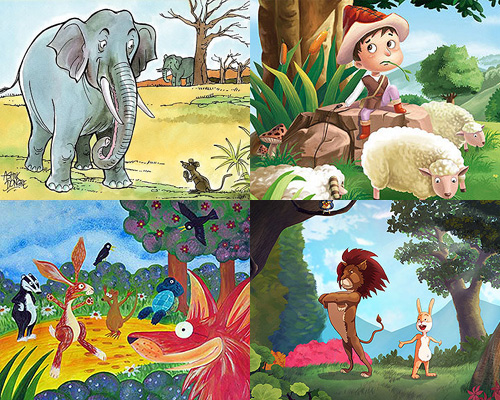
A collection of the most popular Panchatantra stories to you, for they are loved by adults and kids alike
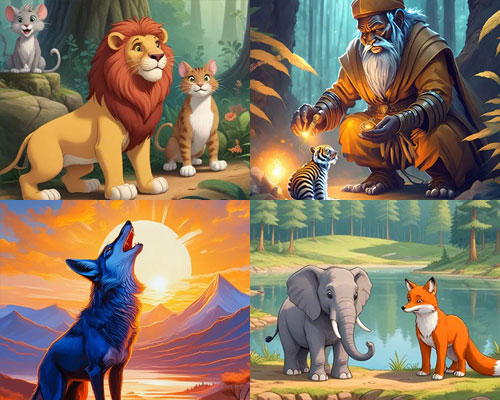
Explore the Hitopadesha, a classic collection of Indian fables! Enthralling animal tales can teach you valuable life lessons.
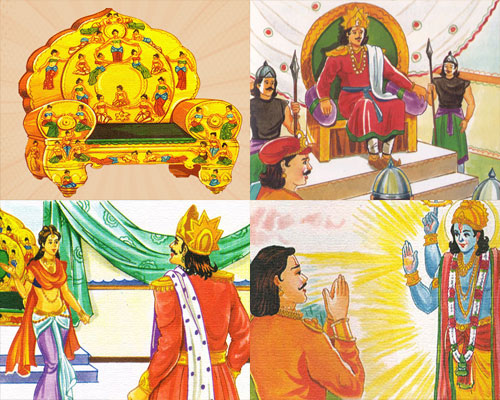
Singhasan Battisi was the fantastic brilliant position of authority of King Vikramaditya, the King of Kings who led in the second century, BC.
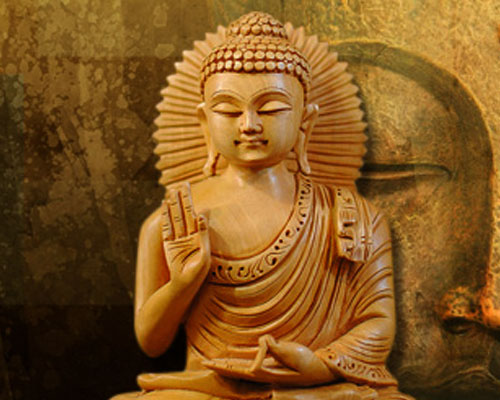
A collection of Buddha Reincarnation Stories and Buddhist Jataka short stories, for kids.
Far from being only old stories, folk tales from India are still in active use in homes and classrooms around the world:
Panchatantra stories, for example, appear in school textbooks both in India and abroad. Many educational publishers include them because they explain complex ideas - fairness, foresight, the cost of greed - in a form a young child can grasp at once.
If you are new to Indian folk tales, these are the best collections to begin with:
Indian folk tales are traditional stories from India passed down orally through generations. They use simple characters and everyday situations to teach values such as honesty, intelligence and kindness.
The best known folk tales from India come from the Panchatantra and Hitopadesha collections, the Jataka tales of the Buddha, and Singhasan Battisi, along with many regional moral stories.
Yes. The Panchatantra is one of the oldest and most influential collections of Indian folk tales, written as a set of animal fables that each end with a clear moral lesson.
Indian folk tales are short and easy to follow, and they show consequences instead of stating rules. This helps children think for themselves while learning cultural values in an enjoyable way.
 Back to School
 Craft Ideas for Kids
 Benefits of Yoga for Kids
 Fun and Jokes
 Stories for Kids
 School Projects & Homework Help
 Hobbies
