Critical Thinking
Stories present dilemmas where characters must think their way out of trouble — training children to reason rather than react.
 Change Language:

Discover 26 timeless tales from the Panchatantra, one of the world's oldest story collections. Written in simple English with vivid characters and powerful moral lessons for children aged 4–14.
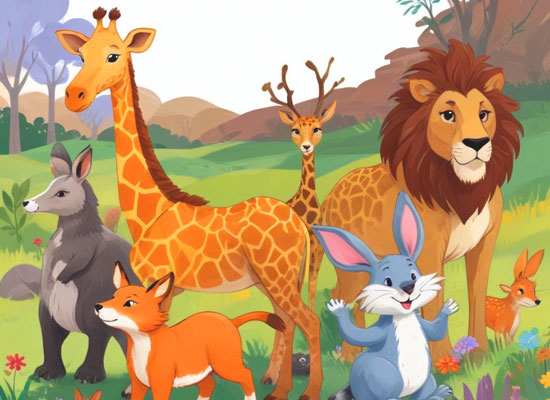
The Panchatantra is a collection of ancient Indian fables, believed to have been composed around 300 BCE by the scholar Vishnu Sharma. The name means "five treatises" — five books of stories, each exploring a different aspect of friendship, strategy, and everyday wisdom.
Originally written in Sanskrit, the tales from the Panchatantra were translated into more than 50 languages and spread across Asia, Europe, and the Middle East — making it one of the most widely translated books in history. The stories feature talking animals, clever humans, and memorable villains who all help children learn to think clearly about life.
These Panchatantra tales use a story-within-a-story structure that invites children to draw their own conclusions, building moral reasoning skills that are just as important today as they were 2,500 years ago. Below you can read 26 of the best-loved stories from the Panchatantra, retold in plain, easy English.
Ancient stories. Modern benefits. Here's why parents and teachers love them.
Stories present dilemmas where characters must think their way out of trouble — training children to reason rather than react.
Multiple stories explore what real friendship means, and why loyalty and honesty are more valuable than cunning or wealth.
Engaging animal characters and cliffhanger endings make children eager to turn the page — a gateway to a lifelong reading habit.
Connect children with India's rich storytelling tradition and one of humanity's greatest literary achievements.
Each story ends with a clear moral, helping children develop a framework for distinguishing right from wrong in daily life.
Relatable characters facing fear, greed, joy, and grief help children understand and name their own emotions.
26 classic tales from the Panchatantra in simple English — perfect for reading aloud or independently.
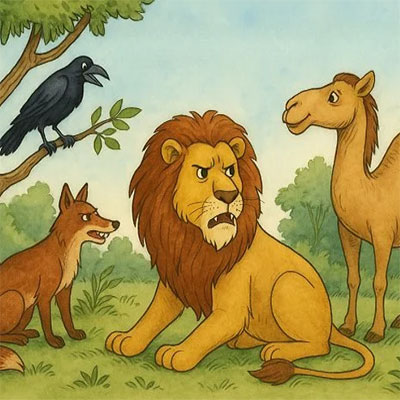
A lion named Madotkata keeps three selfish friends — a jackal, a crow, and a wolf. When a new, loyal friend arrives, the truth about fake friendship is revealed.
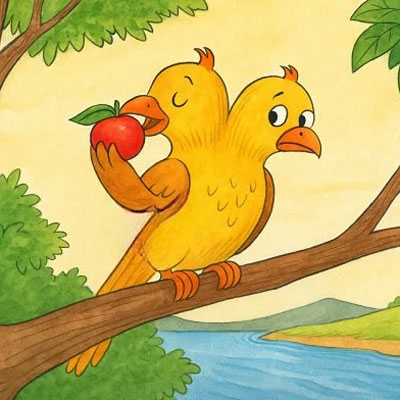
A strange bird has two heads. When one head eats something delicious, the other head grows jealous — with disastrous results. A timeless lesson about envy.
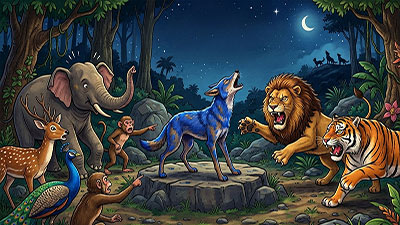
A jackal falls into a vat of blue dye and uses his strange new colour to trick the other animals into crowning him king. But a pretender cannot hide his true nature forever.
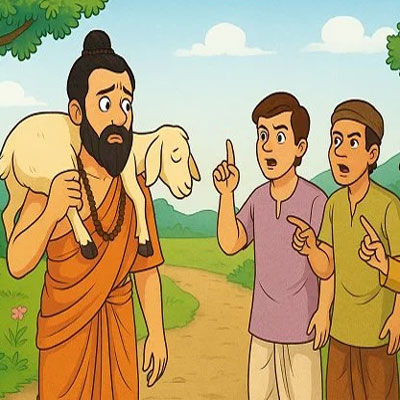
Brahmin Mitra Sharma is tricked by three cunning thieves who convince him his goat is actually a dog. A warning about the danger of persistent lies.
Mahachaturaka the jackal stumbles upon an unexpected feast but must think fast to secure his meal. A celebration of quick thinking and resourcefulness.
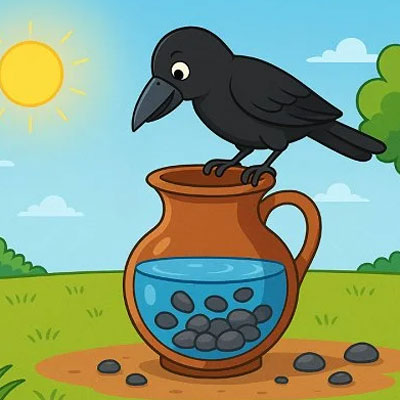
A thirsty crow cannot reach the water in a pitcher. By dropping in pebbles one by one, it cleverly raises the water level. A lesson in persistence and ingenuity.
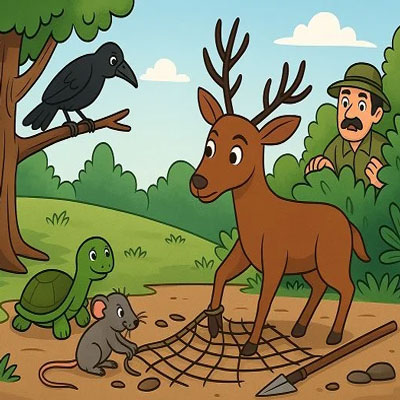
A deer, crow, and mouse live in harmony until a hunter threatens their lives. Their true friendship — and an unexpected fourth companion — saves the day.
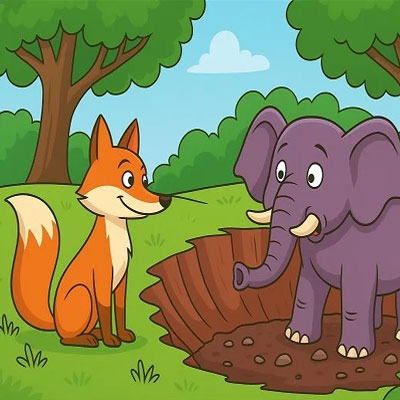
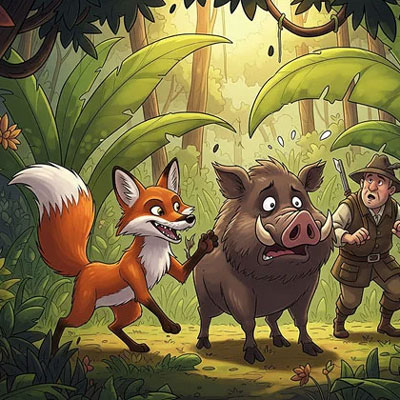
A cruel elephant terrorises the jungle, uprooting trees and bullying smaller animals. A clever fox engineers the elephant's comeuppance using only wit.
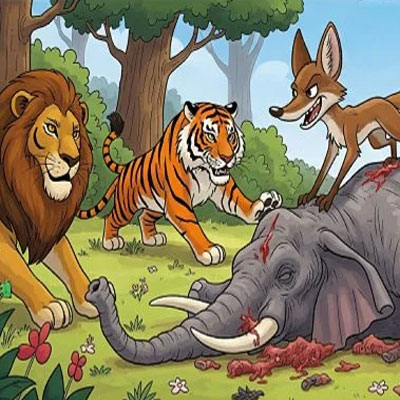
A hungry jackal discovers two dead bodies in the forest and greedily decides to save every morsel — with a fatal consequence. A stark lesson on unchecked greed.
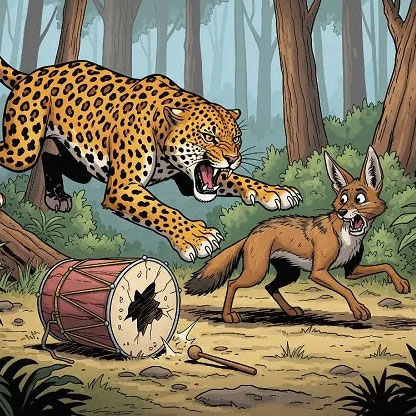
Jackal Gomaya hears a terrifying noise and almost runs away in fear. Investigating the source changes everything. Face your fears before you flee.
A tiny hare outwits the fearsome lion Bhasuraka using nothing but a reflection and a clever story. Intelligence defeats brute strength every time.
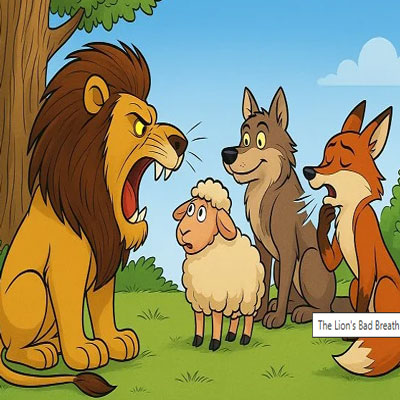
A lion asks animals whether his breath is bad. The bear tells the truth and is punished; the fox flatters and is rewarded — but who really wins? A lesson on truth and tact.
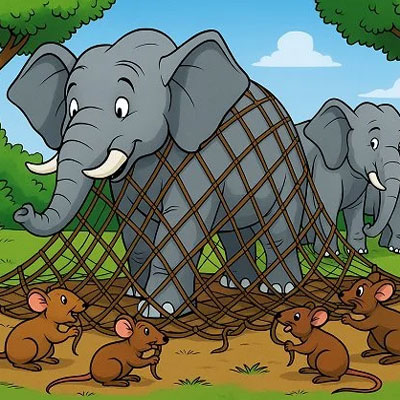
A herd of elephants accidentally crushes the mice colony's homes. Compassion is shown — and later repaid magnificently when the mice rescue the elephants from a hunter's trap.
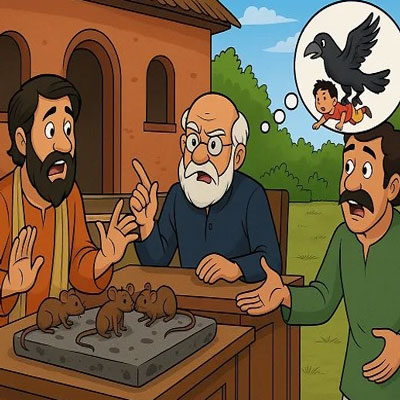
A dishonest merchant claims mice ate his iron balance. When the boy plays the same trick on him, the merchant learns the hard way that deceit is repaid in kind.
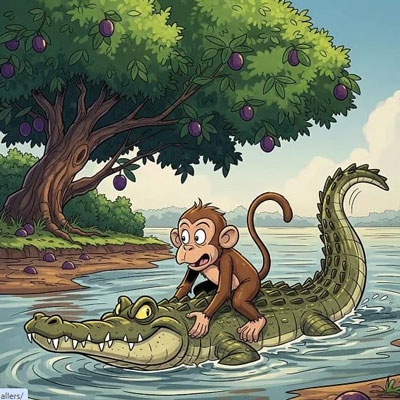
A monkey and a crocodile form a warm friendship — until the crocodile's jealous wife demands the monkey's heart for dinner. A classic story of betrayal and quick thinking.
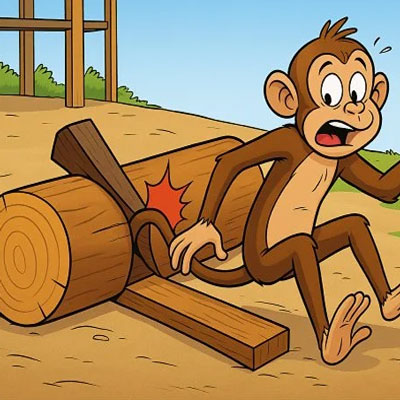
A mischievous monkey at a construction site cannot resist pulling a wedge from a half-sawn log. The moment it does, the log snaps shut — with painful consequences.
An old crow's warning about a growing threat is ignored by the community. When disaster strikes, the survivors wish they had listened. A lesson on heeding experience.
An ill-tempered prince cannot be corrected by anyone — until a wise king shows him the truth through a simple seedling. Good character must be nurtured from the roots.
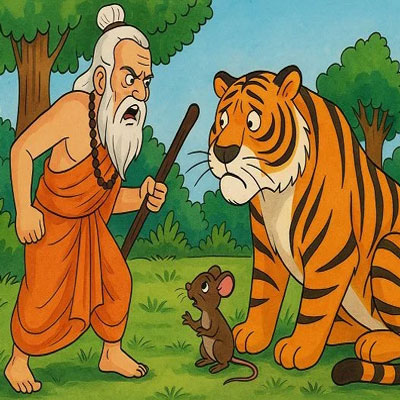
A sage transforms a mouse into increasingly powerful animals to protect it — but no matter what form it takes, its true nature stays the same. You cannot change what you are at heart.
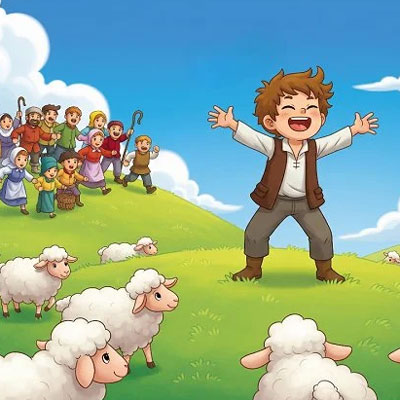
A shepherd boy cries wolf as a joke — twice. When a real wolf attacks, nobody believes him. The classic tale of why honesty is the only policy.
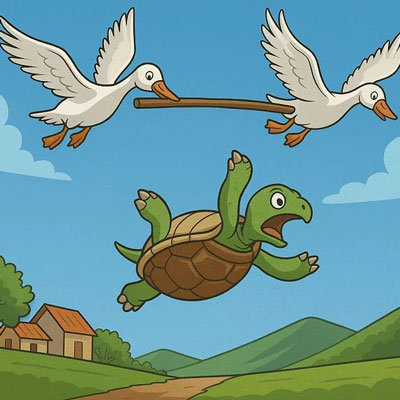
Two geese carry a tortoise by a stick — but he is warned not to open his mouth. Unable to contain himself, he speaks at the worst moment. Know when to stay silent.
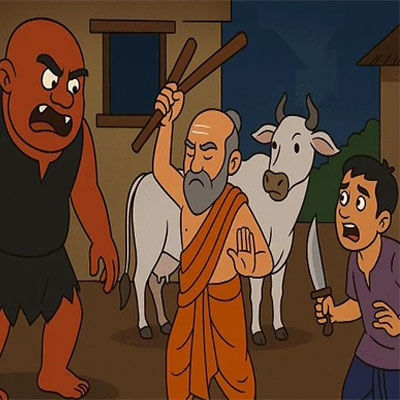
A poor Brahmin receives a valuable goat as a gift, but two greedy strangers plot to steal it. Their own greed ultimately causes them to destroy each other.
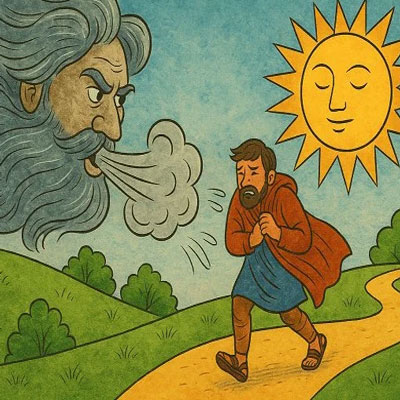
The wind and sun argue about who is more powerful. A contest to remove a traveller's cloak proves that gentle warmth achieves what force cannot.
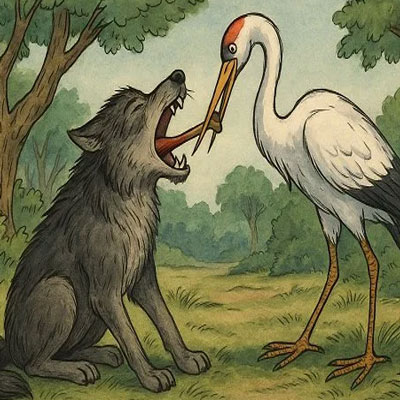
A crane removes a bone from a wolf's throat and asks for a reward. The ungrateful wolf says the reward is not being eaten. Never expect gratitude from the selfish.
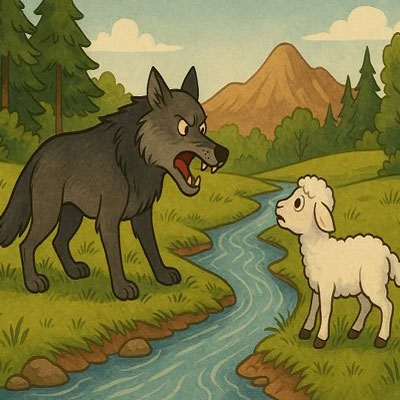
A wolf makes up excuse after excuse to justify eating an innocent lamb. A powerful fable showing that the powerful will always find a reason to bully the weak.
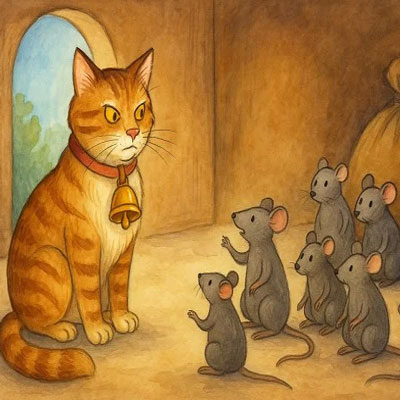
The mice devise a perfect plan to put a bell on the cat — but when asked who will actually do it, not a single mouse steps forward. A timeless lesson in decisive leadership.
Everything parents and teachers want to know about Panchatantra stories.
The Panchatantra is a collection of ancient Indian fables, originally composed in Sanskrit around 300 BCE. Each story features animal characters and teaches children essential life values such as honesty, friendship, loyalty, and wisdom. The name Panchatantra means five treatises, reflecting its five books of stories.
Panchatantra stories are suitable for children aged 4 to 14. The simple language, relatable animal characters, and clear moral lessons make them ideal for early readers as well as older children who can reflect on deeper themes of ethics and decision-making.
The original Panchatantra text contains over 84 stories organised into five books. KidsGen currently offers 26 of the most beloved tales from the Panchatantra, all written in simple, easy-to-understand English for children.
Panchatantra stories teach children values such as the importance of true friendship, the consequences of greed, the power of wit and intelligence over brute strength, loyalty, honesty, self-control, courage, and the value of making wise, thoughtful decisions in life.
Panchatantra stories develop critical thinking, moral reasoning, and empathy in children. Through relatable animal characters and engaging plots, children learn life lessons in a fun and memorable way, building character and values from an early age. They also connect children with India's rich cultural heritage and ancient literary tradition.