
The Science of the New Year
A 365-Day Journey Through Time, Space, and Celebration


Every December 31st, we gather with friends, family, and fireworks to welcome a fresh calendar year. While the night sparkles with confetti and hopeful resolutions, the science of New Year reveals a quieter cosmic spectacle unfolding behind the scenes - a vast physics celebration driven by Earth's relentless motion through space. From our planet's astonishing speed around the Sun to the very first time zone that ushers in 2026, let's pull back the curtain and explore the science that makes the New Year possible.
The Earth's Great Race: One Full Orbit Around the Sun
When the clock strikes midnight, we're not just turning a page on a calendar—we're marking the completion of a full orbit of our planet around the Sun. In other words, a "year" is a cosmic lap.
| Fact | What It Means |
|---|---|
| Orbital speed | ~ 67,000 miles per hour (≈ 30 km/s) |
| Distance traveled in a year | About 584 million miles (≈ 940 million km) |
| Time to complete one orbit | Roughly 365.25 days (the extra quarter gives us leap years) |
During the very moment you raise a glass, the Earth is blazing through space at a speed that would make the fastest roller coaster look sluggish. Imagine that every second you're hurtling through the vacuum of space, wrapped in an atmosphere that protects us from the Sun's relentless radiation. That's the ultimate "speed party"—and we're all invited.
Who Gets to Celebrate First?
Because our planet spins on its axis while simultaneously orbiting the Sun, the New Year doesn't happen everywhere at once. The International Date Line—a thin, imaginary line running through the Pacific Ocean—determines where one calendar day ends and the next begins.
First to greet 2026: The Republic of Kiribati, specifically its easternmost islands such as Kiritimati (Christmas Island), are the very first inhabited places to welcome the new year. Their clocks flip to 00:00:00 just as the rest of the world is still counting down the final seconds of December 31st.
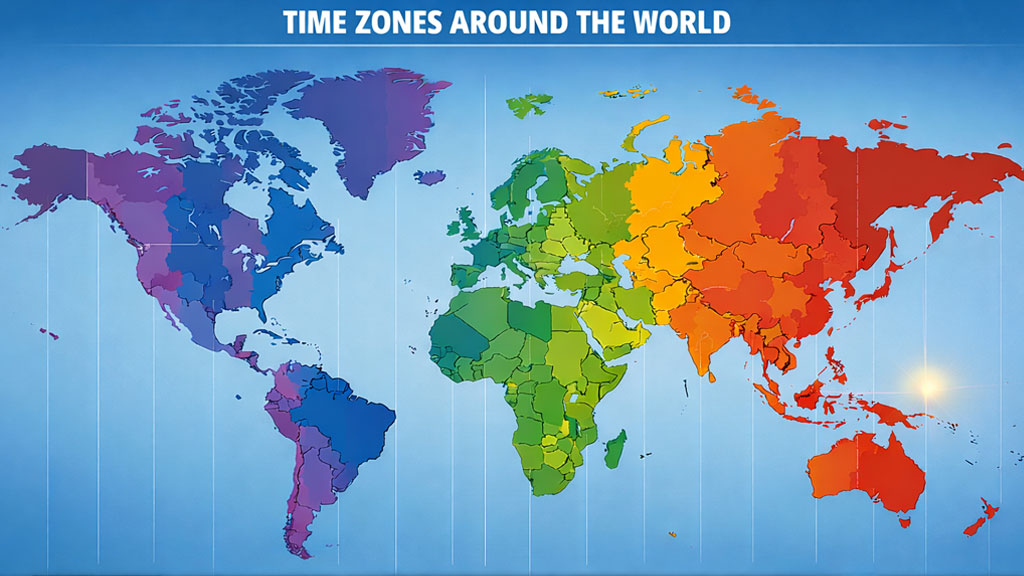
Below the first celebrations, the midnight moment ripples westward across the globe, hitting major cities in the following order (approximate local times):
| Region | Local Midnight (2026) |
|---|---|
| Pacific islands (e.g., Fiji, Samoa) | 00:00 (UTC +13/14) |
| Asia (Tokyo, Seoul, Beijing) | 00:00 (UTC +9) |
| Europe (London, Paris, Berlin) | 00:00 (UTC +0/1) |
| Africa (Johannesburg, Nairobi) | 00:00 (UTC +2/3) |
| Americas (New York, Los Angeles) | 00:00 (UTC -5/-8) |
Every region experiences its own unique countdown, fireworks display, and set of traditions—all tied together by the same orbital rhythm.
Share the Joy: Science to Celebration
Now that you know the science behind New Year's, it's time to connect with others! The same physics that keeps us orbiting the Sun also unites us in shared traditions. Whether it's a fireworks display, a midnight kiss, or a family feast, these moments are part of a beautiful tapestry woven by time, space, and humanity.
Did You Know? The countdown to midnight is a universal metaphor for renewal. From the first celebrators in Kiribati to the last revelers in Samoa, we're all part of the same 365-day journey.
Share the magic
Now that you know the science, it's time to celebrate with your family! You can find beautiful 2026 greetings to share on WhatsApp here:
Why Knowing the Science Makes the Celebration Sweeter
Understanding the celestial mechanics behind the calendar turns a routine tradition into a reminder of humanity's place in the universe. Each tick of the clock is a tiny acknowledgment that we're participants in a grand, moving masterpiece:
- Perspective: The Earth's rapid motion highlights how fleeting our everyday worries are compared to the vastness of space.
- Connection: Time zones illustrate how we're all linked by the same cosmic clock, even when we're celebrating at opposite ends of the planet.
- Inspiration: The knowledge that we are traveling at tens of thousands of miles per hour can spark curiosity in kids (and adults) to explore astronomy, physics, and the wonders of our solar system.
So this New Year's Eve, when you raise that glass, take a moment to look up, smile, and marvel at the invisible race we've been on for 4.5 billion years.
Final Toast
Here's to a 2026 filled with curiosity, discovery, and the joy of knowing that while we're all busy making resolutions, the Earth is busy completing another spectacular orbit. May your celebrations be as bright as the stars that guide our path around the Sun.
Happy New Year - From the fastest moving planet in the solar system to you! 🚀🌟
 Durga Puja
 CLAT Aspirants
 Craft Ideas for Kids
 Benefits of Yoga for Kids
 School Projects & Homework Help
 Hobbies: Philately, Fishing, Camping
 Fun and Jokes