
Story Summary
King Rana Charya believes deeply that work is a form of worship. To discover whether his subjects share this ideal, he sends his trusted courtiers into the kingdom in disguise. They meet a resentful woodcutter, a regretful washer man - and finally a young teacher who studies late into the evening not for personal gain, but to better serve his students. His answer changes the kingdom forever.
Full Story
Once upon a time, there lived a king named Rana Charya. He was a man of high principles who valued hard work and sincerity above all else. The king's favourite proverb was: work is worship.
One day, King Rana Charya decided to find out whether his subjects truly followed his ideals. He called some of his courtiers and said, "Go through the kingdom and find out what jobs people have undertaken, and whether they perform their duties sincerely. Find the person who knows the secret of hard work, and bring him to me - but no one must know that you have been sent by me."
"As you wish, Your Majesty!" said the courtiers and took their leave. As they gathered outside, one of them worried: "Many people know that we are the king's courtiers - they may recognise us." A courtier named Raghavan had a swift solution: "Let us disguise ourselves as tribal men." So they dressed in simple tribal garb, boarded a bullock cart, and set out on their way.
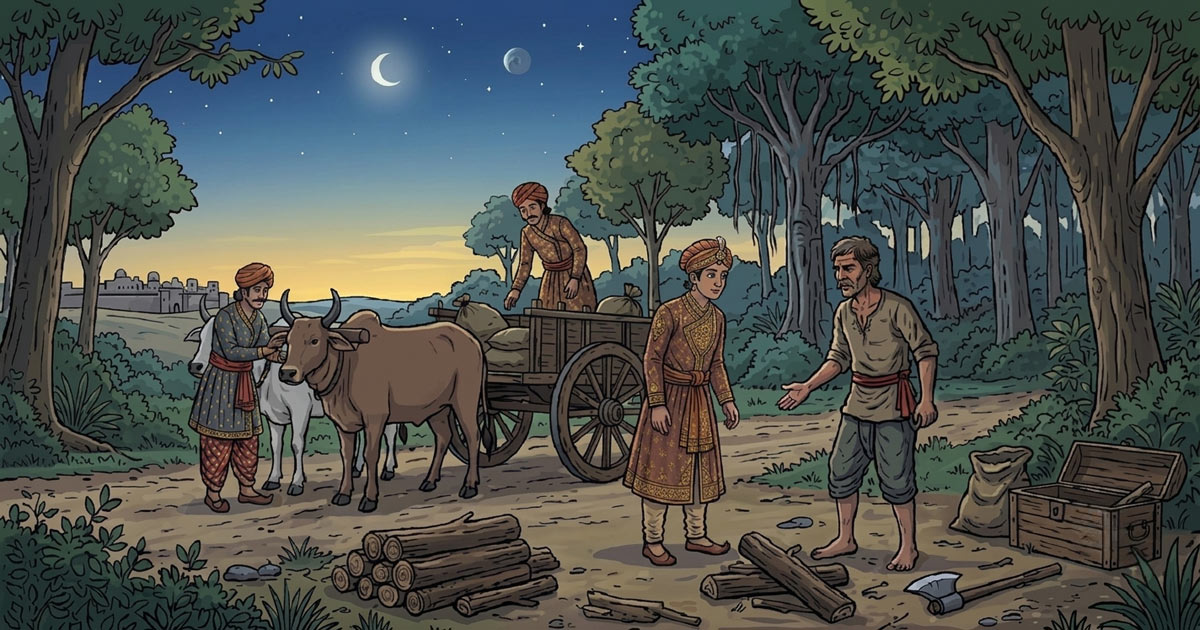
Before long they came upon a woodcutter chopping trees with a large axe. Raghavan stepped down from the cart and greeted him warmly. "O woodcutter, do you enjoy your work?" The woodcutter flung his axe aside with a grim face. "Not at all! I do it only because this trade was passed down to me by my ancestors." The courtiers climbed back onto the cart and continued their journey.
Some miles further on, they found a washer man beating clothes against a stone by the river. Raghavan walked over with a cheerful wave. "Hello, dear washer man - you seem very busy! Do you enjoy your work?" The washer man struck the clothes harder in irritation. "Enjoyable? This is a punishment for me. When I was young I never listened to my parents and never worked hard at my studies. Now my family depends on me, and this is all I am fit for." Disheartened, the courtiers moved on.
A few miles further, as the evening light turned golden, they noticed a young man sitting beneath a lamp, deep in a book. "What are you doing, young man?" asked Raghavan. "I am a teacher," the young man replied, looking up with quiet joy. "I am reading so that I can teach my students better tomorrow. It gives me great satisfaction to share whatever I know."
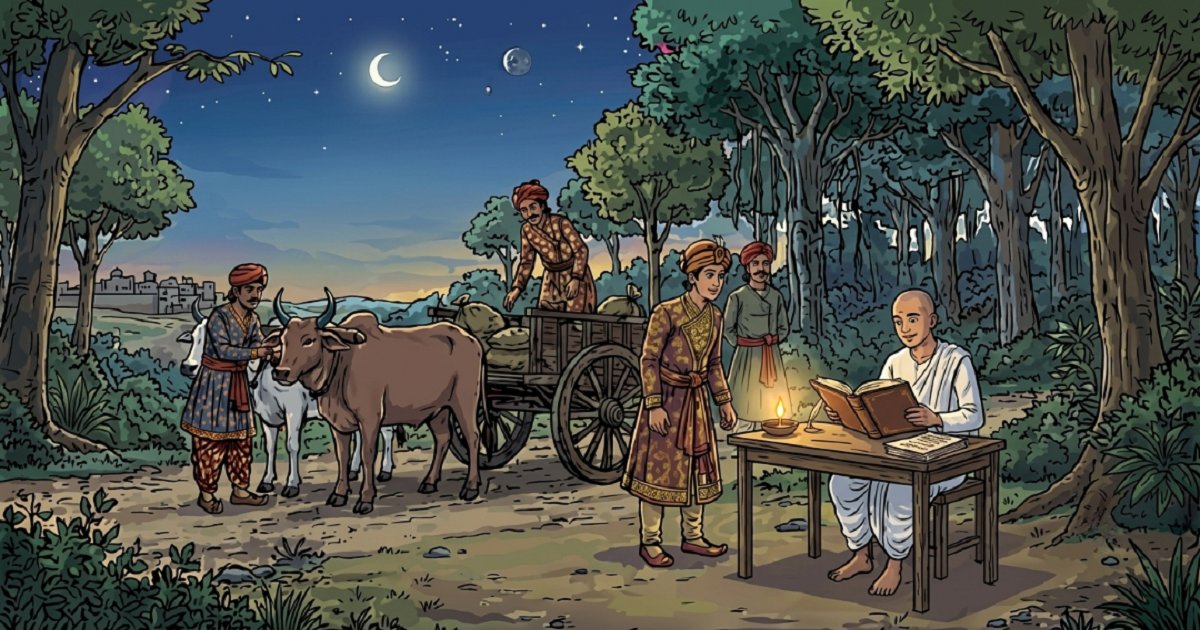
"Tell me," said Raghavan, leaning closer, "do you know the secret of hard work?" The young teacher smiled. "Yes. Work is worship. No matter what you do, you must love it and give it your whole heart."
Moral of the Story
The moral is that every job carries deep meaning when it is done with love and sincerity. Real worship is not limited to prayers and rituals - it is found in the wholehearted dedication you bring to whatever you do each day, no matter how humble or ordinary the task may seem.
Key Characters
- King Rana Charya: A principled king who believes that sincere work is the highest form of devotion.
- Raghavan: The king's trusted courtier who leads the mission in disguise.
- The Woodcutter: Works only out of obligation, carrying a trade he never chose.
- The Washer Man: A man full of regret who suffers the consequences of wasted youth.
- The Young Teacher: The hero of the tale - quietly devoted, endlessly curious, and driven by love for his students.
Why Kids Love This Story
- A Mystery Journey - The courtiers' disguise and secret mission give the story the feel of an adventure, keeping young readers hooked from the first sentence.
- Three Contrasting Characters - Meeting three very different workers - bitter, regretful, joyful - makes the lesson feel discovered rather than dictated.
- A Rewarding Ending - The kind, hard-working teacher is recognised and rewarded. It sends a genuinely uplifting message children carry long after the story ends.
- One Phrase That Sticks - "Work is worship" is simple enough for a young child to remember and repeat, yet deep enough for a parent or teacher to build whole conversations around.
FAQs About the Story
Where does this folk tale come from?
"Work is Worship" is a folk tale from Andhra Pradesh, a state in southern India. It echoes the ancient Indian philosophy of Karma Yoga - the belief that selfless, devoted action is a path toward spiritual fulfilment and societal good.
>Who are the main characters in the story?
The central characters are King Rana Charya (a principled ruler), his courtier Raghavan (who leads the investigation), a woodcutter (who resents his trade), a washer man (who regrets his wasted youth), and a young teacher (who embodies devoted, joyful work). Each character serves a deliberate narrative purpose.
Why does the young teacher impress the king?
The teacher is reading late in the evening - not for personal advancement, but so he can teach his students more effectively the next day. He finds deep joy in spreading knowledge, and he articulates the philosophy "work is worship" naturally and from lived experience, not from books.