
KidsGen / Wishes in Many Languages / Hello
Hello in many languages
Did you know "Aloha", "Konnichiwa" and "Guten Tag" are all ways of saying hello — in Hawaiian, Japanese and German? Hello is the one greeting that works at any hour, so it's the perfect first word to learn in a new language. Read on and watch your circle of friends grow, one "hi" at a time.
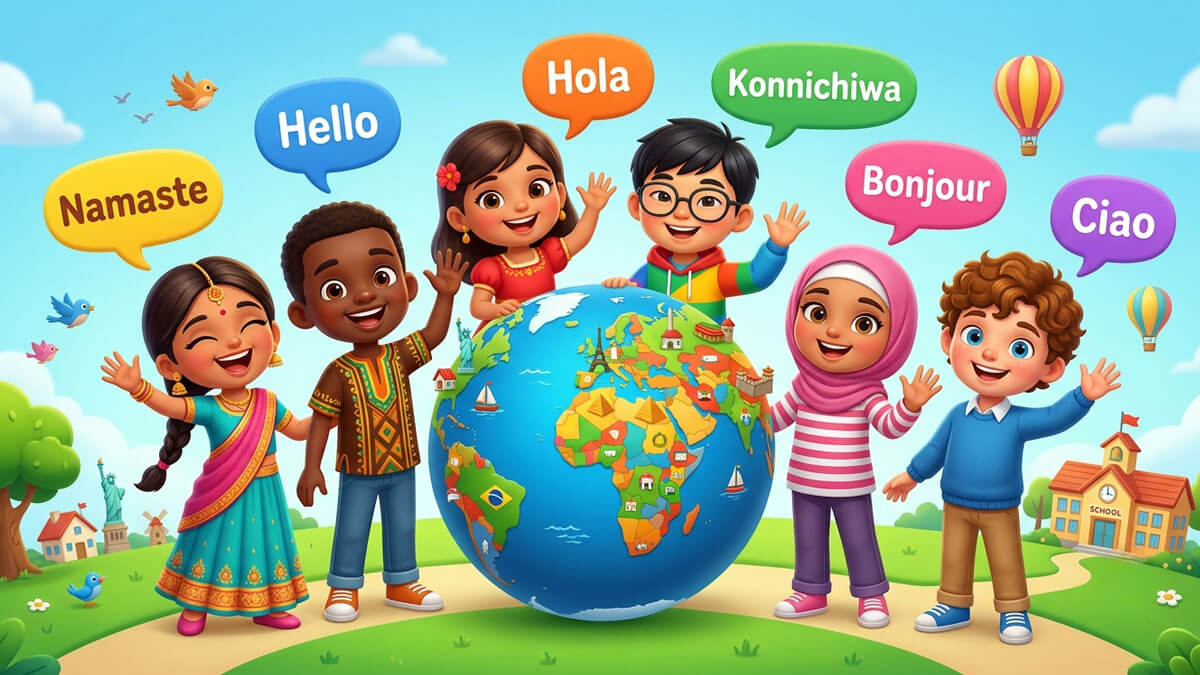
The most useful word you'll ever learn
Unlike "good morning" or "good evening", hello doesn't care what time it is — it works whether you're meeting a new classmate at 8am or a pen pal on a video call at 8pm. That's what makes it the best starting point for learning any language: a single word, and suddenly you can greet someone from almost anywhere on Earth.
Hello, around the world
Search for a language below, or scroll by region. Tap "Copy" on any card to paste the greeting straight into a message.
No languages matched your search. Try a different spelling.
Europe
Asia & the Pacific
Middle East & Africa
Fun facts about saying hello
- Zulu speakers often say "Sawubona", which literally means "I see you" — a reminder that a greeting is about truly noticing another person.
- "Namaste" is more than a word — the accompanying gesture of pressed palms is meant to show that you honour the light in the other person.
- In Māori culture, "Kia ora" can also mean "good luck", "thank you" or "cheers", making it one of the most flexible greetings in the world.
Frequently Asked Questions About Hello in Different Languages
How do you say Hello in different languages?
Hello is expressed differently around the world. For example, Aloha is a Hawaiian greeting, Konnichiwa is Japanese, Guten Tag is German, Bonjour is French, Hola is Spanish, and Ciao is Italian.
How do you say Hello in Japanese?
Konnichiwa is a common Japanese greeting used during the day. The appropriate greeting can vary depending on the time of day and social context.
How do you say Hello in German?
Guten Tag is a common German greeting meaning Good Day. Hallo is also widely used to say Hello.
How do you say Hello in French?
Bonjour is the standard French greeting used during the day. Salut is an informal greeting used among friends and acquaintances.
How do you say Hello in Spanish?
Hola is the common Spanish word for Hello and is widely understood in Spanish-speaking countries.
Why learn to say Hello in other languages?
Learning to say Hello in different languages helps you greet people politely, appreciate other cultures, and communicate with friends from around the world.
Can I use these greetings when meeting people from other countries?
Yes. Learning a greeting in someone's language is a friendly way to start a conversation. Choose a greeting that suits the language, situation, and level of formality.