
Overview: Key Facts and Details
Australia at a Glance
- Continent: Australia (also a sovereign nation)
- Capital: Canberra
- Population: 20,090,437 (2023 estimate)
- Location: Oceania – between the Indian Ocean and the South Pacific Ocean
- Climate: Arid to semi-arid interior, temperate south-east, tropical north
- Terrain: Vast deserts, plateaus, and fertile south-eastern plains
- National Holiday: Australia Day – 26 January
- Key Festivals: Australia Day, Anzac Day (25 April)
- Official Language: English and Indigenous languages
- Currency: Australian Dollar (AUD)
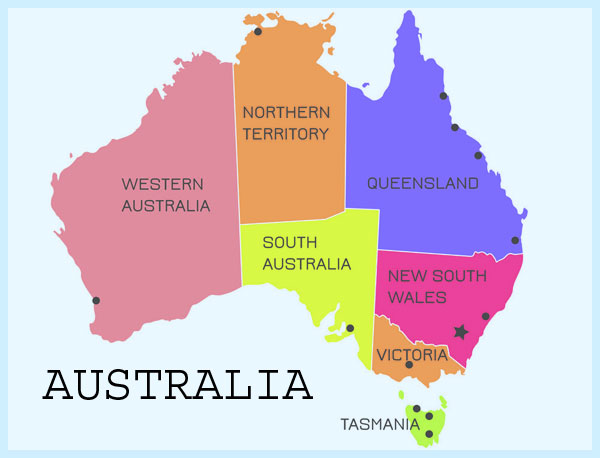
Why Australia Is Called "The Land Down Under"
Australia is the only country in the world that occupies an entire continent. Located entirely in the Southern Hemisphere, its seasons are the reverse of those in Europe and North America, with summer peaking in January and winter arriving in June and July.
History: From Ancient Custodians to a Modern Nation
The First Australians
Aboriginal peoples have lived on the continent for more than 65,000 years, making them the world's oldest continuous cultures. Their Dreamtime stories, rock art, and spiritual connection to the land remain central to Australian identity.
European Arrival and Colonial Era
- 1770: Captain James Cook charted the east coast for Britain
- 1788: The First Fleet arrived at Botany Bay
- 1793: Free settlers arrived, shaping early cities
Geography of the Continent-Country
The Outback
Covering nearly 70% of the continent, the Australian Outback is dominated by deserts, low plateaus, and sparse rainfall. It supports sheep grazing, mining, and remote communities.
Fertile South-East
The south-eastern region supports agriculture, vineyards, and major cities such as Melbourne and Canberra.
Tropical North
Northern Australia features a monsoonal climate, lush wetlands, and rich biodiversity, particularly around Darwin and Kakadu National Park.
Climate Zones
Arid and Semi-Arid Regions
Central and western Australia receive less than 250 mm of rainfall annually.
Temperate Zones
Southern coastal areas enjoy mild winters and warm summers.
Tropical Regions
Northern Australia experiences wet summers and dry winters.
Natural Wonders
The Great Barrier Reef
The Great Barrier Reef stretches over 2,300 km and is the largest coral reef system on Earth, visible even from space.
Unique Australian Wildlife
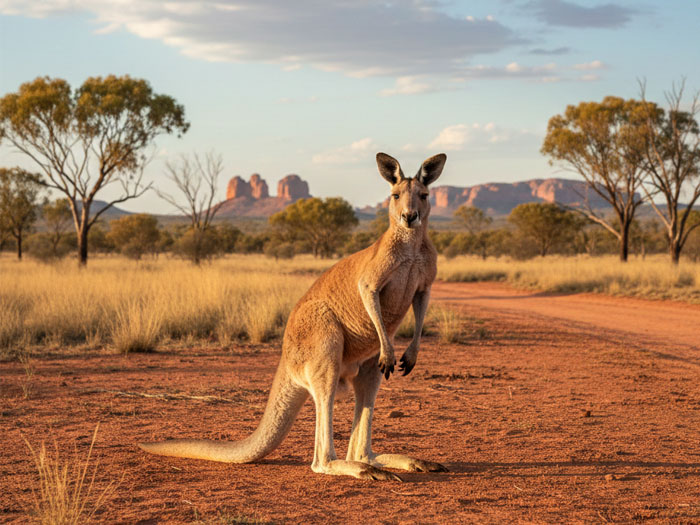
Australia is home to iconic species such as kangaroos, koalas, wombats, platypus, and Tasmanian devils, found nowhere else in the world.
Australian Culture, Festivals, and Sports
Australia Day
Celebrated on 26 January, Australia Day features barbecues, fireworks, and community events while also encouraging reflection on Indigenous history.
Anzac Day
Held on 25 April, Anzac Day honors Australian and New Zealand soldiers with dawn services and parades.
Sports in Australia
Cricket, rugby, soccer, and Australian Rules Football (AFL) are central to Australian culture.
Modern Australian Life
States and Territories
Australia consists of six states and two territories, including New South Wales, Victoria, Queensland, and Western Australia.
Major Cities
From Sydney's Opera House to Melbourne's laneways, Brisbane's riverfront, Perth's beaches, Adelaide's festivals, and Hobart's heritage, Australian cities blend lifestyle with culture.
Economy
A diverse economy driven by mining, agriculture, tourism, education, and technology innovation.
Essential Travel Tips for First-Time Visitors
Best Time to Visit
Southern cities are best visited in spring and autumn, while the tropical north is ideal during the dry season.
Must-See Attractions
Highlights include Uluru, the Great Barrier Reef, Tasmania's wilderness, and the Daintree Rainforest.
Safety and Cultural Etiquette
Use sun protection, carry water in remote areas, and respect Indigenous lands and traditions.
Why Australia Continues to Captivate the World
Australia blends ancient cultures with modern cities, vast deserts with turquoise oceans, and rare wildlife with vibrant urban life. Whether you seek adventure, culture, or natural beauty, Australia promises unforgettable experiences.
Recipes
Chocolate Crackles
The biggest Aussie snack is Chocolate Crackles! These can be made before hand and are something that is always served at Aussie kids parties.
You need:
- 250 grams (9 ounces) Copha (which is vegetable shortening)
- 4 cups rice bubbles (crispies rice)
- 1 cup sifted icing sugar
- 3 tablespoons coca (cocoa)
Method:
Melt the copha in a saucepan over a low heat, or in a microwave oven. Mix the rice bubbles, icing sugar, coca and melted copha until well combined. Spoon mixture into cupcake paper holders and then set for 12-24 hours in the refrigerator. This makes about 24 choccy crackles.
Australian Damper
You need:
- 4 cups self-rising flour
- 1 teaspoon salt
- 1 tablespoon butter, softened
- 1 cup milk
- 1/2 cup water
Method:
- Preheat oven to 425 degrees F (220 degrees C) Grease a baking sheet.
- In a large bowl, stir together the flour and the salt. With pastry blender or your hands, cut in butter. Make a well in the center of the flour mixture and pour in the milk and water. Stir until the dough comes together. Turn the dough out onto a lightly floured surface and form into a round loaf 8 inches across. Place the loaf onto the prepared pan and using a sharp knife, cut a cross in the top.
- Bake for 25 minutes in the preheated oven, then lower the temperature to 350 degrees F (175 degrees C) and continue to bake for an additional 5 to 10 minutes. The loaf should be golden brown and the bottom should sound hollow when tapped.