
Geography, Population, and Cultural Overview of Europe
Geographic Location and Size
Europe is the second smallest continent on Earth, covering about 10,390,000 square kilometers (4,010,000 square miles). Despite its small land area, it is home to over two-thirds of a billion people, making it one of the most densely populated continents.
Europe is bordered to the north by the Arctic Ocean, to the west by the Atlantic Ocean, to the south by the Mediterranean Sea, and to the southeast by the Black Sea and the Caucasus Mountains. It connects to Asia at its eastern borders.
Countries and Languages
There are 44 countries in Europe, including large ones like Russia, France, Germany, and small ones like Monaco and Vatican City. Languages spoken include English, French, German, Spanish, Russian, Polish, Greek, and many more.
Each country has its own culture, history, and government. The continent's diversity in languages, food, traditions, and religions makes it a colorful and fascinating part of the world.
The People of Europe
The majority of Europe's population belongs to the Caucasoid race, characterized by fair or lightly pigmented skin, a wide range of hair and eye colors, and other shared features. There is also an increasing number of people of African and Asian descent, due to migration in recent decades.
Modern humans arrived in Europe nearly 40,000 years ago, following earlier hominid species that are now extinct. Over thousands of years, waves of immigrants from Asia, Africa, and the Middle East have shaped Europe's population and culture.
Europe Through History
Europe has witnessed some of the most significant events in human history:
- Ancient Civilizations: Greece and Rome shaped modern laws, science, art, and democracy.
- The Middle Ages: Castles, knights, and monarchs ruled Europe during this period.
- World Wars: Europe was the center of both World War I (1914-1918) and World War II (1939-1945), causing massive destruction.
- The Cold War: After WWII, Europe was divided into East and West by ideology-communism vs. capitalism.
- Balkans Conflict: The 1990s saw ethnic wars in former Yugoslavia, resulting in new nations like Serbia, Croatia, and Bosnia.
The European Union
The European Union (EU) is a unique economic and political union of 27 countries. It promotes free trade, travel, and cooperation among its members. Citizens of EU countries can live and work in any other EU country without a visa.
The EU also aims to protect human rights, fight climate change, and maintain peace. In the 21st century, its biggest challenge is building a peaceful, prosperous, and unified Europe while respecting each nation's unique identity.
Economy and Technology
Europe is one of the world's strongest economic regions, with countries like Germany, France, and Italy leading in manufacturing, automobiles, fashion, banking, and green energy.
The common currency used by 20 EU countries is the Euro (€). Europe's digital economy is growing fast, with cities like Berlin, Stockholm, and Amsterdam becoming tech innovation hubs.
Open a European Bank Account Online with Monvenience
Do you live outside Europe but want to access European financial services?
Monvenience.com allows you to open an online EU bank account with an LT IBAN valid across the entire European Union.
- Ideal for freelancers, students, businesses, and remote workers
- Supports multi-currency transactions
- No physical presence required
- Quick digital onboarding
Festivals Celebrated Across Europe
Europe's festivals reflect its rich cultural heritage and traditions:
- La Tomatina (Spain): A massive tomato-throwing event held in Buñol every August.
- Oktoberfest (Germany): The world's biggest beer and folk festival, held in Munich.
- Carnival of Venice (Italy): Famous for its masks and costumes, held before Lent.
- Christmas Markets (All Over Europe): Beautiful lights, crafts, food, and snow!
- Bastille Day (France): Celebrated on July 14, marking the start of the French Revolution.
- Midsummer (Sweden, Finland): Celebrating the summer solstice with music and flowers.
Map of Europe *
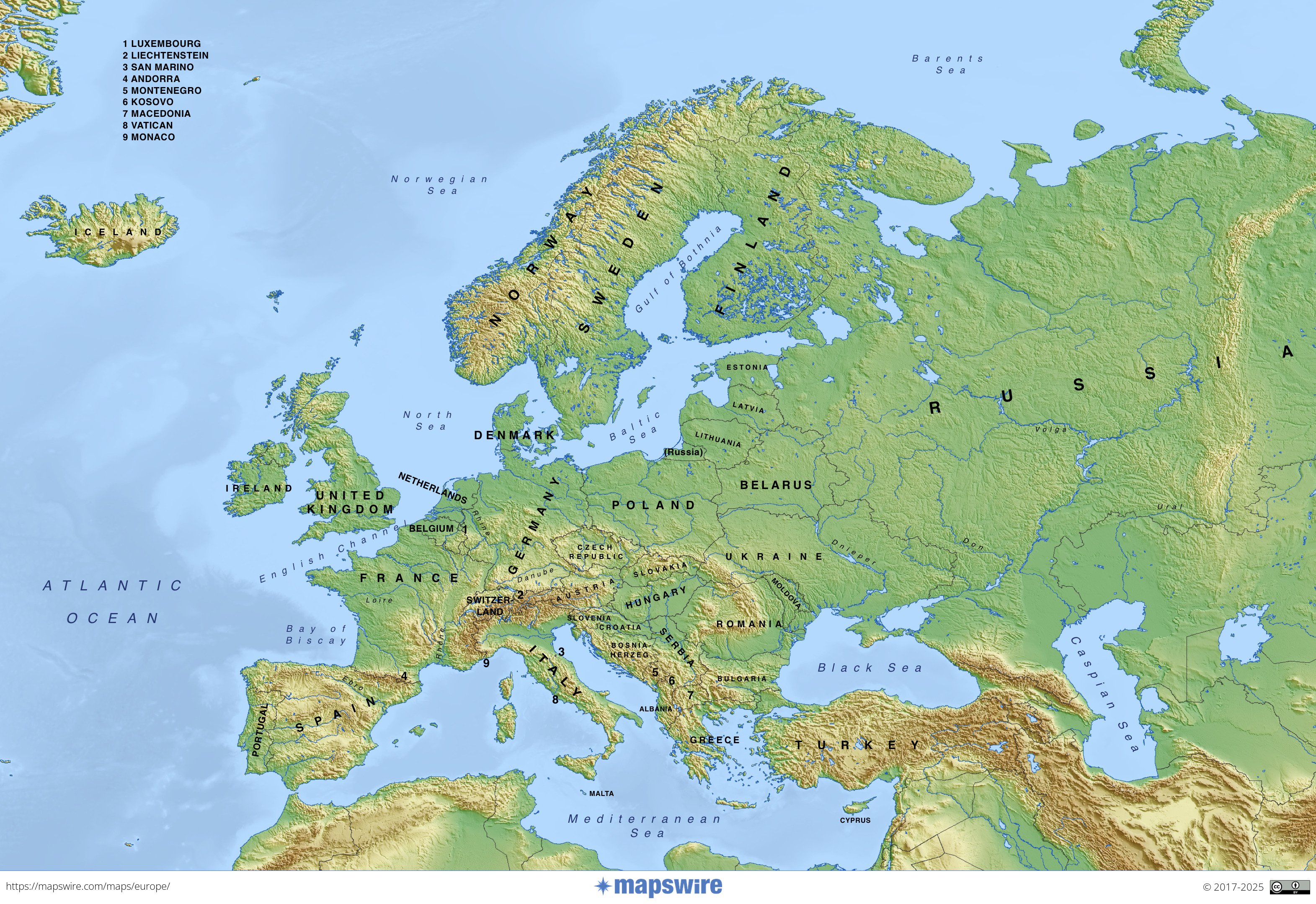
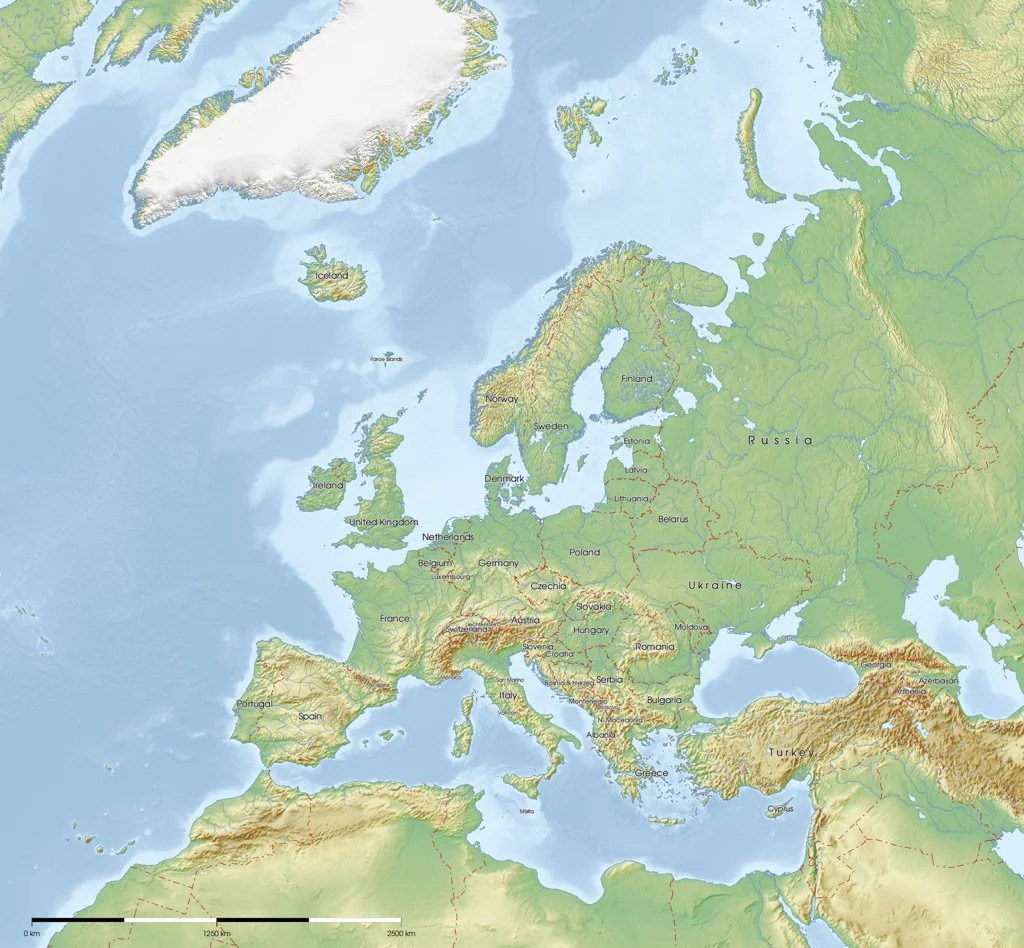
* Note on the Map of Europe
This map shows the countries of Europe using internationally recognized borders.
According to international law, the Crimean Peninsula and the Donbas region (which includes the Donetsk and Luhansk areas) are part of Ukraine. Some of these regions are currently under military occupation due to the ongoing conflict between Russia and Ukraine, which began in 2014 and expanded in 2022.
Because of this situation, different maps on the internet may look different depending on when they were created or which source they use. On KidsGen, we follow the borders that are officially recognized by the United Nations and most countries around the world.
We aim to present maps that are:
- Accurate
- Neutral
- Suitable for school projects
- Consistent with international standards
This helps students understand both the geographical layout of Europe and the way political events can affect the way maps are drawn. If the borders in Europe change in the future, the map will be updated again to reflect the most widely accepted international information.
Russia–Ukraine Conflict: Easy Timeline for Students
Before 2014
- Ukraine and Russia were neighboring countries with cultural and historical connections.
- They sometimes disagreed about politics and which international groups Ukraine should join.
2014 – Crimea Taken Over
- In February–March 2014, Russia took control of Crimea, a peninsula that is legally part of Ukraine.
- Most of the world, including the United Nations, still recognizes Crimea as Ukrainian territory.
- Fighting also started in eastern Ukraine, in the Donbas region (Donetsk and Luhansk).
2015–2021 – Ongoing Tension
- Small battles continued in the Donbas area.
- Many peace talks were held, but no final agreement was reached.
- Crimea remained under Russian occupation.
February 2022 – Full-Scale Invasion
- Russia sent its military further into Ukraine, turning the conflict into a major war.
- Many cities were affected, and millions of people moved to safer places.
2022–Present – Continued Conflict
- Several countries around the world support Ukraine with humanitarian and economic help.
- Fighting in eastern and southern Ukraine continues.
- Internationally, Ukraine is still recognized to include Crimea and the Donbas region.
Why This Matters for Maps
- Because different areas are under different control, maps on the internet may look different.
- Some show only current military positions, while others show legally recognized borders, which include all of Ukraine.
- For school learning, it is important to use maps that follow international standards.
Frequently Asked Questions
Q: What is the total area of Europe?
A: Europe covers about 10,390,000 square kilometers (4,010,000 square miles).
Q: How many countries are there in Europe?
A: There are 44 recognized countries in Europe.
Q: What is the European Union (EU)?
A: A political and economic union of 27 European countries that cooperate on laws, trade, travel, and security.
Q: What are some famous festivals in Europe?
A: Oktoberfest (Germany), La Tomatina (Spain), Carnival of Venice (Italy), and Midsummer (Scandinavia).
Q: Can I open a bank account in Europe online?
A: Yes! Monvenience.com offers LT IBANs for non-residents, fully valid across the EU.