
Christmas in Egypt
Coptic Christmas: the Nativity Fast, the Christmas Eve liturgy and the 7 January holiday


In Egypt, Christmas is celebrated mainly on 7 January by the Coptic Orthodox Church, the country's largest Christian community, after a 43-day fast, and 7 January is a national public holiday. On the evening of 6 January families attend a long Christmas Eve liturgy; the main service is led by Pope Tawadros II at the Cathedral of the Nativity of Christ in the New Administrative Capital. After the liturgy the fast is broken with fatta, and Christmas Day is spent visiting relatives over kahk biscuits. Egypt's smaller Catholic community celebrates on 25 December.
How Christmas is celebrated in Egypt
Christmas in Egypt is, above all, the feast of the Copts, members of the Coptic Orthodox Church, one of the oldest churches in the world, which traces its foundation to St Mark in Alexandria. Christianity reached Egypt in the first century, and the Coptic Church still keeps its own calendar, its own liturgy and the Coptic language in its worship alongside Arabic. Its Christmas, celebrated on 7 January, follows a long fast and is marked by a night-time liturgy on Christmas Eve, a feast that breaks the fast, and a day of visits, new clothes and sweets.
How many Christians live in Egypt is a matter of debate, and sources vary. No recent official figure has been released. Pew Research Center, working from census and survey data, put Christians at about 5 per cent of the population around 2010, while Coptic Church officials and many media reports give 10 per cent or more, and some estimates run to 15 per cent. Pew noted that Christians may be undercounted. Most Egyptian Christians are Coptic Orthodox; there are smaller Catholic, Protestant and other communities.
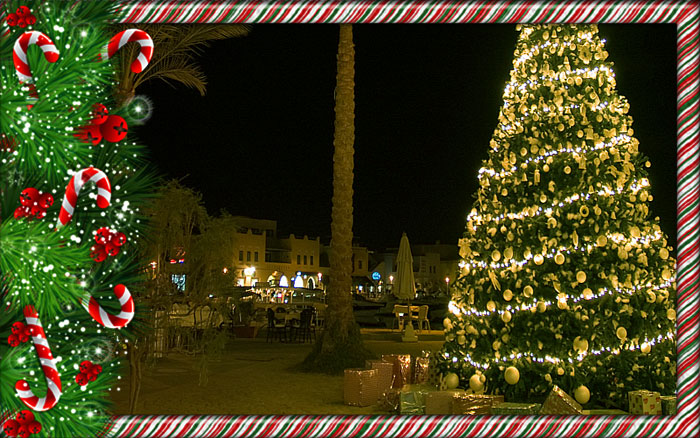
In recent decades Christmas has become more visible in public life. Christmas trees and decorations, once found mainly in Christian homes and churches, now appear in shopping centres and toy shops, and people of different faiths attend Christmas concerts. Baba Noel, Father Christmas, visits churches on Christmas morning with gifts. Christmas in Arabic is Eid al-Milad, the feast of the Nativity.
Why Coptic Christmas is on 7 January
The Coptic Church celebrates the Nativity on 29 Kiahk, in the fourth month of the Coptic calendar. That date corresponds to 25 December in the Julian calendar, introduced by Julius Caesar in 46 BC. The Julian year is slightly too long, and the Julian calendar now runs thirteen days behind the Gregorian calendar introduced by Pope Gregory XIII in 1582. As a result, 29 Kiahk falls on 7 January. Egypt adopted the Gregorian calendar for civil purposes in 1875, under the Khedive Ismail, but the Coptic Church kept its traditional reckoning. In 2027 Coptic Christmas falls on Thursday, 7 January.
The month of Kiahk itself is a time of prayer and hymns. In the weeks before the feast many Copts spend more time in church, joining the special hymns and praises sung during Kiahk.
The 43-day Nativity Fast
Coptic Christmas is preceded by the Nativity Fast, known as the 43-day fast. It begins on 16 Hatour, which is 25 November in most years, and ends with the Christmas Eve liturgy. Forty of the days form the Advent fast, recalling Moses's forty days on Mount Sinai. The other three were added in the tenth century, under the Fatimid caliph al-Mu'izz, to commemorate the fast the Copts kept before the miracle of the moving of the Mokattam hill in Cairo, associated in Coptic tradition with St Simon the Tanner.
During the fast, observant Copts follow a plant-based diet: no meat, poultry, eggs, milk or butter. Fish is allowed, except on Wednesdays and Fridays. The church is flexible about how strictly the fast is kept, but some very devout people eat nothing at all from midnight until the middle of the following afternoon.
The Christmas Eve liturgy
On the evening of 6 January, Coptic churches across Egypt are full for the Christmas Eve liturgy, which begins in the evening and usually ends around midnight. Families come dressed in new clothes, and many churches are full long before the service begins.
The principal service is led by Pope Tawadros II, Pope of Alexandria and Patriarch of the See of St Mark, at the Cathedral of the Nativity of Christ in the New Administrative Capital, east of Cairo. The cathedral was inaugurated on 6 January 2019 by President Abdel Fattah el-Sisi and Pope Tawadros II, and can hold about 8,200 worshippers; it is often described as the largest church in the Middle East. Attendance at the Christmas Eve liturgy is by invitation, distributed through parishes. President el-Sisi has made a practice of attending in person to congratulate the Coptic community, and leaders of other Egyptian churches attend to bring their greetings to the Pope.
Christmas Day in Egypt
After the liturgy, families go home to break the fast. The first meal is usually light, as stomachs are used to weeks of plant-based food, and the classic dish is fatta, toasted bread and rice layered with meat and broth. 7 January, Christmas Day, is a national public holiday, declared by President Hosni Mubarak in December 2002 and first observed in 2003. It is a day for visiting relatives, often gathering at the home of the eldest member of the family, and for receiving visitors with kahk and tea or coffee.
The youngest members of the family wear new clothes and receive eidiyah, gifts of money from older relatives, as at other Egyptian feasts. Many families now decorate a Christmas tree and exchange presents, customs that came to Egypt from the West.
New Year's Day, 1 January, falls during the Coptic fast, six days before Christmas, and is not one of Egypt's national public holidays. Even so, New Year greetings are widely exchanged across Egypt's communities, and many people send messages and cards to friends and family; for New Year's Day greetings and cards, including free Happy New Year 2027 cards, status images and ready-to-send wishes, see our sister site. The Coptic Christmas season closes with Epiphany, Eid al-Ghitas, the feast of the baptism of Jesus, on 19 January.
Egypt's churches and their Christmas dates
Not all Egyptian Christians celebrate on the same day. The Coptic Orthodox Church and the Evangelical Church of Egypt, the main Protestant church, mark Christmas on 7 January, while Egypt's Catholics, including the Coptic Catholic Church, follow the Western date of 25 December.
| Church | Christmas date | Notes |
|---|---|---|
| Coptic Orthodox Church | 7 January (Christmas Eve liturgy on 6 January) | By far the largest church; 43-day fast; Pope Tawadros II leads the Christmas Eve liturgy in the New Administrative Capital |
| Evangelical Church of Egypt (Protestant) | Mainly 7 January | Celebrates with the Copts; Christmas Eve or Christmas Day services, often with choirs |
| Coptic Catholic Church and other Catholics | 25 December (Mass on 24 December) | Christmas Mass presided over by the Coptic Catholic Patriarch; Advent observed |
| Anglican (Episcopal) and other churches | Varies | Church leaders attend the Coptic Christmas liturgy to bring greetings |
Catholics observe Advent rather than the Coptic fast, and Protestant churches do not keep an Advent fast. Many foreign residents also celebrate on 25 December, which is not a public holiday in Egypt.
Christmas food in Egypt
Coptic Christmas food is shaped by the fast that comes before it: weeks of plant-based meals, then a feast of meat. Elaborate desserts are not part of the tradition; the essential sweet is kahk, the same biscuit baked for the Eid festivals, a custom that predates Islam in Egypt.
| Food | What it is | When |
|---|---|---|
| Fasting dishes | Plant-based meals without meat, eggs or dairy; fish allowed except on Wednesdays and Fridays | 25 November to 6 January |
| Fatta | Toasted bread and rice layered with meat and broth | After the Christmas Eve liturgy, to break the fast |
| Boiled eggs and cheese | Part of a light first meal after weeks of fasting | Night of 6–7 January |
| Roast chicken or other meat | Festive meat dishes that vary from family to family | Christmas Day |
| Macaroni béchamel | Baked macaroni in béchamel sauce | Christmas Day |
| Kahk | Traditional Egyptian biscuits, the same as those baked for Eid | Served to visitors with tea, coffee or milk |
Egyptian Christmas season dates 2026–27
| Date | Occasion | What happens |
|---|---|---|
| Nativity Fast begins | Start of the 43-day fast (16 Hatour) | |
| Catholic Christmas Eve | Christmas Mass in Catholic churches | |
| Western Christmas Day | Catholic and foreign communities celebrate; not a national holiday | |
| New Year's Day | Greetings exchanged; falls within the Coptic fast | |
| Coptic Christmas Eve | Christmas Eve liturgy into the night; the fast is broken afterwards | |
| Coptic Christmas (29 Kiahk) | National public holiday; family visits, kahk and new clothes | |
| Epiphany (Eid al-Ghitas) | The Coptic feast of the baptism of Jesus closes the Christmas season |
Video: Christmas in Egypt
Christmas in Egypt: frequently asked questions
How is Christmas celebrated in Egypt?
Most Egyptian Christians belong to the Coptic Orthodox Church and celebrate Christmas on 7 January, after a 43-day fast without meat, eggs or dairy. On the evening of 6 January families attend a long Christmas Eve liturgy, led in the New Administrative Capital by the Pope of Alexandria, and afterwards break the fast with fatta. Christmas Day is spent visiting relatives, with kahk biscuits, new clothes and gifts of money for the youngest. 7 January is a national public holiday.
When is Coptic Christmas in 2027?
Coptic Christmas falls on Thursday, 7 January 2027, which is 29 Kiahk in the Coptic calendar. The Christmas Eve liturgy takes place on the evening of Wednesday, 6 January 2027. The date is a national public holiday in Egypt.
Why do Copts celebrate Christmas on 7 January?
The Coptic Church keeps Christmas on 29 Kiahk in its own calendar, which corresponds to 25 December in the Julian calendar. Because the Julian calendar is now thirteen days behind the Gregorian calendar, 29 Kiahk falls on 7 January. Egypt adopted the Gregorian calendar for civil use in 1875, but the Coptic Church kept its traditional reckoning.
What is the Coptic Nativity Fast?
The Nativity Fast, often called the 43-day fast, runs from 25 November to Christmas Eve. It combines a 40-day Advent fast with three days added in the tenth century to commemorate the moving of the Mokattam hill in Cairo. Observant Copts eat a plant-based diet, avoiding meat, poultry, eggs and dairy; fish is allowed except on Wednesdays and Fridays.
Where does the Coptic Pope celebrate Christmas Eve?
Pope Tawadros II, Pope of Alexandria and Patriarch of the See of St Mark, leads the Christmas Eve liturgy at the Cathedral of the Nativity of Christ in the New Administrative Capital, east of Cairo. The cathedral was inaugurated on 6 January 2019 and holds about 8,200 people. President Abdel Fattah el-Sisi has made a practice of attending to congratulate the Coptic community.
Is Christmas a public holiday in Egypt?
Yes. Coptic Christmas, 7 January, has been a national public holiday since 2003, following a decree announced by President Hosni Mubarak in December 2002. 25 December is not a national holiday, and Catholics who celebrate on that date do so as a religious feast.
What do Egyptians eat at Christmas?
After the Christmas Eve liturgy, Coptic families break the fast with fatta, a dish of toasted bread, rice and meat with broth, often alongside a light meal of boiled eggs and cheese. Christmas Day brings more festive meat dishes such as roast chicken and macaroni with béchamel sauce, and kahk, traditional Egyptian biscuits, are served to visitors with tea or coffee.
How many Christians are there in Egypt?
Estimates vary widely and no recent official figure has been published. Pew Research Center, using census and survey data, estimated Christians at about 5 per cent of the population around 2010, while Coptic Church sources and many media reports give 10 per cent or more. Most Egyptian Christians belong to the Coptic Orthodox Church.
Christmas in nearby countries
 CLAT Aspirants
 Diwali
 Thanksgiving
 Christmas
 Craft Ideas for Kids
 Fun and Jokes
 School Projects & Homework Help
 Hobbies

CLAT Preparation for Students
Class 12 Accounts Mock Papers
Thanksgiving Greetings
Chritmas Greeting Cards
Christmas Around the World
New Year 2027
Hanukkah Cards
7 Continents of the World
Moral Stories
Fairy Tales and Fables
Classic Stories
Betal Pachisi
Singhasan Battisi
Indian Mythology stories
School Projects
Quiz on Famous Footballers
Unsolved Mysteries
Pets & Pet Care
Wishes and Greetings in Many Languages