
Christmas in India
Bada Din: midnight Mass, paper stars, kuswar and plum cake from Goa to the Northeast


In India, Christmas is celebrated on 25 December, a national holiday, with midnight Mass, carols, cribs and lit paper stars outside Christian homes, and with cakes and sweets shared among neighbours of every faith. Christians are a small minority, about 2.3% of the population in the 2011 Census, yet Christmas, often called Bada Din ("the Big Day"), is one of the most widely enjoyed festivals in the country. The strongest celebrations are in Goa, Kerala, the Christian-majority states of Nagaland, Mizoram and Meghalaya, and the cities of Mumbai and Kolkata. Each region brings its own food, music and language to the season.
How India celebrates Christmas
India's 2011 Census counted 27,819,588 Christians, about 2.3% of the population. They belong to some of the oldest churches in the world, including the Syrian Christian communities of Kerala, who trace their faith to St Thomas the Apostle, as well as Catholic, Protestant and Orthodox churches founded in the colonial era and since. Christmas is the most important festival of the Christian year in India, and 25 December is listed among the closed holidays for central government offices nationwide, so government offices and most businesses close for the day.
Christmas also reaches far beyond the churches. In north and north-west India it is known as Bada Din, "the Big Day", and in Kolkata as Boro Din. Shopping malls and markets put up trees and lights, bakeries are busy with plum cake, and many non-Christian families exchange cakes and greetings. Christian homes set up a crib, the nativity scene, often with clay figures, and hang a lit star outside to stand for the Star of Bethlehem. Where fir trees are not available, a Christmas tree may be an artificial pine or a branch of a local tree, and some families decorate their homes with banana or mango leaves and small oil lamps.
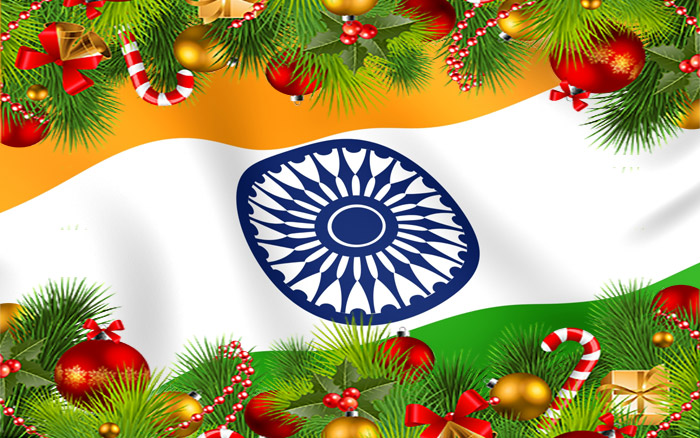
Midnight Mass, carols and cribs
For Indian Christians, especially Catholics, the high point is midnight Mass on Christmas Eve. Churches are lit with strings of lights and stars, and services are held in English and in regional languages, such as Konkani in Goa and Malayalam in Kerala. Many families wear new clothes for the occasion, and a festive meal follows on Christmas Day.
In the days before Christmas, carol groups from parishes and youth associations go from house to house after dark, singing in English and local languages. Households welcome them with refreshments. Parishes and neighbourhoods also take pride in building large cribs, some with moving water, lights and whole miniature villages.
Christmas in Goa
Goa's Christmas, Natal, carries centuries of Portuguese and Catholic tradition. The central service is the Missa de Galo, the "rooster's Mass" held at midnight on Christmas Eve, usually in Konkani with hymns sung by local choirs. Visitors often attend at the Basilica of Bom Jesus or the Se Cathedral in Old Goa. Afterwards families return home to share sweets and spend the night together.
Homes build elaborate cribs from clay figurines, coconut fibre and moss, and in villages such as Benaulim and Varca in South Goa neighbours visit one another to see them. Large paper-and-bamboo stars, lit from within, hang from balconies, and many villages hold informal competitions for the best. In the weeks before Christmas, women of the family prepare the kuswar, the Konkani name for the platter of homemade Christmas sweets that is sent to neighbours, relatives, friends and colleagues as a Christmas greeting. Panaji and Mapusa hold Christmas markets, and the beaches of the north coast are crowded with visitors until New Year.
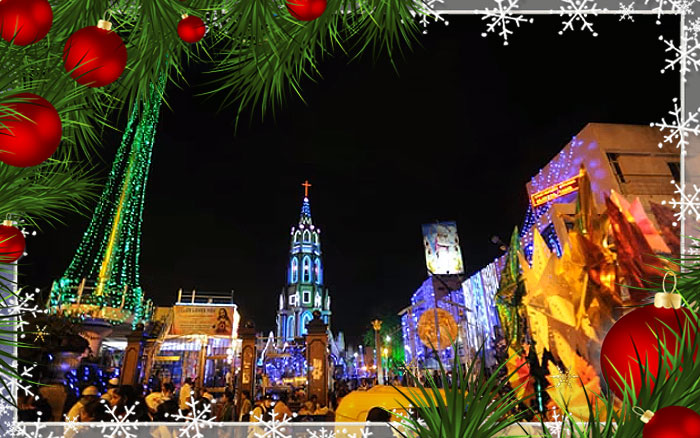
Christmas in Kerala
Kerala has more than six million Christians, one of the largest Christian communities in India. Many Syro-Malabar Catholics keep the 25 Nombu, a 25-day fast from 1 December, giving up meat and alcohol, and sometimes dairy, until the midnight Mass on Christmas Eve. In some churches the Mass begins outdoors at the crib, and the figure of the Infant Jesus is carried inside in procession.
A lit paper star in front of a house was once a sign that the family was Christian; today it is common to see one outside homes of all faiths across the state, especially in towns such as Kottayam and Pala. Carol groups visit homes after sunset, and Father Christmas is called Christmas Appooppan or Pappani. The Christmas feast typically includes appam with stew, duck roast, fish dishes, homemade grape wine and plum cake.
India's first Christmas cake
Kerala is credited with India's first Christmas cake. On 20 December 1883, in Thalassery (then Tellicherry), the baker Mambally Bapu of Mambally's Royal Biscuit Factory, founded in 1880, baked a cake for the British planter Murdoch Brown, who had brought a sample from England. Brown is said to have declared it "excellent" and ordered a dozen more.
Kolkata and Mumbai
Kolkata: Boro Din on Park Street
Kolkata has kept the Christmas traditions of its British and Anglo-Indian past. Park Street is strung with lights through the season, and since 2011 the West Bengal government has held a Christmas festival in the area, running until New Year's Day, while nearby Allen Park fills with Christmas installations, cribs and food stalls. Crowds fill the streets on Christmas Eve, and St Paul's Cathedral, a Gothic Revival building dating from 1847, is the city's most popular church at Christmas and is illuminated for its midnight Mass.
Plum cake is the city's Christmas essential. Queues form at the Park Street tearoom Flurys, founded in 1927, and at Nahoum & Sons, the Jewish bakery founded in 1902 by Israel Mordecai, a Baghdadi Jew. In Bow Barracks, red-brick former military barracks long home to Anglo-Indian families, residents decorate the lanes with stars and lights and sell homemade cakes and wine. Anglo-Indian families across India bake Christmas cake together, fry kalkals and rose cookies and make coconut sweets and marzipan in the fortnight before Christmas.
Mumbai
Mumbai's Christmas draws on the traditions of its Goan, Mangalorean and East Indian Catholic communities. Midnight Mass is held at Mount Mary Basilica in Bandra, St Thomas Cathedral and many parish churches, and the streets of Bandra, especially Hill Road, and Colaba are lit up. Kulkuls and plum cakes are the city's Christmas treats.
Christmas in the Northeast
Three states of India have Christian majorities. In the 2011 Census, Christians made up 87.93% of the population of Nagaland, 87.16% of Mizoram and 74.59% of Meghalaya, and Christmas is the biggest festival of the year in all three. Nagaland, where Baptists are by far the largest church, has often been described as the only predominantly Baptist state in the world.
Christmas in the Northeast is a homecoming and a community occasion. In Nagaland, churches usually host a community feast, and each tribe brings its own dishes, from the Sumi's axone (fermented soybean) to the Lotha's pork with bamboo shoot. The season opens with the Hornbill Festival, held every year from 1 to 10 December at Kisama Heritage Village near Kohima since 2000, which showcases the culture of the Naga tribes. In Mizoram, the festive mood begins around 1 December, guitar-led carol groups sing Mizo Christmas songs (Krismas lenkhawm) from house to house, and community feasts of rice, meat and vegetables are served on wild plantain leaves. In Shillong, Meghalaya's capital, choirs and concerts fill the evenings in the week before Christmas, and midnight Mass at the cathedral draws thousands.
Christmas around India
| Place | Christmas highlights |
|---|---|
| Goa | Missa de Galo (midnight Mass), cribs and paper stars, carol groups, kuswar sweets, the Three Kings feast in January |
| Kerala | 25 Nombu fast, lit paper stars, carol groups visiting homes, Christmas Appooppan, plum cake and homemade wine, the Pappani effigy burnt in Fort Kochi on New Year's Eve |
| Mumbai | Midnight Mass at Mount Mary Basilica in Bandra and St Thomas Cathedral; lights on Hill Road and in Colaba; Goan and East Indian traditions |
| Kolkata | Park Street lights, the Allen Park Christmas festival, midnight Mass at St Paul's Cathedral, Bow Barracks, plum cakes |
| Nagaland | Church community feasts with tribal dishes; the Hornbill Festival, 1 to 10 December |
| Mizoram | Community feasts served on plantain leaves; guitar-led carol groups singing Krismas lenkhawm songs |
| Meghalaya (Shillong) | Evening concerts and choirs in the week before Christmas; midnight Mass at the Cathedral of Mary Help of Christians |
| Puducherry | Lights and wreaths in the French Quarter; services at the Basilica of the Sacred Heart of Jesus |
Traditional Indian Christmas food
There is no single Indian Christmas dinner. Every community has its own feast, from Kerala's appam and stew to Goa's sorpotel and the pork dishes of Nagaland, but almost everywhere the season means plum cake and trays of homemade sweets shared with neighbours.
| Food | What it is | Where or when |
|---|---|---|
| Plum cake | Rich fruit cake, often soaked in rum or brandy | All over India; Kerala and Kolkata bakeries are famous for it |
| Neureos | Half-moon pastries filled with coconut, cardamom and nuts | Goa and the Konkan coast, part of the kuswar |
| Kulkuls (kidyo) | Grooved, fried curls of dough glazed with sugar | Goan homes; kalkals in Anglo-Indian homes |
| Bebinca | Many-layered baked pudding of egg yolks, coconut milk and ghee | Goa |
| Dodol and perad | Coconut-milk and jaggery sweet; firm guava cheese | Goa |
| Rose cookies | Crisp rice-flour and coconut-milk cookies made with a rose-shaped mould | Goan and Anglo-Indian homes |
| Marzipan | Shaped and coloured sweets, often made with cashews in Goa | Goa and Anglo-Indian homes |
| Appam with stew | Rice pancakes served with chicken stew | Kerala, after the Christmas Mass |
| Duck roast | Spiced roast duck, often with palappam | Kerala, especially Kuttanad |
| Sorpotel | Spicy, vinegary pork dish | Goa |
| Pork with bamboo shoot and axone | Pork cooked with bamboo shoot; fermented soybean | Nagaland community feasts |
New Year and the Three Kings
In India the Christmas season runs straight into New Year. Goa's beaches and Kolkata's Park Street stay busy with celebrations until 1 January. In Fort Kochi, Kerala, an effigy of Pappani, the Christmas old man, is burnt on the beach on New Year's Eve. Greetings now travel mostly by phone, and many Indians share Happy New Year 2027 cards for WhatsApp, status images and ready-to-send wishes with family and friends at midnight.
The season ends with Epiphany. In Goa, the Feast of the Three Kings is held on 6 January or the first Sunday of January in three villages: Reis Magos (Verem), Cansaulim, where the feast is held at a hilltop chapel on Cuelim hill, and Chandor. Three young villagers, dressed as the Magi in crowns and robes, lead a procession, in some villages on horseback.
Indian Christmas season dates 2026
| Date | Occasion | What happens |
|---|---|---|
| First Sunday of Advent | Advent begins in churches | |
| Hornbill Festival opens; 25 Nombu begins | Festival at Kisama, Nagaland, until 10 December; Syro-Malabar Christians in Kerala start the 25-day fast | |
| Christmas Eve | Missa de Galo and midnight Masses; carol groups | |
| Christmas Day (Bada Din) | National holiday; church, family meals, sweets shared with neighbours | |
| New Year's Eve | Celebrations; the Pappani effigy burnt at Fort Kochi beach | |
| New Year's Day | Church services and visiting | |
| First Sunday of January | The Three Kings feast in Goa is held on 6 January or on this Sunday, depending on the village | |
| Epiphany | Three Kings processions at Reis Magos, Cansaulim and Chandor in Goa |
The Allen Park festival in Kolkata usually runs in the days around Christmas and into the New Year; dates are announced each December.
Video: Christmas in India
Christmas in India: frequently asked questions
How is Christmas celebrated in India?
In India, Christmas is a national holiday on 25 December, celebrated by the Christian minority with midnight Mass, carols, cribs and paper stars outside homes, and enjoyed by many people of other faiths as a festive day. Families share plates of homemade sweets and cake with neighbours, and city streets and markets are lit up. The biggest celebrations are in Goa, Kerala, the Christian-majority states of the Northeast, Mumbai and Kolkata.
Is Christmas a public holiday in India?
Yes. Christmas Day, 25 December, is one of the closed holidays for central government offices across India and is observed as a public holiday nationwide. In 2026 it falls on Friday, 25 December.
What is Christmas called in India?
Christmas is widely called Christmas, but in Hindi-speaking north India it is also known as Bada Din, the Big Day. In Bengali, the Kolkata equivalent is Boro Din. In Goa, Christmas is Natal, and the Christmas Eve midnight Mass is called Missa de Galo.
What percentage of India is Christian?
According to the 2011 Census, India had 27,819,588 Christians, about 2.3% of the population. Christians are a majority in three states: Nagaland (87.93%), Mizoram (87.16%) and Meghalaya (74.59%). Kerala, with more than six million Christians, has one of the largest Christian communities in absolute numbers.
What is kuswar?
Kuswar is the Konkani name for the platter of homemade Christmas sweets prepared by Catholic families in Goa and along the Konkan coast and shared with neighbours, relatives and friends. It typically includes neureos (half-moon pastries filled with coconut), kulkuls (sugar-glazed fried curls), bebinca, dodol, doce, perad (guava cheese), marzipan and rose cookies.
Where was India's first Christmas cake baked?
India's first Christmas cake is generally credited to Mambally Bapu of Mambally's Royal Biscuit Factory in Thalassery (Tellicherry), Kerala, who baked it on 20 December 1883 at the request of the British planter Murdoch Brown. Kerala plum cake remains one of the best-loved parts of an Indian Christmas.
How is Christmas celebrated in Kolkata?
Kolkata celebrates Christmas, Boro Din, with lights along Park Street, a Christmas festival held by the West Bengal government since 2011 that runs until New Year's Day, and Christmas installations and cribs in Allen Park. St Paul's Cathedral is the city's most popular church for midnight Mass, and plum cakes from bakeries such as Flurys and Nahoum's are a city tradition. The Anglo-Indian neighbourhood of Bow Barracks also decorates its streets.
Why do Indian Christians hang a star outside their homes?
The paper or bamboo star hung outside a home at Christmas represents the Star of Bethlehem that guided the Magi to the Infant Jesus. In Kerala and Goa these lit stars are hung on balconies, verandas and trees through December, and Goan villages sometimes hold informal competitions for the biggest stars. In Kerala a star was once a sign of a Christian household, but today many homes of all faiths display one.
Christmas in nearby countries
 CLAT Aspirants
 Diwali
 Thanksgiving
 Christmas
 Craft Ideas for Kids
 Fun and Jokes
 School Projects & Homework Help
 Hobbies

CLAT Preparation for Students
Class 12 Accounts Mock Papers
Thanksgiving Greetings
Chritmas Greeting Cards
Christmas Around the World
New Year 2027
Hanukkah Cards
7 Continents of the World
Moral Stories
Fairy Tales and Fables
Classic Stories
Betal Pachisi
Singhasan Battisi
Indian Mythology stories
School Projects
Quiz on Famous Footballers
Unsolved Mysteries
Pets & Pet Care
Wishes and Greetings in Many Languages