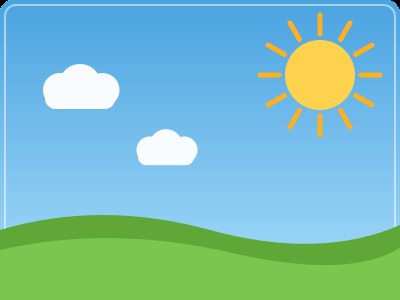
Sunlight looks white, but it is really a mixture of all the colours. As sunlight passes through the air, it bumps into the tiny gas molecules in our atmosphere and gets scattered in all directions. Blue light travels in shorter, smaller waves than red light, and these short blue waves are scattered much more strongly than the others. This scattered blue light spreads right across the sky, so when we look up on a clear day, the sky appears blue. This scattering of light by tiny particles is known as Rayleigh scattering.
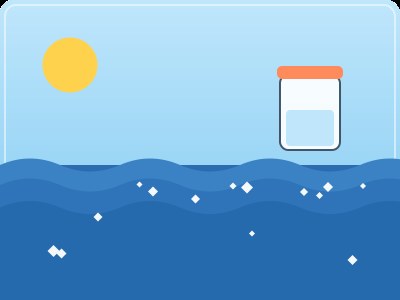
The salt in the sea comes mostly from the land. Rainwater is very slightly acidic, and as it falls on rocks and flows over the land it slowly dissolves tiny amounts of salts and minerals from them. Rivers and streams carry these dissolved salts down to the sea. Some salt also comes from openings in the sea floor. Rivers are replenished with fresh rain, so they never taste salty, but the sea has no outlet. Over millions of years, water leaves the sea by evaporating while the salt stays behind, so the salt has slowly built up and made the sea salty.
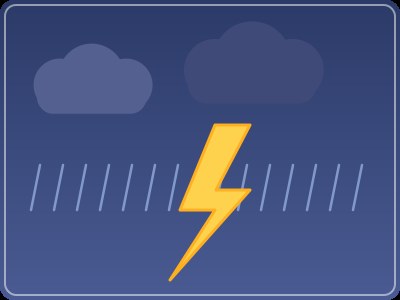
Lightning and thunder actually happen at the very same moment — thunder is simply the sound made by a lightning flash. We see the lightning first because light travels far faster than sound. Light moves at about 300,000 kilometres every second, while sound travels through the air at only about 340 metres every second. So the flash reaches our eyes almost instantly, but the thunder takes longer to reach our ears. The farther away the storm is, the bigger the gap between the flash and the rumble.
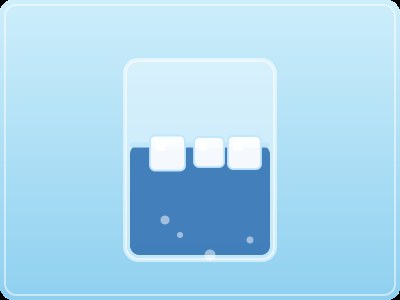
Most things become heavier for their size, or denser, when they freeze — but water is unusual. When water freezes into ice, its molecules join together in an open, ordered pattern that spreads them slightly farther apart than in liquid water. This makes ice a little less dense than the water around it, and because it is lighter for its size, ice floats. This is why ice cubes bob in a drink and why sheets of ice form on top of ponds and lakes rather than at the bottom.
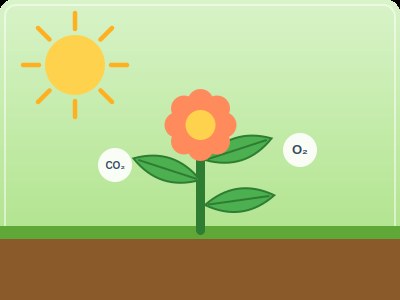
Unlike us, green plants make their own food using sunlight, in a process called photosynthesis. Their leaves contain a green colouring called chlorophyll, which traps the energy in sunlight. The plant takes in a gas called carbon dioxide from the air through tiny holes in its leaves, and draws up water from the soil through its roots. Using the Sun's energy, it combines the carbon dioxide and water to make a sugar, which is its food, and it releases oxygen into the air as it does so. That oxygen is the very gas that we and other animals need to breathe.
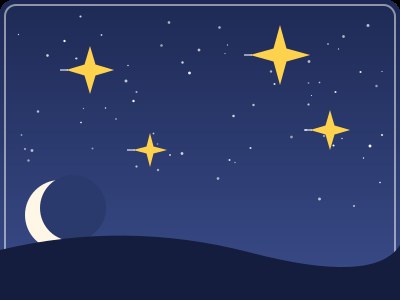
Stars themselves shine with a steady light — they only seem to twinkle because of our atmosphere. Starlight has to pass through many kilometres of moving air before it reaches our eyes. The air is always shifting, and it has warmer and cooler layers of different thicknesses. As the tiny beam of starlight passes through, these moving layers bend it this way and that, so the star seems to flicker and sparkle. This is why stars twinkle but the planets, which look larger and brighter to us, usually shine more steadily.
Goosebumps are the little raised bumps that appear on our skin when we feel cold or suddenly frightened or excited. Each tiny bump is made by a small muscle at the base of a hair, which tightens and pulls the hair upright. In furry animals, this fluffs up their coat to trap warm air and keep them warm, and makes them look bigger when they are scared. Humans have far less body hair, so goosebumps do not do much for us any more — they are a leftover reaction we have inherited from our animal ancestors.
When you cut an onion, you break open its tiny cells, and the chemicals stored inside mix together and react. This reaction releases a gas that drifts up into the air. When the gas reaches your eyes, it mixes with the natural moisture there and mildly stings them. Your eyes protect themselves by making extra tears to wash the irritating gas away — and that is why chopping onions makes you cry. Chilling the onion first, or cutting it under running water, gives off less of this gas and helps keep the tears away.
Hiccups come from the diaphragm, the large sheet of muscle beneath our lungs that helps us breathe. Sometimes the diaphragm becomes irritated — for example if we eat or drink too quickly, gulp air, or eat too much — and it gives a sudden, sharp squeeze. This makes us pull in a quick breath, and the top of the windpipe snaps shut to stop it. That sudden closing is what makes the familiar 'hic' sound. Hiccups are usually harmless and stop by themselves after a little while.
A cat's eyes seem to glow in the dark because of a special mirror-like layer at the back of each eye called the tapetum lucidum. When light enters a cat's eye, this shiny layer reflects it back through the eye a second time. This gives the cat two chances to use the same light, helping it see very well in dim conditions. When a torch or car headlight shines on a cat at night, we see that reflected light bouncing back out as a bright glow. Many other animals that are active at night, such as dogs and deer, have this same shiny layer.
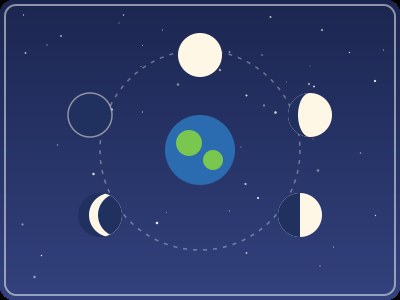
The Moon does not really change shape — it only seems to, because of how sunlight falls on it. The Moon has no light of its own; it shines because one half of it is lit by the Sun. As the Moon travels around the Earth over about a month, we see different amounts of its sunlit side. Sometimes we see all of it (a full Moon), sometimes only a thin curved sliver (a crescent), and sometimes none at all (a new Moon). These changing views are called the phases of the Moon.
When water is heated, its tiny particles gain energy and move about faster and faster. Some of them near the surface gain enough energy to escape into the air as an invisible gas called water vapour. As this hot vapour rises and meets the cooler air, it cools down again and turns back into countless tiny droplets of water floating in the air — and that little cloud of droplets is the steam we can see. So the 'steam' we notice above a hot cup is really water vapour that has cooled into tiny drops.
Magnets pull strongly on only a few metals — mainly iron, and also nickel and cobalt. Inside these metals are countless tiny magnetic regions. Normally they point in all directions and cancel out, but when a magnet comes near, they line up and the metal is pulled towards the magnet. Most other materials, such as aluminium, copper, wood, plastic and glass, do not have this property, so a magnet will not stick to them. That is why a fridge magnet holds on to a steel fridge door, which contains iron, but slides right off a wooden or plastic one.
Sleep is the time when our body and brain rest and repair themselves. While we sleep, the body mends tired muscles and helps us grow, and the brain sorts through everything we have seen and learned during the day, storing away the important memories. Sleep also helps our body fight off illness and lets us wake up feeling fresh, alert and in a good mood. This is why children, whose bodies and brains are still growing, need more sleep than grown-ups — usually around nine to eleven hours each night.
Try out the other sections



 CLAT Aspirants
 Back to School
 Craft Ideas for Kids
 Benefits of Yoga for Kids
 Fun and Jokes
 Stories for Kids
 School Projects & Homework Help
 Hobbies
