
Christmas in the Czech Republic (Czechia)
Vánoce: Mikuláš, Štědrý den, the carp supper and Ježíšek


In the Czech Republic (Czechia), Christmas, Vánoce, is centred on Christmas Eve, Štědrý den ("Generous Day"), 24 December. After a day of fasting, families sit down in the evening to fish soup, fried carp and potato salad, and then a little bell rings to announce that Ježíšek, the Baby Jesus, has left presents under the tree. The season opens with Advent and the visit of Mikuláš (St Nicholas) on the evening of 5 December, and 24, 25 and 26 December are all public holidays.
Advent, Barborka and Mikuláš
Advent wreaths with four candles mark the Sundays before Christmas. On 4 December, St Barbara's Day (Barborka), a cherry branch is cut and put in water; if it blossoms by Christmas Eve, it is said to foretell a wedding within the year.
On the evening of 5 December, the eve of St Nicholas Day, Mikuláš walks the streets in bishop's robes with an angel (anděl) and a devil (čert). Those who recite a poem or sing a song receive sweets and fruit from the angel, while the devil rattles his chains and threatens to carry off the naughty. On 13 December, St Lucy's Day, women dressed in white as Lucie traditionally visited homes in some regions.
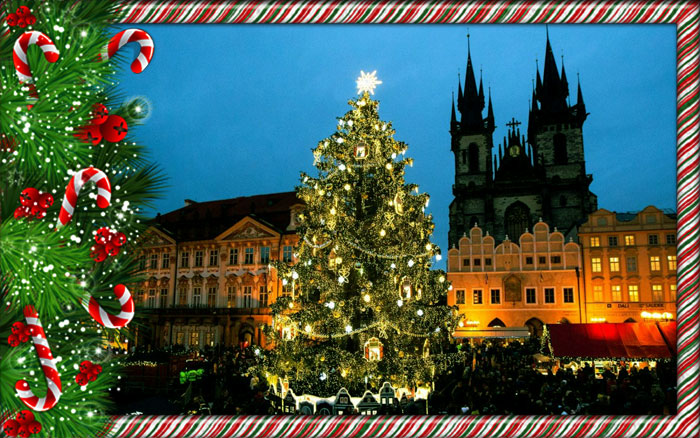
Christmas markets fill Prague's Old Town Square and Wenceslas Square through Advent, with similar markets in Brno, Olomouc and other towns. In the final days before Christmas, live carp are sold from large tubs in the streets.
Štědrý den: the Czech Christmas Eve
Christmas Eve is the heart of Czech Christmas. Traditionally the family fasts during the day; anyone who lasts until dinner is promised a glimpse of the golden piglet (zlaté prasátko) on the wall. The carp bought earlier is often kept alive in the bathtub until the 24th, and some families release it into a river instead of eating it.
Dinner is served in the early evening, starting with fish soup followed by fried carp and potato salad. Some households lay an extra place for an unexpected guest. After the meal a small bell rings: Ježíšek has visited, and everyone gathers around the tree to open presents. Many then go to midnight Mass (půlnoční mše), where Jakub Jan Ryba's Czech Christmas Mass of 1796, known by its opening words "Hej, mistře", is a favourite.
25 December, Boží hod vánoční, is a family day with a roast lunch, often duck, goose or turkey, and 26 December, St Stephen's Day (Štěpán), is a further public holiday traditionally linked with carol singing.
Czech Christmas Eve customs and superstitions
Many old Štědrý den customs foretell the coming year, and several are still played at the table today.
| Custom | What happens | What it means |
|---|---|---|
| Cutting an apple | An apple is cut crosswise through the middle | A clean star means health; a cross means illness |
| Carp scales | A scale is placed under the plate or kept in a wallet | Money throughout the year |
| Walnut-shell boats | Tiny candles in walnut shells are floated on water | A boat that floats far means a long journey |
| Pouring lead | Molten lead or wax is poured into cold water | The shape hints at the year ahead |
| Throwing a shoe | An unmarried woman throws a shoe over her shoulder | Toe towards the door means marriage within the year |
| Golden piglet | Fasting until Christmas Eve dinner | Promise of seeing the zlaté prasátko |
Traditional Czech Christmas food
Carp became the classic Christmas Eve fish because the Catholic Christmas Eve was meatless and carp was raised in large fishponds in South Bohemia, especially around Třeboň. Weeks before Christmas, households bake many kinds of cukroví, small Christmas biscuits such as vanilla crescents (vanilkové rohlíčky), alongside the braided sweet loaf vánočka.
| Food | What it is | When it is eaten |
|---|---|---|
| Rybí polévka | Fish soup, often made from the carp | Christmas Eve dinner |
| Smažený kapr | Breaded fried carp | Christmas Eve dinner |
| Bramborový salát | Potato salad with vegetables and mayonnaise | Christmas Eve dinner |
| Vánočka | Braided sweet bread with raisins and almonds | Throughout Christmas |
| Cukroví | Assorted small Christmas biscuits | Advent and Christmas |
| Roast duck, goose or turkey | Festive roast with dumplings and cabbage | Christmas Day lunch |
Christmas in Czechoslovakia (1918–1992)
From 1918 until the end of 1992, Czechs and Slovaks shared one state, Czechoslovakia, and most of the customs on this page were common to both: Mikuláš with his angel and devil, a meatless Christmas Eve supper with carp, gifts from the Baby Jesus and midnight Mass. Under communist rule from 1948 to 1989, religious celebration was discouraged and the authorities promoted Děda Mráz (Grandfather Frost), the Soviet New Year figure, as a secular gift-bringer, but Ježíšek and the Christmas Eve table survived in family life.
Since Czechoslovakia peacefully split into the Czech Republic and Slovakia on 1 January 1993, both countries have kept these shared traditions, with regional differences in the Christmas Eve meal. See Christmas in Slovakia for the Slovak table of oblátky with honey and kapustnica.
Video: Christmas in the Czech Republic
Christmas in the Czech Republic: frequently asked questions
Who brings Christmas presents in the Czech Republic?
In the Czech Republic presents are brought by Ježíšek, the Baby Jesus, on Christmas Eve. After dinner a small bell rings to announce that he has visited, and the family opens the presents under the tree.
Why do Czechs eat carp at Christmas?
Carp is eaten because the traditional Catholic Christmas Eve was meatless and carp was bred in large fishponds in South Bohemia. Live carp are sold in the streets before Christmas and are often kept in the bathtub until 24 December.
When is Mikuláš in the Czech Republic?
Mikuláš, St Nicholas, visits on the evening of 5 December, the eve of St Nicholas Day. He is accompanied by an angel and a devil, and gives sweets to those who recite a poem or sing a song.
Is Christmas Eve a public holiday in the Czech Republic?
Yes. Christmas Eve, 24 December, is a public holiday in the Czech Republic, as are Christmas Day on 25 December and St Stephen's Day on 26 December.
How was Christmas celebrated in Czechoslovakia?
Czechoslovakia, which existed from 1918 to 1992, shared the customs still kept in the Czech Republic and Slovakia: Mikuláš on 5 December, a meatless Christmas Eve supper with carp, gifts from the Baby Jesus and midnight Mass. The communist regime promoted Grandfather Frost instead, but these family traditions survived.
How do you say Merry Christmas in Czech?
Merry Christmas in Czech is "Veselé Vánoce". A longer greeting is "Veselé Vánoce a šťastný nový rok", meaning Merry Christmas and a Happy New Year.
Usage terms
All images on this page are free to download for personal, non-commercial use, such as copying them at home or printing them as a reference. Please do not resell them, republish them on other websites or use them in advertising. Images © KidsGen.com.
Christmas in nearby countries
 CLAT Aspirants
 Diwali
 Thanksgiving
 Christmas
 Craft Ideas for Kids
 Fun and Jokes
 School Projects & Homework Help
 Hobbies

CLAT Preparation for Students
Class 12 Accounts Mock Papers
Thanksgiving Greetings
Chritmas Greeting Cards
Christmas Around the World
New Year 2027
Hanukkah Cards
7 Continents of the World
Moral Stories
Fairy Tales and Fables
Classic Stories
Betal Pachisi
Singhasan Battisi
Indian Mythology stories
School Projects
Quiz on Famous Footballers
Unsolved Mysteries
Pets & Pet Care
Wishes and Greetings in Many Languages