
When is Diwali 2026?
Diwali 2026 is on Sunday, 8 November. Lakshmi Puja is performed that evening on Amavasya, the new-moon night of the Hindu month of Kartika. The five days of Diwali run from Dhanteras on Friday, 6 November to Bhai Dooj on Wednesday, 11 November. In 2026, Choti Diwali and the main Diwali fall on the same day, and Monday 9 November is a gap day between the celebrations.
| Date | Day of Diwali | What happens |
|---|---|---|
| Day 1: Dhanteras | Shopping for gold, silver or new utensils; worship of Dhanvantari and Lakshmi; first diyas at the door | |
| Day 2: Naraka Chaturdashi (Choti Diwali) | Pre-dawn oil bath; in Tamil Nadu and much of the South, this morning is Deepavali itself | |
| Day 3: Diwali, Lakshmi Puja | Lakshmi and Ganesha puja at dusk, diyas and rangoli everywhere, sweets and fireworks; Kali Puja in Bengal | |
| Day 4: Govardhan Puja | Annakut food offerings to Krishna; Gujarati New Year (Bestu Varas); Padwa in Maharashtra; Bali Pratipada in Karnataka | |
| Day 5: Bhai Dooj | Sisters apply tilak and pray for their brothers; Bhai Phonta in Bengal, Bhau Beej in Maharashtra |
Why the dates bunch up in 2026: each day of Diwali follows a lunar tithi rather than a fixed calendar date. This year the Chaturdashi tithi is present at dawn on 8 November and the new moon begins that evening, so Choti Diwali and Lakshmi Puja share a date. The new moon then runs into the morning of 9 November, which pushes Govardhan Puja to the 10th.
The 5 days of Diwali explained
Day 1: Dhanteras
Dhanteras, or Dhantrayodashi, opens the festival on the thirteenth lunar day. It honours Dhanvantari, the physician of the gods, and Goddess Lakshmi. Buying gold, silver, a new steel or brass utensil, or even a new broom is considered lucky, and a lamp for Yama, the god of death, is lit at the doorway to protect the family.
Day 2: Naraka Chaturdashi (Choti Diwali)
Naraka Chaturdashi recalls Lord Krishna's victory over the demon Narakasura. Many families rise before dawn for an oil bath (abhyanga snan), put on new clothes and light the first crackers. In Tamil Nadu and much of South India this morning is celebrated as Deepavali.
Day 3: Diwali and Lakshmi Puja
The main Diwali night falls on Amavasya, the darkest night of the month. Homes are lit with rows of diyas, rangoli is drawn at the entrance, and Lakshmi and Ganesha are worshipped at dusk for prosperity and wisdom. Traders open new account books. In Bengal, Assam, Odisha and Tripura the same night is Kali Puja.
Day 4: Govardhan Puja
Govardhan Puja remembers Krishna lifting Govardhan Hill to shelter villagers from Indra's storms. Temples and homes offer Annakut, a "mountain of food". In Gujarat it is Bestu Varas, the New Year; in Maharashtra it is Padwa; and in Karnataka, Bali Pratipada honours King Mahabali.
Day 5: Bhai Dooj
Bhai Dooj celebrates the bond between brothers and sisters. Sisters apply a tilak to their brothers' foreheads and pray for their long life, and brothers give gifts in return. It is called Bhai Phonta in Bengal, Bhau Beej in Maharashtra and Bhai Tika in Nepal.
Why is Diwali celebrated?
The name Diwali comes from the Sanskrit Deepavali, "a row of lamps". At its heart the festival celebrates the victory of light over darkness, good over evil and knowledge over ignorance. Different communities remember different stories on the same night:
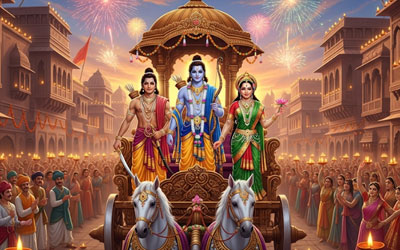
- Rama's return to Ayodhya: in North India, Diwali marks Lord Rama, Sita and Lakshmana coming home after 14 years of exile and the defeat of Ravana, when the people of Ayodhya lit lamps to welcome them.
- Goddess Lakshmi: the goddess of wealth is believed to visit clean, well-lit homes on Diwali night.
- Krishna and Narakasura: in the South, Deepavali celebrates Krishna's defeat of the demon Narakasura.
- Goddess Kali: in eastern India, the fierce goddess who destroys evil is worshipped through the night.
- Bandi Chhor Divas: Sikhs celebrate the release of Guru Hargobind from Gwalior Fort, and the Golden Temple in Amritsar is lit with lamps.
- Mahavira's nirvana: for Jains, Diwali marks the day Lord Mahavira attained liberation.
Read the full stories in History of Diwali and About Diwali.
How Diwali is celebrated
- Cleaning and decorating: homes are cleaned and decorated before Dhanteras to welcome Lakshmi. See our Diwali decoration ideas.
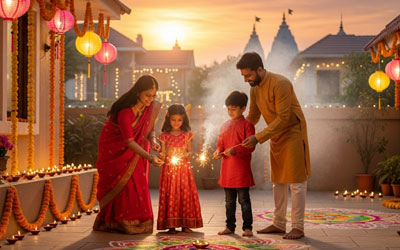
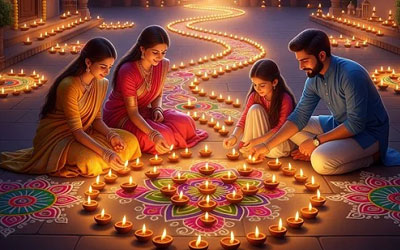
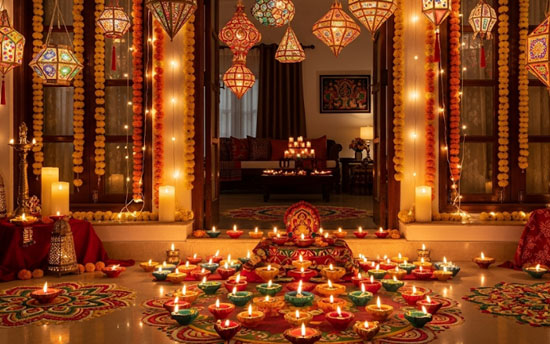
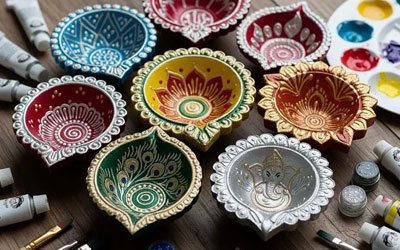
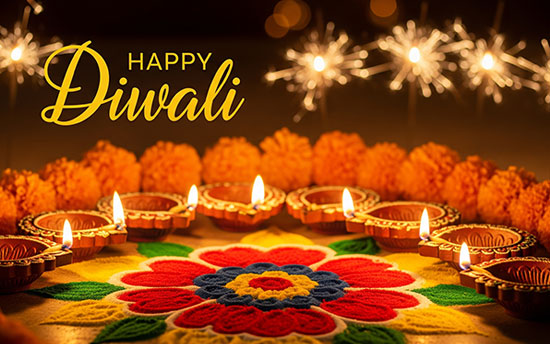
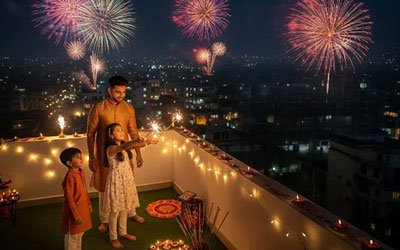
- Diyas and lights: clay oil lamps line doorsteps, balconies and windows, alongside lanterns and fairy lights.
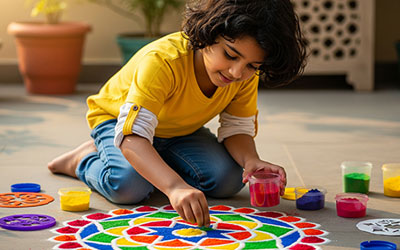
- Rangoli: colourful patterns of powder or petals are drawn at the entrance. Try our rangoli designs to download.
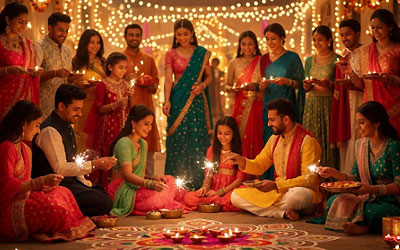
- Lakshmi Puja: the family gathers at dusk on the main Diwali night to worship Lakshmi and Ganesha.
- Sweets and gifts: ladoos, barfis and dry fruits are made, shared and gifted. Find Diwali recipes.
- New clothes and visits: families dress up, visit relatives and exchange greetings and Diwali cards.
- Fireworks: many cities limit crackers to green crackers or fixed hours, so check local rules and read our fireworks safety tips.
Learn about Diwali
The story, meaning and traditions behind the festival of lights.
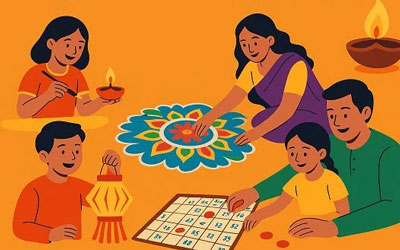
Decorate for Diwali
Rangoli, lamps and handmade decorations for your home.
Cards, wallpapers and colouring
Greetings to send and images to download, print or colour.
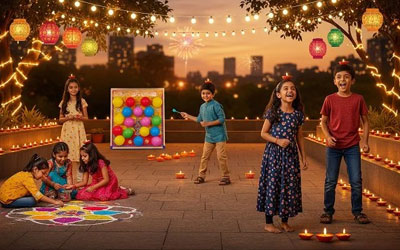
Games, quizzes and activities
Festive fun for the whole family.
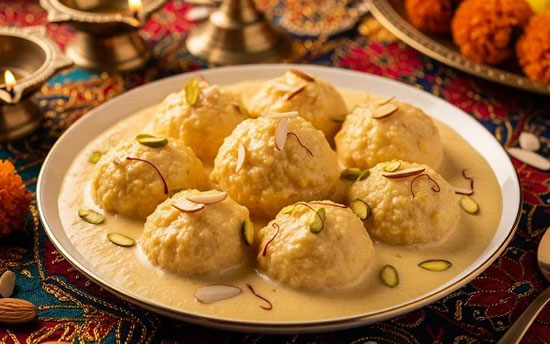
Food and safety
Sweets for the table and tips for a safe celebration.
Diwali dates in future years
| Year | Diwali date |
|---|---|
| 2026 | |
| 2027 | |
| 2028 | |
| 2029 |
Diwali always falls on the new moon of the Hindu month of Kartika, which is why its date moves between mid-October and mid-November each year.
Diwali 2026: frequently asked questions
When is Diwali in 2026?
Diwali 2026 is on Sunday, 8 November, when Lakshmi Puja is performed in the evening. The five-day festival begins with Dhanteras on Friday, 6 November and ends with Bhai Dooj on Wednesday, 11 November.
What are the 5 days of Diwali in 2026?
The five days of Diwali 2026 are Dhanteras on Friday 6 November, Naraka Chaturdashi (Choti Diwali) and Lakshmi Puja both on Sunday 8 November, Govardhan Puja on Tuesday 10 November and Bhai Dooj on Wednesday 11 November.
Why are Choti Diwali and Diwali on the same day in 2026?
The festival days follow lunar tithis rather than calendar dates. In 2026 the Chaturdashi tithi is present at dawn on 8 November and the Amavasya (new moon) needed for Lakshmi Puja begins that evening, so both fall on Sunday, 8 November. Because the Amavasya continues into the morning of 9 November, Govardhan Puja moves to 10 November.
Why is Diwali celebrated?
Diwali celebrates the victory of light over darkness and good over evil. In North India it marks Lord Rama's return to Ayodhya after defeating Ravana; it is also the night Goddess Lakshmi is worshipped for prosperity. In the South it recalls Lord Krishna's victory over Narakasura, Sikhs celebrate Bandi Chhor Divas and Jains mark the nirvana of Lord Mahavira.
What does the word Diwali mean?
Diwali comes from the Sanskrit word Deepavali, meaning a row of lamps. It refers to the rows of clay diyas that are lit in homes, temples and streets on the festival night.
Is Kali Puja on the same day as Diwali in 2026?
Yes. In West Bengal, Assam, Odisha and Tripura, Kali Puja is celebrated on the same new-moon night as Diwali, Sunday 8 November 2026, with Goddess Kali worshipped through the night.
When is Diwali in 2027?
Diwali 2027 is on Friday, 29 October. In 2028 it falls on Tuesday, 17 October, and in 2029 on Monday, 5 November.
How is Diwali celebrated at home?
Families clean and decorate their homes, draw rangoli at the entrance, light diyas and lanterns, perform Lakshmi and Ganesha puja in the evening, wear new clothes, exchange sweets and gifts, and in many places light fireworks.
Usage terms
Images on this page are © KidsGen.com and may be shared for personal, non-commercial use with a link back to this page. Please do not resell them, republish them on other websites or use them in advertising.
 CLAT Aspirants
 Halloween
 Diwali
 Craft Ideas for Kids
 Benefits of Yoga for Kids
 Fun and Jokes
 School Projects & Homework Help
 Hobbies

