

The Story of Ganga's Descent: How Shiva Became Gangadhara
A king once prayed for generations to bring a sacred river down from the heavens to earth — but the river's power was so immense that the earth itself could not have survived her fall. Only Shiva could catch her safely.
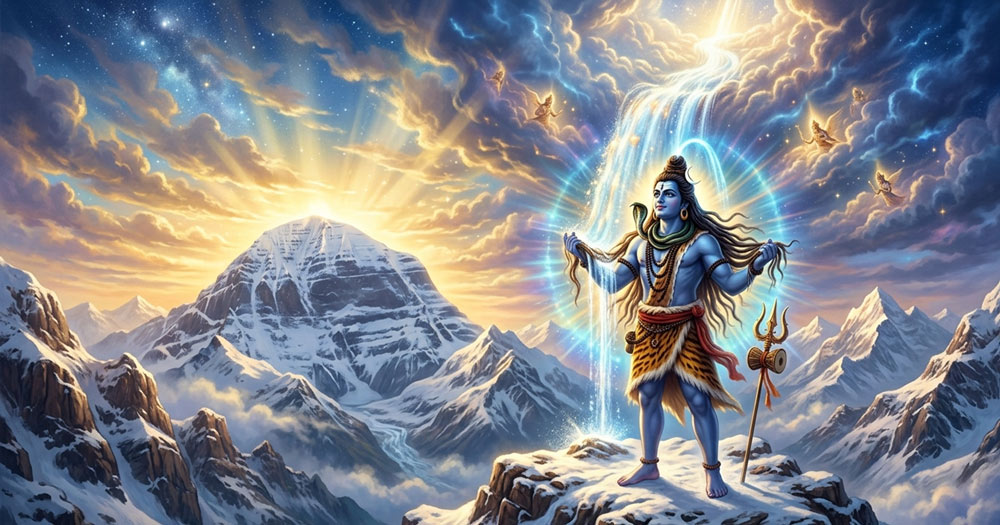
A King's Long Prayer
Generations before this story begins, King Bhagiratha's ancestors, sixty thousand princes in number, had been reduced to ashes by the curse of an angry sage, their souls left unable to find peace or move on. Bhagiratha, learning of his family's terrible burden, resolved to correct it, and understood that only the sacred waters of the heavenly river Ganga, poured over their ashes, could finally purify their souls and set them free.
For many long years, Bhagiratha performed severe penance, praying first to Brahma for Ganga's release from the heavens. Brahma agreed to let her descend, but issued a serious warning: her tremendous force, falling directly from such a height, would strike the earth with enough power to shatter it entirely.
Understanding this danger, Bhagiratha turned his prayers next toward Lord Shiva, the only being he believed strong and steady enough to receive such tremendous force safely, and asked him to help ease Ganga's fall.
A River's Pride
Ganga herself, confident in her own overwhelming power, privately believed that she could sweep even Shiva completely off his feet the moment she made contact with him, and perhaps carry him away entirely along with everything else in her path as she descended. This quiet arrogance shaped her thinking as the appointed moment for her descent finally arrived.
As Ganga crashed downward from the heavens with a deafening, earth-shaking roar, Shiva calmly stood his ground upon the peak of Kailash and simply opened his long, thick, matted locks of hair to receive her. The entire tremendous river poured directly into the maze of his hair, its full force absorbed almost instantly.
Lost and Found in the Hair of Shiva
Rather than sweeping through effortlessly as she had expected, Ganga instead found herself completely lost within the dense, labyrinthine tangle of Shiva's hair, wandering endlessly through its coils for what felt like years without ever finding a way out. Her early pride slowly gave way, bit by bit, to genuine humility as she came to understand just how thoroughly her own power had been contained.
Bhagiratha, watching this unfold and fearing his long quest might end in failure after all, continued his devoted prayers without pause, asking Shiva to finally release the river so that his ancestors' souls might at last find peace. Moved by this continued devotion, Shiva compassionately created several narrow openings within his hair, allowing Ganga to flow out gently, in gentle, life-giving streams rather than as a single, destructive flood.
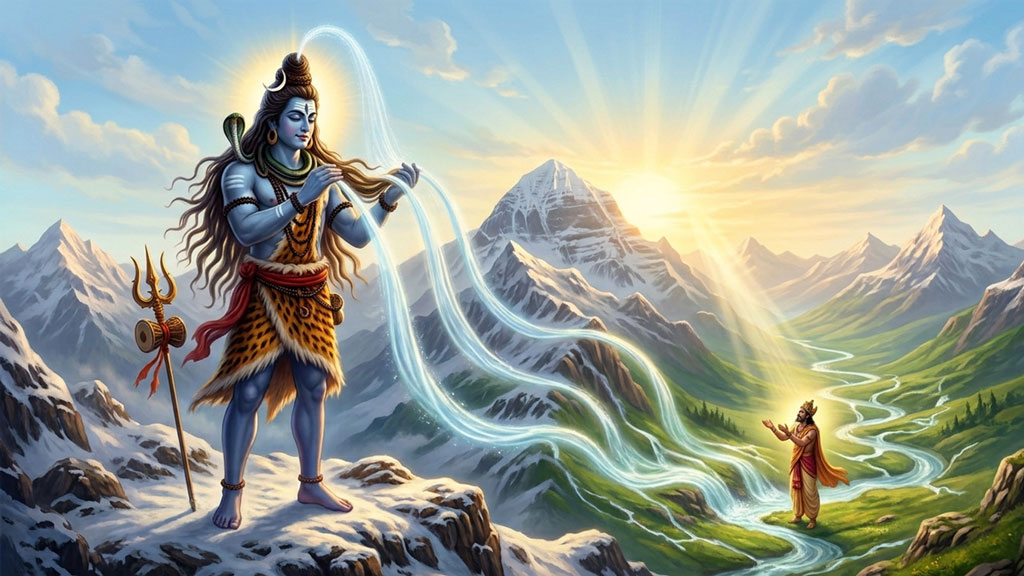
From that day forward, Lord Shiva became known by a new name in honour of this feat: Gangadhara, 'the one who bears the Ganga' — and the river, now calm and life-giving, flowed onward across the plains, eventually reaching the ashes of Bhagiratha's ancestors and granting them, at last, the peace they had waited so long to receive.
Why This Story Matters
This story is a gentle way to explain how something powerful — like the river Ganga, or even a big feeling — can be guided calmly rather than let loose all at once. Shiva doesn't stop the river's power; he simply slows it down enough for it to become helpful instead of harmful.
Quick Questions
Why couldn't Ganga come down to earth directly?
Ganga's force was believed to be so powerful that the earth could not withstand her fall directly, so Shiva agreed to catch her in his hair to soften the impact.
What does the name Gangadhara mean?
Gangadhara means 'the bearer of the Ganga,' a name given to Shiva after he caught the mighty river in his matted hair and released her gently onto the earth.