

Lohengrin and Elsa the Beautiful
Elsa, the young Duchess of Brabant, found herself in a dangerous position after the death of her father. Many lords sought her hand in marriage and control of her lands, and the most forceful of them all was Count Telramund, her own former guardian, who had ruled in her family's name since her father's passing and had no intention of giving up his power easily.
When Elsa refused to marry him, Telramund accused her before the royal court of a terrible crime she had not committed, declaring that unless someone could defend her honour in single combat, she would be found guilty and lose everything. Elsa, alone and without a champion, could only pray for help as the day of the trial approached.
On the very morning of the trial, a strange and wonderful sight appeared on the river: a small boat, pulled gracefully across the water by a swan, carrying a knight in shining armour whom no one at court had ever seen before. He introduced himself only as Lohengrin, and without hesitation, he offered to fight on Elsa's behalf.
Lohengrin defeated Telramund in the trial by combat, proving Elsa's innocence before the entire court, and the two were soon married. But Lohengrin made one condition of their marriage absolutely clear before the wedding: Elsa must never ask him his true name or where he had come from. For a time, the couple lived happily, and Lohengrin ruled wisely and fairly beside her.
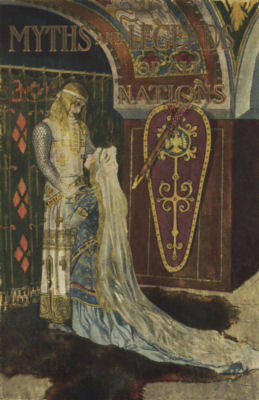
As the years passed, however, whispers and doubts crept into Elsa's heart, fed by those around her who questioned why her husband's past remained such a mystery. Unable to resist any longer, Elsa finally asked Lohengrin the forbidden question. Bound by the promise he had made when he first arrived, Lohengrin had no choice but to reveal his true identity — and having done so, he was obliged to leave. The same swan that had carried him to Brabant returned to carry him away again, leaving Elsa to rule alone, wiser for the mystery she had finally understood too late to keep him.
Who's Who in This Story
- Lohengrin — the mysterious "Swan Knight" who defends Elsa's honour
- Elsa — the young Duchess of Brabant, falsely accused by Telramund
- Count Telramund — Elsa's former guardian, who falsely accuses her to seize power
Did You Know?
- Lohengrin's legend is closely connected to the Arthurian legends, and in some versions he is described as the son of the knight Percival.
- The composer Richard Wagner turned this legend into one of his most famous operas, simply titled Lohengrin.
- The "Bridal Chorus," a piece of music from Wagner's opera, is still widely played at weddings today as the tune often called "Here Comes the Bride."
Lohengrin's legend gently reminds us that trust, once given, is a promise worth keeping — and that some mysteries are better honoured than solved.