
Beautiful Rangoli Designs for Diwali: A Guide to Festive Floor Art
Rangoli, the vibrant art of decorating floors with patterns, is an integral part of Diwali celebrations. More than just a beautiful decoration, a rangoli is believed to welcome gods and goddesses, particularly Goddess Lakshmi, into the home. It is a creative expression of joy and a way to add color and positive energy to your living space. Whether you're a seasoned artist or a beginner, this guide will provide you with beautiful ideas and tips to create a stunning rangoli for the festival of lights.
The Significance of Rangoli in Diwali
Rangoli is a revered folk art in India that goes far beyond simple decoration. It is a form of spiritual expression, a welcoming gesture, and a profound lesson about the nature of life. The cultural and spiritual importance of rangoli is deeply interwoven into daily rituals and major festivals, particularly Diwali.
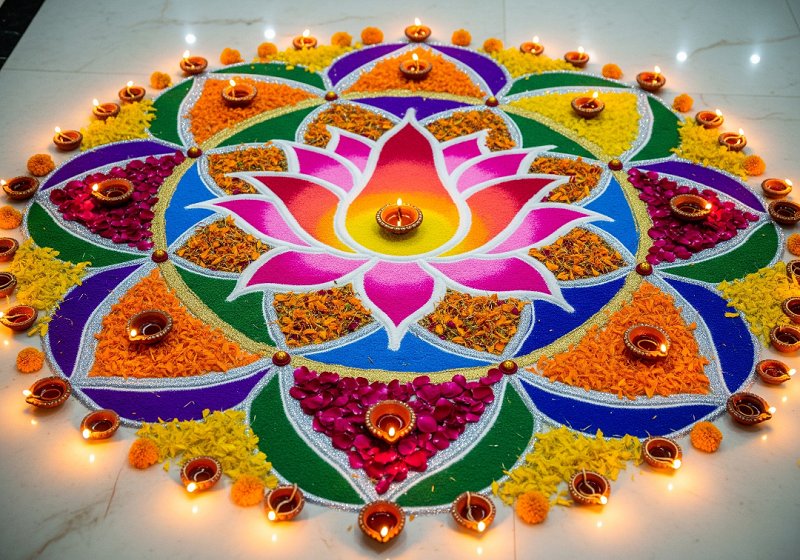
Essential Materials and Tools
Main Materials for Your Rangoli
- Colored Powders: This is the most common material. You can buy ready-made rangoli powders in a wide array of vibrant colors.
- Rice Flour: Many traditional rangolis are made using rice flour, which is a naturally white powder. It's a great base for your design, and you can mix it with spices or food coloring to create your own colors.
- Fresh Flower Petals: For a fragrant and eco-friendly rangoli, use fresh flower petals. Marigolds, roses, and jasmine petals are excellent choices for their color and scent.
- Colored Sand or Sawdust: These materials are often used for outdoor rangolis as they are durable and create a textured look.
Essential Tools for Rangoli Art
- Sieve or Shaker: A fine sieve is perfect for creating a smooth, even base layer. A small shaker bottle with a thin nozzle can help you pour the powder with precision.
- Rangoli Pens: These are small plastic pens with funnels that allow you to draw clean, thin lines with colored powders, making intricate patterns much easier to create.
- Stencils: For beginners or those short on time, stencils are a lifesaver. You can find stencils in various designs that you simply place on the floor and fill with your chosen colors.
- Small Spoons or Cones: You can use a small spoon to pour powder or make your own cones from paper to create fine, detailed lines in your design.
Traditional Rangoli Designs
The Classic Circular Pattern
This rangoli is characterized by a central point from which a series of circles radiate outwards. Each successive circle is a new layer, and the spaces between them are meticulously filled with different colors and patterns. The beauty of this design lies in its perfect symmetry, with each ring complementing the one before it, creating a harmonious and balanced whole.
Common Motifs
The spaces between the circles are often filled with a variety of motifs, each with its own significance:
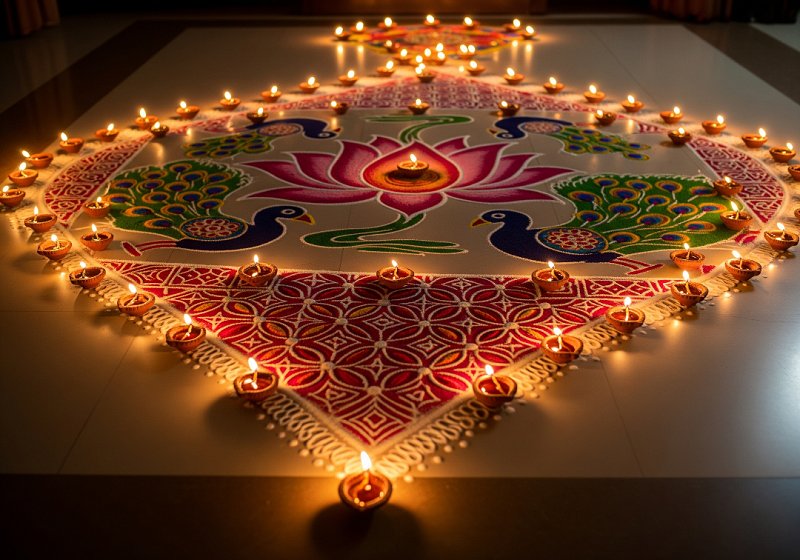
- Lotus Flowers: A popular choice for their association with purity and the goddess Lakshmi.
- Peacocks: Symbolize beauty, grace, and eternal life.
- Geometric Patterns: Triangles, squares, and stars are used to add a modern touch and represent stability and harmony.
- Auspicious Symbols: The diya, Swastika, and Om are often incorporated to bring good luck and divine blessings.
- Natural Elements: Designs can also feature leaves, vines, and other natural patterns to represent a connection to nature.
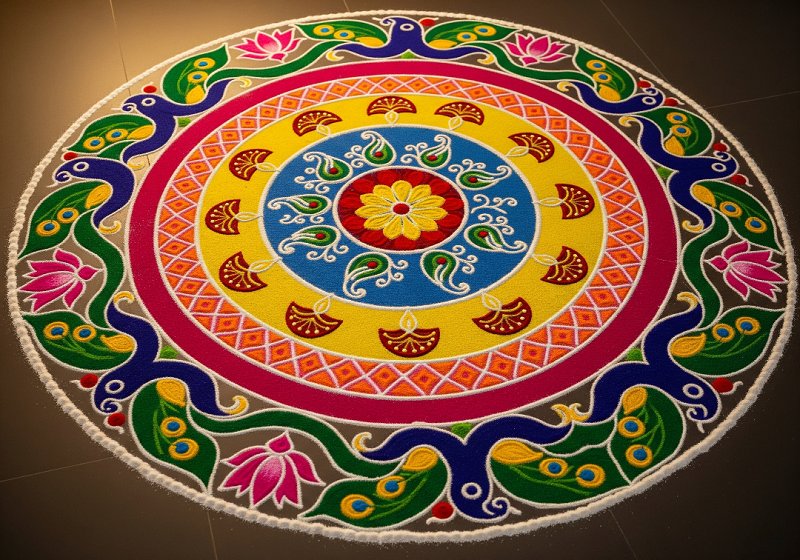
Auspicious Symbols
Traditional rangolis often incorporate sacred symbols that are believed to bring good fortune and divine blessings. These include:
- The Lotus: A symbol of purity, beauty, and the divine, often associated with Goddess Lakshmi.
- The Diya: The oil lamp symbolizes the triumph of light over darkness and knowledge over ignorance.
- The Swastika: A symbol of prosperity, good luck, and a new beginning.
- The Om: The sacred sound and symbol of the universe, representing divine energy and spiritual peace.
- The Peacock: A symbol of beauty, grace, and eternal life.
Modern and Contemporary Rangoli Ideas:
The Floral Rangoli
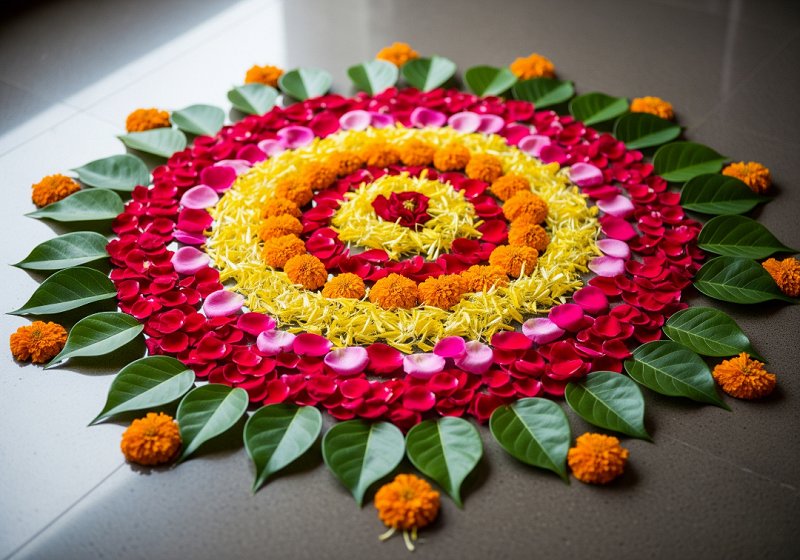
Creating a rangoli with a mix of fresh flower petals is a beautiful way to bring the natural vibrancy and fragrance of the outdoors into your home for Diwali. Using a combination of marigolds, roses, and leaves allows you to play with a rich palette of colors and textures, resulting in a stunning and fragrant masterpiece.
Step 1: Gather and Prepare Your Materials
First, gather your fresh flowers and leaves. A great combination to use is:
- Marigolds: For their rich orange and yellow petals.
- Roses: For their vibrant red, pink, or white petals.
- Leaves: Use fresh green leaves, such as mango leaves, to add a contrasting color and shape.
Gently pluck the petals from the flowers and separate them into different bowls by color. Keep the leaves intact.
Step 2: Create Your Outline
On a clean, flat surface, such as your entryway or a courtyard, create a simple outline for your rangoli. You can use chalk to draw a basic pattern, or you can start with a central flower or object and build the design outwards. A simple circular or star shape works wonderfully for a floral rangoli.
Step 3: Fill the Design with Petals and Leaves
- The Marigold Base: Begin by filling the largest sections of your design with marigold petals. Their volume and vibrant color make them perfect for creating the main, bold circles or geometric shapes. You can use a mix of yellow and orange marigolds to create a lovely gradient effect.
- The Rose Petal Contrast: Use your rose petals to create borders, inner sections, or delicate accents. A ring of deep red rose petals surrounding a marigold section creates a striking contrast. White or pink rose petals can be used to break up the warmer colors and add a soft, elegant touch.
- The Green Leaf Accents: Use the leaves to add a beautiful natural border or to create a detailed outline. You can use them to form a green ring around the entire rangoli or to make small, leaf-shaped motifs within the design.
Step 4: The Finishing Touches
Once you have filled in your design, step back and admire your work. For a final, beautiful touch, place a few lit diyas or small oil lamps strategically within the design. The flickering glow of the lamps will illuminate the colors of the petals, making your floral rangoli a truly magical centerpiece for your Diwali celebrations.
Abstract and Geometric Designs
To create a rangoli with a modern, minimalist aesthetic, focus on simple geometric shapes like squares, triangles, and lines. This style offers a clean and contemporary look that is a refreshing alternative to traditional, intricate patterns.
Rangoli Ideas
- The Grid: Instead of a complex circular design, create a large grid pattern using straight lines. You can make a series of intersecting squares or a simple checkerboard. Fill each square with a different solid color for a bold, graphic look. To add a festive touch, place a single small diya in the center of a few of the squares.
- The Triangle Motif: Use triangles to create a modern, dynamic design. You can arrange them to form a large central star, or create a repeating pattern of triangles that points outwards from a central point. Use a simple color palette, such as two or three complementary colors, to maintain the minimalist feel.
- The Striped Rangoli: For a quick and easy modern design, create a series of thick, parallel lines of different colors. You can make them horizontal, vertical, or diagonal. This style is particularly effective in an entryway, as it creates a striking visual path.
Materials and Tips
- Use a Limited Color Palette: Stick to two or three colors. Black, white, gray, and gold create a very chic and modern look, while a combination of bright colors like turquoise, fuchsia, and lime green can be just as modern but with a more vibrant feel.
- Keep it Clean: The key to a modern rangoli is clean, straight lines. Use a scale or a piece of cardboard as a guide to help you create sharp edges.
- Add a Modern Accent: Instead of traditional diyas, use small, battery-operated LED candles or glass tealight holders for a clean and contemporary glow.
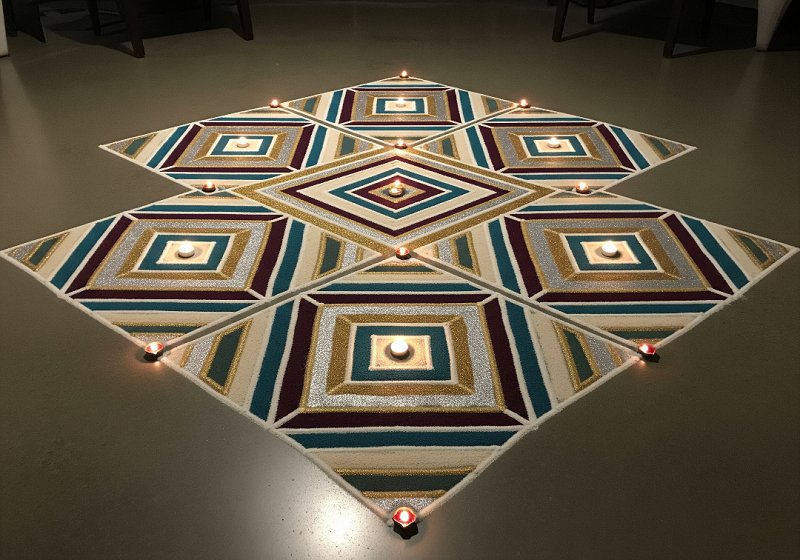
Rangoli with Diyas: A Magical Combination
Combining a rangoli with the warm glow of diyas is a magical way to elevate your Diwali decorations. The flickering light brings the colors of the rangoli to life and symbolizes the festival's central theme of light over darkness.
How to Enhance a Rangoli with Diyas
- The Border Glow: One of the simplest and most effective ways to use diyas is to place them along the outer border of your rangoli. Arrange the diyas at a consistent distance from each other, creating a luminous frame around your artwork. This arrangement not only defines the rangoli's shape but also makes it a brilliant focal point in any room.
- Highlighting the Design: Place a diya inside the rangoli itself to highlight key features of your design.
- In the Center: A single diya placed in the very center of the rangoli draws all attention inward and symbolizes the spiritual light at the heart of the home.
- On Motifs: Place diyas on the petals of a lotus flower, the points of a star, or within the patterns of a peacock motif. This adds a beautiful, three-dimensional glow that brings the design to life.
- Creating a "Path of Light": If your rangoli has radiating lines or a geometric pattern, you can place a diya at the end of each line or on each corner of a square. This creates a "path of light" that seems to flow outwards from the rangoli, spreading its positive energy into the room.
- Mixing with Flowers: For a floral rangoli, place the diyas in a way that the light reflects on the petals. You can place a diya in the middle of a circle of marigolds or surround a diya with a ring of rose petals. The contrast between the flickering flame and the vibrant colors of the flowers is truly breathtaking.
 Back to School
 Craft Ideas for Kids
 Benefits of Yoga for Kids
 Fun and Jokes
 Stories for Kids
 School Projects & Homework Help
 Hobbies

 Change Language:
Try out the other sections