
| Origin | Irish folklore, the tale of Stingy Jack |
|---|---|
| Original material | Hollowed-out turnips, swedes or beets |
| Became a pumpkin | After the tradition reached North America with Irish immigrants |
| Safest light source | Battery-operated LED tea light, not an open flame |
| Carving time | About 30 to 45 minutes for a simple face |
| Halloween 2026 | Saturday, 31 October 2026 |
Last updated: 28 August 2026
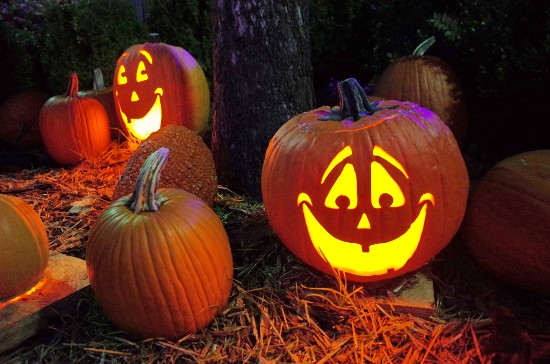
The legend of Stingy Jack
The story is old enough that nobody can point to exactly where or when it was first told, but versions of it have circulated in Ireland for generations, and it always centres on the same character: a clever, lazy, hard-drinking man everyone in his village had learned to call Stingy Jack.
Jack wasn't dangerous, exactly — just relentlessly, exhaustingly dishonest. He talked his way out of debts, played cruel jokes on people who'd never done him any harm, and generally treated the truth as something for other, less clever people to bother with. So when the Devil himself came to collect Jack's soul one evening, having heard enough about this troublesome man to come and see for himself, Jack did what Jack always did: he looked for an angle.
He offered the Devil one last drink before they left. The Devil agreed, and Jack, with no money on him, persuaded the Devil to turn himself into a silver coin to cover the bar bill. The Devil, amused, obliged — and Jack immediately pocketed the coin next to a small silver cross he happened to be carrying. A cross held that close to a coin is enough to trap whatever the coin really is, and the Devil found himself stuck. Jack only agreed to let him change back on one condition: that the Devil leave him alone for a full year, and not come looking for his soul at all.
The Devil agreed, furious, and kept his word. But a year is not forever, and when he came back, Jack tricked him again — this time convincing the Devil to climb an apple tree to fetch some fruit, then quickly carving crosses into the bark all around the trunk so the Devil couldn't climb back down. Trapped a second time, the Devil had no choice but to bargain again. This time Jack asked for something bigger: a promise that the Devil would never claim his soul at all.
Years later, Jack died, as everyone eventually does, tricks or no tricks. He went first to the gates of Heaven, but was turned away — he'd lived a selfish, deceitful life, and there was no place for him there. So he went to the only other door he knew, down to the gates of Hell. But the Devil was waiting, and kept the promise Jack himself had extracted all those years before: he would not take Jack's soul, not now, not ever.
Jack was left with nowhere to go. Not good enough for Heaven, not permitted into Hell — caught, permanently, in between. Some part of the Devil, or perhaps just his sense of humour, made him toss Jack a single ember from the fires of Hell, just enough to see by in the endless dark. Jack, always resourceful, had a turnip in his pocket. He hollowed it out, set the ember inside, and has supposedly been wandering the earth with it ever since, looking for a resting place he'll never find. The Irish began calling him "Jack of the Lantern" — Jack-o'-lantern — and the name stuck.
From turnip to pumpkin
For a long time, the "lanterns" people carved to mark the story, and to ward off Jack and other wandering spirits on the night when the dead were said to walk, were made from turnips, swedes or beets — whatever hard root vegetable was easiest to hollow out. When large numbers of Irish immigrants arrived in North America in the nineteenth century, they found a vegetable that did the job far better: the pumpkin. It was bigger, softer to carve, and grew abundantly across the continent. Within a generation or two, the pumpkin had all but replaced the turnip, and the Jack-o'-lantern as it's recognised today was born.
How to carve a Jack-o'-lantern: a step-by-step guide
Carving one is a straightforward project for a family evening. Here's a safe way to do it from start to finish.
What you'll need
- A fresh, medium-to-large pumpkin with a sturdy stem
- A pumpkin carving kit, or a sharp, sturdy kitchen knife
- A large spoon or scoop
- A marker or pen
- A battery-operated LED tea light
- Newspaper or a plastic sheet to protect your work surface
- Prepare your work area. Choose a flat, well-lit surface and cover it with newspaper or a plastic sheet — pumpkin carving is messier than it looks, and this saves the cleanup.
- Cut the lid. Cut a circle around the stem at a 45-degree angle, angled inward, so the lid won't fall through the hole once it's back in place. Make the opening wide enough to fit a hand through comfortably.
- Scoop out the seeds and pulp. Reach inside and clear out all the stringy pulp and seeds with a large spoon, scraping the inside walls down to about an inch thick so it's easier to carve. Set the seeds aside if you want to roast them afterwards.
- Draw the face. Decide on a design — classic triangle eyes, a toothy grin, or something entirely your own — and sketch it directly onto the skin with a marker before making any cuts.
- Carve the face. Cut along the lines you've drawn, working from the centre of each shape outward. This makes it much less likely that a delicate piece, like a thin nose or a tooth, will snap off partway through.
- Add detail if you like. Smaller tools, or even a drill for shallow surface patterns, can add texture without cutting all the way through the skin.
- Light it safely. Set a battery-operated LED tea light inside rather than an open flame, put the lid back on, and your Jack-o'-lantern is ready for the porch.
Pumpkin carving safety
- An adult should always supervise carving, and should do the cutting itself for young children.
- Use a proper pumpkin carving tool rather than a large kitchen knife where possible — the blades are shorter and less likely to slip.
- Carve on a flat, stable surface so the pumpkin can't roll or tip while you're cutting.
- Choose an LED tea light over a real candle. It gives a similar glow with no risk of fire near dry pumpkin flesh or nearby decorations.
- Keep any lit pumpkin, LED or otherwise, away from paper decorations, curtains and costumes.
Common questions about Jack-o'-lanterns
Who is Stingy Jack in the Jack-o'-lantern legend?
Stingy Jack is a trickster figure from Irish folklore who is said to have twice outwitted the Devil, only to be turned away from both Heaven and Hell after he died. Left to wander the dark with nothing but a burning coal, he is said to have carried it inside a hollowed-out turnip, giving us the name Jack-o'-lantern.
Why do people carve pumpkins instead of turnips?
The original Irish lanterns were carved from turnips, swedes or beets. When Irish immigrants brought the tradition to North America in the nineteenth century, they found pumpkins larger, softer to carve, and far more plentiful, and pumpkins gradually became the standard.
Is it safe for kids to carve pumpkins?
Young children can help with the parts that don't involve a blade, such as drawing the face and scooping out the pulp. Cutting should be done by an adult or an older child using a proper pumpkin carving tool rather than a kitchen knife, on a stable, well-lit surface.
How long does a carved pumpkin last?
A carved pumpkin typically stays fresh for about five to ten days at room temperature. Keeping it in a cool spot out of direct sun, and refrigerating it overnight if possible, can extend that by several more days.
Should I use a real candle or an LED light inside?
A battery-operated LED tea light is the safer choice. It gives a similar glow without an open flame near dry pumpkin flesh, paper decorations or costumes, and it won't blow out or need to be relit.