
Christmas in Canada
From Québec's réveillon to Newfoundland's mummers: a winter Christmas, province by province


Christmas in Canada is a winter festival celebrated on 25 December, with Boxing Day following on 26 December. Most Canadians mark it with a decorated tree, lights on homes, Santa Claus parades, church services on Christmas Eve, presents on Christmas morning and a turkey dinner. Canada's two founding cultures give it two styles: in Québec and French-speaking communities the highlight is the réveillon, a feast after midnight Mass on Christmas Eve, while English Canada follows British and American customs. Newfoundland's mummers, Ukrainian Christmas Eve suppers on the Prairies, community feasts in the Arctic and a near-certain white Christmas in much of the country make it distinctly Canadian.
How Canadians celebrate Christmas
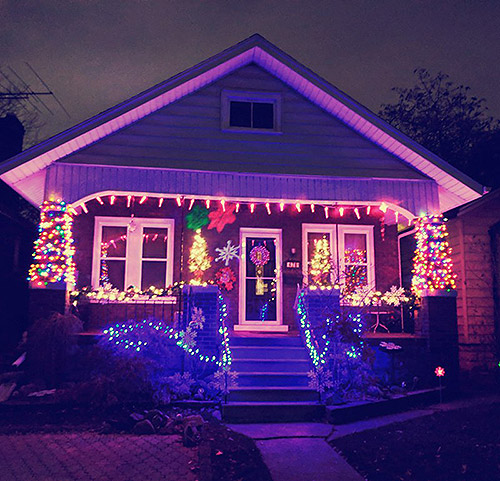
The Canadian season begins in mid-November with Santa Claus parades. Toronto's Santa Claus Parade, first held in 1905, is one of the oldest in the world, and towns from coast to coast stage their own. Through December, homes and streets are covered in lights, Christmas markets open in cities such as Toronto, Québec City and Vancouver, and outdoor skating rinks become the centre of winter social life. Canada's oldest Christmas song, the "Huron Carol" ("Jesous Ahatonhia"), was written around 1642 by the Jesuit missionary Jean de Brébeuf in the Wendat (Huron) language, setting the Nativity among hunters and furs.
On Christmas Eve, many families attend candlelight services or midnight Mass. In English Canada, presents are usually opened on Christmas morning, followed by a roast turkey dinner in the afternoon or evening. In Québec and among Acadians, the family gathers after midnight Mass for the réveillon, a long night feast, and many open presents that night. The cold is part of the celebration: a "white Christmas", which Environment and Climate Change Canada defines as at least 2 cm of snow on the ground on Christmas morning, is likely in most of the country outside the coast of British Columbia and parts of southern Ontario and the Maritimes.
Santa's postal code: H0H 0H0
Canada is proud to deliver Santa's mail. For more than 40 years, Canada Post has run a letters-to-Santa programme using the postal code H0H 0H0 ("Ho ho ho"). Volunteer "postal elves" help Santa answer more than a million letters a year from around the world, replying in the language the letter was written in, including Braille. No stamp is needed for letters posted within Canada; to receive a reply before Christmas, letters must be posted by early December (the 2025 deadline was 8 December).
Christmas in every Canadian province and territory
| Region | Signature tradition | Christmas weather |
|---|---|---|
| Newfoundland and Labrador | Mummering ("jannies") through the Twelve Days; figgy duff | Snowy and windy |
| Nova Scotia, New Brunswick, Prince Edward Island | Nova Scotia's tree for Boston; Acadian réveillon | Changeable, often snowy |
| Québec | Messe de minuit and réveillon; tourtière; Québec City Christmas market | Snowy and cold |
| Ontario | Toronto's Santa Claus Parade; Parliament Hill lights in Ottawa; Niagara Falls Winter Festival of Lights | Cold; snow likely in the north |
| Manitoba and Saskatchewan | Ukrainian Sviat Vechir supper; Mennonite and German baking | Very cold, reliably white |
| Alberta | Mountain Christmas in Banff and Lake Louise; the 2027 World Juniors in Edmonton and Red Deer | Cold, with occasional chinook thaws |
| British Columbia | Vancouver Christmas Market; Bright Nights in Stanley Park; Nanaimo bars | Mild and wet on the coast; snowy inland |
| Yukon, Northwest Territories, Nunavut | Community feasts and games; church services in Indigenous languages | Extreme cold; very short days |
Newfoundland and Labrador: mummers
Newfoundland's best-known custom is mummering. During the Twelve Days of Christmas, groups of "mummers" or "jannies" disguise themselves in quilts, lace curtains, oversized boots and pillowcase masks, knock on doors and ask "Any mummers 'lowed in?". Hosts must guess who they are, offering food and a drink, before the mummers unmask, dance and move on. St. John's now holds an annual Mummers Festival and parade to keep the tradition alive. Christmas dinner may end with figgy duff, a steamed raisin pudding.
The Maritimes: Nova Scotia, New Brunswick and Prince Edward Island
Every year since 1971, Nova Scotia has sent a large Christmas tree to Boston to thank the city for its help after the 1917 Halifax Explosion; it stands on Boston Common through the season. The Maritimes are also major Christmas tree country, with balsam fir farms supplying markets across North America. Acadian families in New Brunswick, Nova Scotia and Prince Edward Island keep French traditions, including midnight Mass and the réveillon.
Québec: Noël and the réveillon
In Québec, Christmas, Noël, centres on Christmas Eve. After the messe de minuit (midnight Mass), families gather for the réveillon, a feast that can last until dawn, with tourtière (spiced meat pie), ragoût de pattes et de boulettes (pork hock and meatball stew), turkey, bûche de Noël and sucre à la crème. Père Noël brings presents, often opened after the réveillon. Québec City, with its snowy old town, hosts a German-style Christmas market, and the season continues with the Jour de l'An (New Year's Day), traditionally a big family day in Québec.
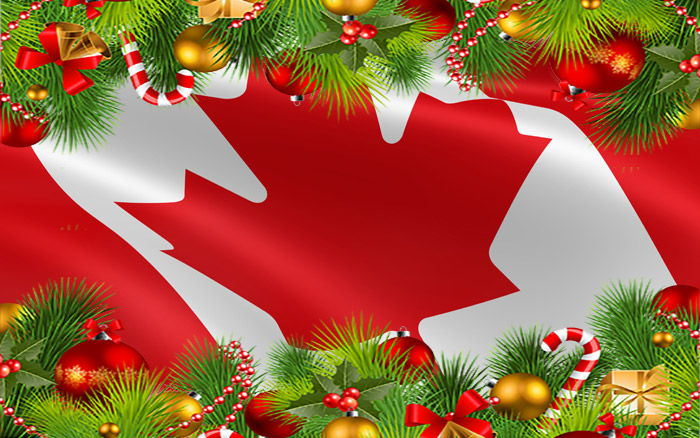
Ontario
Ontario is home to the Toronto Santa Claus Parade, held since 1905, and Toronto's Distillery District hosts a popular winter market. In Ottawa, the buildings of Parliament Hill are lit for the national Christmas lights programme, and Niagara Falls stages its Winter Festival of Lights. Boxing Day is a statutory holiday in Ontario and one of the country's biggest shopping days.
Manitoba and Saskatchewan: the Prairies
The Prairies were settled by large numbers of Ukrainian, German, Mennonite and Polish immigrants, and their Christmas customs remain strong. Ukrainian-Canadian families hold Sviat Vechir (Holy Supper), a meatless meal of twelve dishes beginning with kutia (wheat berries with honey and poppy seeds) and including varenyky (perogies) and holubtsi (cabbage rolls). Some families hold it on 24 December and others on 6 January, depending on the calendar their church follows. Mennonite and German families bake pfeffernüsse (spiced "peppernut" cookies). The Prairies almost always have a white Christmas, with temperatures that can fall below −30°C.
Alberta
Many Albertans and visitors spend Christmas in the Rocky Mountains, where Banff and Lake Louise offer skiing, skating and snow-covered scenery. Calgary and Edmonton hold large light festivals. Over the 2026 holidays, Edmonton and Red Deer host the IIHF World Junior Championship, from 26 December 2026 to 5 January 2027, with the medal games at Edmonton's Rogers Place.
British Columbia
Coastal British Columbia has Canada's mildest Christmas, often green and wet rather than white. Vancouver hosts a German-style Christmas market downtown, the Bright Nights train ride through lights in Stanley Park, and decorated boats sailing the harbour with carollers aboard. BC also gave Canada the Nanaimo bar, a no-bake layered square of chocolate, custard and coconut that appears on many Christmas cookie trays. Inland and in the mountains, resorts such as Whistler offer a snowy Christmas.
Yukon, the Northwest Territories and Nunavut
In the North, Christmas falls near the darkest time of the year, when the sun barely rises or does not rise at all in the far north. In Inuit and other Indigenous communities across Nunavut and the Northwest Territories, the season is a time of community feasts featuring country food such as caribou and Arctic char, traditional games and contests, dances, and church services and carols in Inuktitut and other Indigenous languages, often running through to New Year.
Traditional Canadian Christmas food
| Food | What it is | Where it is most popular |
|---|---|---|
| Roast turkey with stuffing and cranberry sauce | The standard Christmas dinner | Nationwide |
| Tourtière | Spiced pork or mixed-meat pie | Québec and French Canada, at the réveillon |
| Ragoût de pattes et de boulettes | Pork hock and meatball stew | Québec |
| Butter tarts | Pastry shells with a sweet butter, sugar and egg filling | Nationwide, especially Ontario |
| Nanaimo bars | Layered no-bake chocolate and custard squares | British Columbia and nationwide |
| Shortbread | Scottish-style butter biscuits | Nationwide |
| Figgy duff | Steamed raisin pudding | Newfoundland and Labrador |
| Kutia and varenyky | Honeyed wheat berries; filled dumplings | Ukrainian Canadians on the Prairies |
| Sucre à la crème | Maple or brown-sugar fudge | Québec |
| Eggnog | Sweet chilled drink of milk, cream and eggs | Nationwide |
Boxing Day and the World Juniors
Boxing Day, 26 December, is one of Canada's biggest shopping days, often stretched into a "Boxing Week" of sales. It is a statutory holiday in Ontario and for federally regulated employers; elsewhere its status varies by province. For hockey fans, 26 December also means the start of the IIHF World Junior Championship, the under-20 tournament that is a holiday television tradition in Canada. The 2027 edition is being played in Edmonton and Red Deer, Alberta, from Saturday 26 December 2026 to Tuesday 5 January 2027.
Canadian Christmas season dates 2026
| Date | Occasion | What happens |
|---|---|---|
| Mid-November | Santa Claus parades | Toronto and towns across Canada |
| Sunday, 29 November 2026 | First Sunday of Advent | Advent wreaths in churches |
| Early December | Letters to Santa deadline | Post to H0H 0H0 for a reply before Christmas |
| Thursday, 24 December 2026 | Christmas Eve | Midnight Mass; réveillon in Québec; Sviat Vechir in many Ukrainian homes |
| Friday, 25 December 2026 | Christmas Day | Statutory holiday; presents and turkey dinner |
| Saturday, 26 December 2026 | Boxing Day | Sales; World Juniors begin in Edmonton and Red Deer |
| 25 December – 6 January | Twelve Days of Christmas | Mummering in Newfoundland |
| Friday, 1 January 2027 | New Year's Day (Jour de l'An) | Statutory holiday; big family day in Québec |
| Tuesday, 5 January 2027 | World Juniors final | Gold medal game at Rogers Place, Edmonton |
| Wednesday, 6 January 2027 | Epiphany | End of the Twelve Days; Ukrainian Christmas Eve for Julian-calendar churches |
Video: Christmas in Canada
Christmas in Canada: frequently asked questions
How is Christmas celebrated in Canada?
Canadians celebrate Christmas with decorated trees, lights on homes, Santa Claus parades, church services on Christmas Eve, presents on Christmas morning and a turkey dinner. In Québec the main event is the réveillon, a feast after midnight Mass, and Boxing Day on 26 December is a major shopping day.
What is Santa's postal code in Canada?
Santa's postal code in Canada is H0H 0H0. Letters addressed to Santa Claus, North Pole, H0H 0H0, Canada need no stamp within Canada, and Canada Post's volunteers reply to more than a million letters a year in the language they were written in.
What is the réveillon in Québec?
The réveillon is a Christmas Eve feast held in Québec and French-speaking Canada after midnight Mass. It can last until dawn and traditionally includes tourtière, meatball stew, turkey, bûche de Noël and sucre à la crème.
What is mummering in Newfoundland?
Mummering is a Newfoundland Christmas tradition in which people disguise themselves in odd clothes and masks during the Twelve Days of Christmas, visit homes, and are offered food and drink while their hosts try to guess who they are.
Is Boxing Day a holiday in Canada?
Boxing Day, 26 December, is a statutory holiday in Ontario and for federally regulated employers, and its status varies in other provinces. Across Canada it is one of the biggest shopping days of the year and the start of the World Junior hockey championship.
What do Canadians eat at Christmas?
Most Canadians eat roast turkey with stuffing and cranberry sauce at Christmas. Regional favourites include tourtière in Québec, figgy duff in Newfoundland, Ukrainian kutia and varenyky on the Prairies, and butter tarts, shortbread and Nanaimo bars across the country.
Does it snow at Christmas in Canada?
In most of Canada a white Christmas, at least 2 cm of snow on the ground on Christmas morning, is likely, especially on the Prairies, in Québec and in the North. Coastal British Columbia and parts of southern Ontario and the Maritimes are less certain to have snow.
Usage terms
All images on this page are free to download for personal, non-commercial use, such as copying them at home or printing them as a reference. Please do not resell them, republish them on other websites or use them in advertising. Images © KidsGen.com.
 CLAT Aspirants
 Back to School
 Craft Ideas for Kids
 Benefits of Yoga for Kids
 Fun and Jokes
 Stories for Kids
 School Projects & Homework Help
 Hobbies
