
Fresh Flower Decorations for Diwali: A Guide to Natural Beauty
Diwali, the festival of lights, is a time when homes are filled with the warm glow of diyas and the vibrant colors of celebration. In many Indian traditions, the beauty and fragrance of fresh flowers are considered an essential part of the festivities. They symbolize purity, prosperity, and a deep connection to nature. This guide will help you discover creative and beautiful ways to use fresh flowers to adorn your home, making your Diwali celebrations even more special and fragrant.
Why Decorate with Fresh Flowers for Diwali?
In Hindu rituals and festivals, flowers are far more than mere decoration; they are considered a sacred offering and a bridge between the material and spiritual worlds. Their use is deeply embedded in cultural traditions, symbolizing purity, devotion, and divine energy.
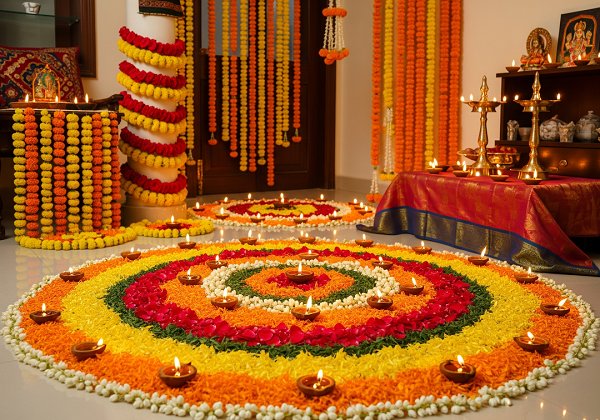
The Best Flowers for Diwali Decorations
Marigolds
Marigolds, known as Genda Phool in Hindi, are a cornerstone of decoration in Indian festivals and rituals, and their popularity stems from a beautiful blend of practical, cultural, and spiritual reasons.
The Significance of Their Colors:The bright orange and yellow hues of marigolds are their most striking feature, and these colors are deeply symbolic in Hindu tradition.
- Connection to the Sun: The vibrant, fiery colors of marigolds are reminiscent of the sun's energy, which is a life-giving force. This link to Surya Dev, the Sun God, makes the flowers highly auspicious and a symbol of vitality and positivity.
- Auspiciousness and Purity: The golden and saffron shades of marigolds represent prosperity, new beginnings, and purity. These colors are believed to attract divine blessings and good luck, which is why they are a staple in both daily prayers and major celebrations.
Roses
Roses bring a touch of timeless elegance and a captivating fragrance to Diwali decorations, offering a beautiful contrast to the earthy feel of marigolds. Their use is perfect for creating a sophisticated and romantic ambiance.
Lotus
The lotus flower, or Kamal, holds deep and powerful symbolism in Hindu culture, making it a particularly sacred and meaningful element in Diwali decorations. Its significance goes far beyond its beautiful appearance.
Stunning Floral Decoration Ideas
The Floral Rangoli
Step 1: Gather Your Materials
First, collect a variety of fresh flowers. Marigolds (Genda) are a classic choice for their vibrant yellow and orange colors and sturdy petals. You can also use:
- Roses: For their beautiful reds, pinks, and whites.
- Jasmine (Mogra): Small, white flowers that work well for outlines and intricate details.
- Leaves: Use green leaves like mango or betel leaves to add a different color and texture.
Gently remove the petals and leaves from their stems, keeping each color in a separate bowl.
Step 2: Prepare Your Base
Choose a clean, flat surface for your rangoli. This could be your entryway, a courtyard, or a designated area in your living room. Draw your design on the floor using chalk. For beginners, a simple circular pattern or a lotus flower design is a great start.
Step 3: Lay the Foundation
Start by outlining your design with a sturdy material. You can use whole flowers, such as an entire marigold head, or a line of jasmine flowers. Alternatively, you can use a line of marigold petals as your border. This initial outline helps keep the rest of your design neat and tidy.Step 4: Fill in the Colors
This is where the creativity comes in. Use your different colored petals to fill in the sections of your rangoli.
- Marigold Petals: Use them to create bright, bold layers. You can use both the yellow and orange petals to create a striking contrast.
- Rose Petals: Use them for the inner sections of a design or for creating a beautiful, elegant border. Their smooth texture and deep colors add a touch of sophistication.
- Mixed Petals: Don't be afraid to mix and match. You can layer rose petals over marigold petals for a multi-toned effect, or sprinkle them randomly for a natural, confetti-like look.
Step 5: Add the Finishing Touches
Once you have filled in your design, use the smaller flowers like jasmine to create delicate details and accents. You can also use fresh leaves to add green highlights or create a beautiful, natural border.
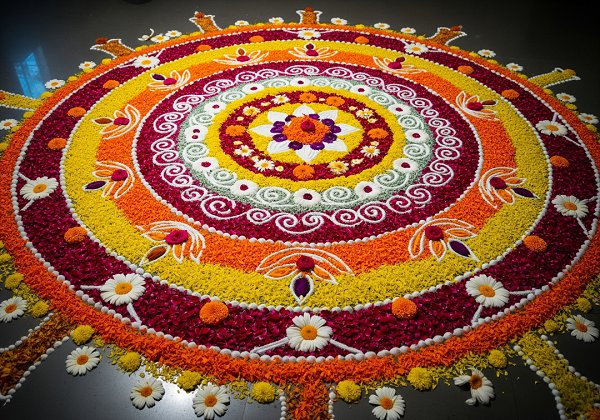
Finally, to complete the look, place a few lit diyas or small oil lamps strategically within the design or along its border. The soft, flickering light will illuminate the colors and fragrances of your floral masterpiece, bringing a magical touch to your Diwali decorations.
Door and Window Garlands
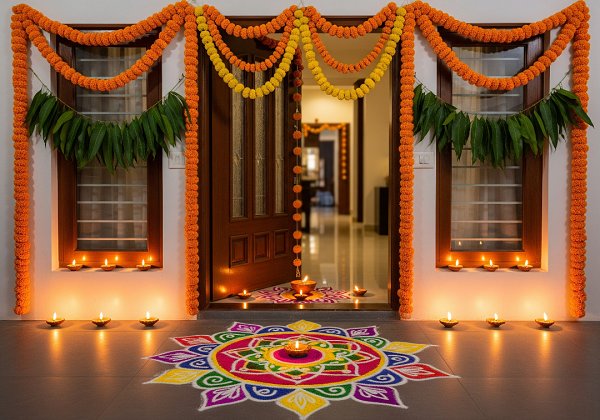
Adorning entrances and windows with fresh flower garlands is a timeless Diwali tradition that brings a beautiful scent and vibrant color to your home. Here's a simple guide on how to hang them securely and stylishly.
Hanging Garlands on Entrances and Windows
1. Prepare the Garland: Gently unroll your garland. If it's a long one, you may want to cut it into smaller, manageable sections to fit the space you are decorating. For a fuller look, you can twist two or more garlands together.
2. Choose Your Hanging Method:
- Hooks or Nails: If you have small, existing hooks or are able to use small nails, these provide the most secure way to hang garlands, especially for heavier ones. Simply loop the string of the garland over the hook or nail.
- Adhesive Hooks: For a non-damaging option, use small, clear adhesive hooks. They stick to most surfaces and can be easily removed without leaving a mark. Place these at key points where you want the garland to hang.
- Tape: For very light garlands and a temporary setup, a strong, double-sided tape or floral tape can be used to secure the garland to the top of a door frame or windowsill.
Create Your Arrangement:
- For Doors: A popular method is to create an archway by draping the garland over the top of the door frame and letting it hang down both sides. You can also hang one long garland horizontally across the top of the door frame for a simple and elegant look.
- For Windows: Frame the entire window by outlining the top and sides with the garland. You can also drape a single garland horizontally across the top of the window frame.
Add a Focal Point: To make your entrance even more welcoming, you can add a decorative element in the center of the door frame, such as a small decorative bell or a diya-shaped charm, to create a beautiful focal point.
The Use of Torans
A toran is a specific type of decorative garland that is traditionally used to adorn the main entrance of a home.
What it is: While a simple garland can be any length of strung flowers, a toran is typically a more elaborate, horizontal garland that is specifically designed to be hung over the top of a doorway. They are often made from marigolds and mango leaves, which are considered highly auspicious.
Its Purpose: Hanging a toran is a traditional ritual believed to welcome Goddess Lakshmi and bring prosperity and good fortune into the home. It is a sign of welcome and celebration.
So, while any flower garland can be used to decorate, a toran specifically refers to the one that graces your home's main entrance, carrying with it a special layer of cultural and spiritual significance.
Centerpieces and Floating Arrangements
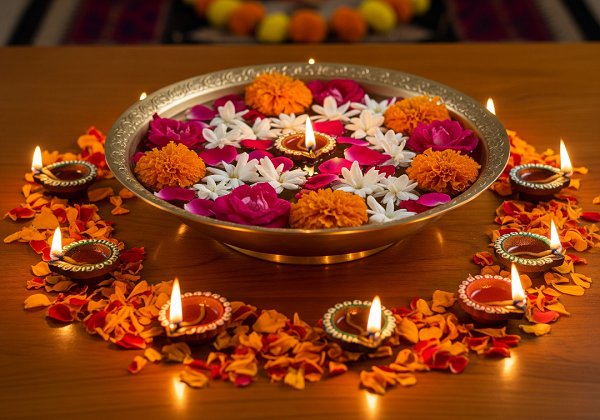
Creating a floral centerpiece with a bowl of water is a classic and elegant way to decorate for Diwali. The combination of flowers, water, and the warm glow of a diya or candle creates a serene and beautiful focal point for any table.
Floating Floral Centerpiece Ideas
- The Classic Rose and Candle Bowl: Fill a wide, shallow bowl (glass or decorative brass works best) with water. Gently float the petals of a few red or pink roses on the surface. Add a few small, unlit tealight candles or floating diyas, then light them to cast a beautiful, flickering reflection. The warm glow and delicate rose scent create a romantic and peaceful atmosphere.
- The Marigold and Jasmine Bowl: For a more traditional look, use vibrant marigold and fragrant jasmine flowers. Fill your bowl with water, then arrange a mix of marigold heads and jasmine blossoms. The bright orange and yellow of the marigolds contrast beautifully with the pure white of the jasmine. Add a few floating diyas to complete this beautiful and auspicious arrangement.
- The Layered Floral Arrangement: Create a stunning multi-layered effect. Start by placing a few unlit diyas or a small, round plate in the center of the bowl. Surround this with a tight ring of marigold petals. Outside this ring, arrange a layer of rose petals. You can then add a few floating candles in the outer layer to finish the look. The different textures and colors will make the centerpiece visually striking.
Tips for a Perfect Centerpiece
- Choose the Right Bowl: A wide, shallow bowl works best to give your flowers and candles enough space to float gracefully.
- Use Room-Temperature Water: Very cold water can cause condensation on a glass bowl, which might look messy.
- Add Essential Oils: A few drops of a fragrant essential oil, like rose or sandalwood, can enhance the aroma of your centerpiece.
- Don't Overcrowd: Give your flowers and lights space to float. Overcrowding can make the arrangement look cluttered.
Mandir (Altar) Decor
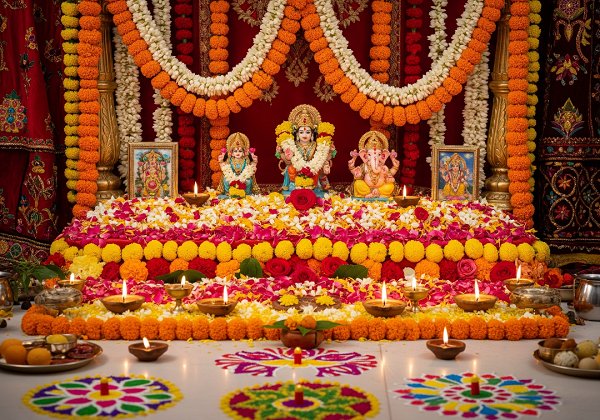
To make your puja area truly beautiful for Diwali, fresh flowers are a wonderful choice. Their natural beauty and fragrance purify the space and create a sacred atmosphere. Here's how you can use flowers to decorate, from simple touches to more intricate designs.
Simple and Elegant Decor Ideas
- Floral Garlands for the Idols: The most traditional and meaningful way to use flowers is by adorning the deities. Take a fresh garland of marigolds, jasmine, or roses and gently place it around the idols of Goddess Lakshmi and Lord Ganesha. For a more personal touch, you can make a small, custom garland yourself with a needle and thread.
- A Bed of Petals: Create a bed of fresh flower petals on a small plate or a brass tray, and place the idols directly on top of them. Rose, marigold, and lotus petals work well for this. This simple arrangement makes the deities look as though they are resting on a cloud of flowers.
- Decorating the Thali: For the puja thali (the worship plate), arrange a small, circular pattern of rose or marigold petals around the diya. You can also place individual jasmine flowers or small blossoms to add a fragrant and beautiful detail to your puja offerings.
Intricate Arrangements
- Floral Archway: If your puja area is a dedicated space or altar, you can create a beautiful floral archway. Use sturdy garlands of marigolds and jasmine and drape them over the arch. You can secure them with small hooks or even a bit of floral wire. This creates a grand and visually stunning frame for the deities.
- Lotus and Diya Arrangements: The lotus is a powerful symbol of purity, making it a perfect choice for the puja area. Place a large, fresh lotus flower at the center of the altar, and arrange a few small diyas or tealight candles around it. You can also create a lotus design on the floor around the altar using petals and then place the diyas inside the petals.
- The Floral Cascade: For a dramatic and elegant effect, create a cascading floral arrangement. Start by hanging garlands from the top of the altar and let them flow down the sides. You can intersperse them with fresh leaves like mango leaves and add small blossoms throughout the arrangement. This creates a lush, abundant look that fills the space with both color and fragrance.
Tips for Keeping Your Flowers Fresh
Using fresh flowers for Diwali adds a beautiful, natural touch to your home, but it's important to keep them from wilting quickly. By following a few simple steps, you can ensure your floral decorations stay vibrant and fragrant throughout the festivities.
1. Hydrate and Replenish
The key to keeping your flowers fresh is consistent hydration.
- Start with Fresh Flowers: Use flowers that are freshly picked or purchased on the day of decoration.
- Cold Water for Arrangements: For arrangements in bowls or vases, use fresh, cold water. You can add a few ice cubes to the water to keep it cool for longer.
- Change the Water Daily: For any arrangement in a vase, change the water daily to prevent bacteria from growing and to provide a fresh source of hydration for the stems.
2. Manage Temperature and Sunlight
Heat is the enemy of fresh flowers.
- Keep Away from Direct Heat: Place your floral arrangements, garlands, and rangolis away from direct sunlight, lit diyas, candles, and other sources of heat. The warmth will cause the petals to wilt and dry out quickly.
- Cooler is Better: If possible, keep your decorations in a cool, well-ventilated area. This helps preserve their freshness and fragrance.li>
3. Spritz and Mist
Moisture is vital for keeping petals looking their best.
- Spritz with Water: For rangolis and garlands, lightly spritz the petals with cold water from a spray bottle every few hours. This is especially important for decorations that are not in water. The light mist will keep the petals hydrated and looking lively.
- Sprinkle Carefully: For rangolis on the floor, you can also gently sprinkle a few drops of water over the petals to keep them from drying out and losing their color.
By following these practical tips, you can extend the life of your beautiful fresh flower decorations and enjoy their natural beauty for a longer time this Diwali.
 Back to School
 Craft Ideas for Kids
 Benefits of Yoga for Kids
 Fun and Jokes
 Stories for Kids
 School Projects & Homework Help
 Hobbies

 Change Language:
Try out the other sections