
Rabbits as Pets: A Care Guide
Soft, curious and full of bounce, rabbits are gentle pets that love company. Learn what rabbits eat, how to give them a safe home, how to handle them kindly and how to read their body language so you can be a great rabbit friend.
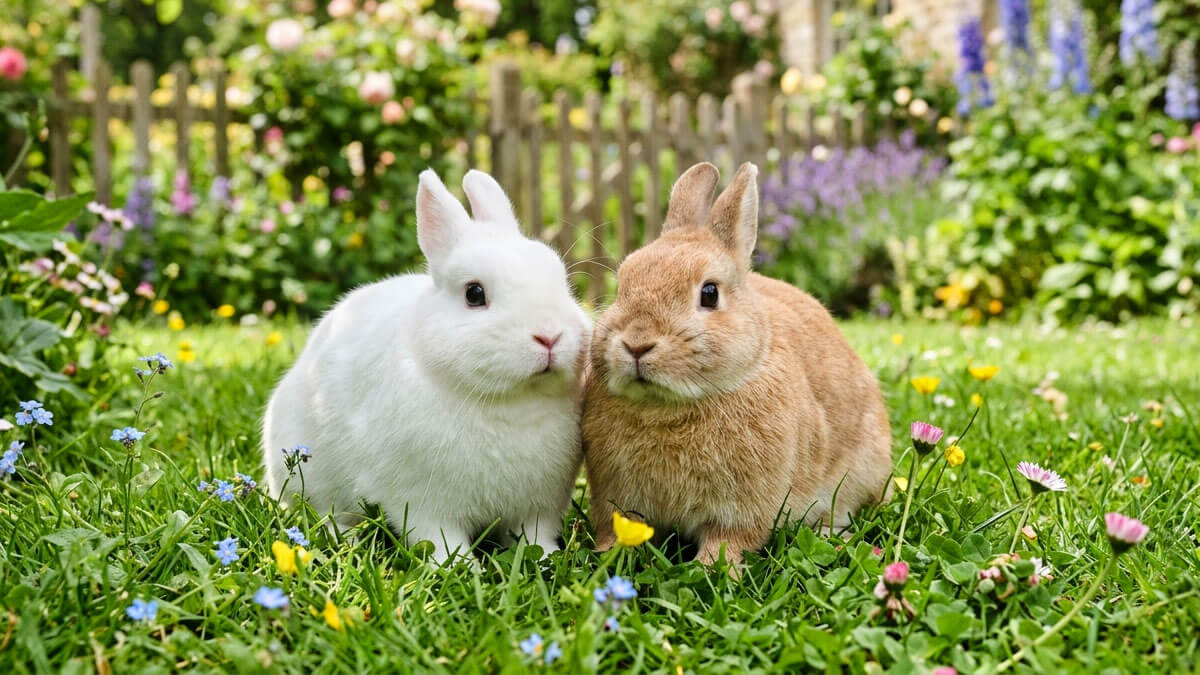
Rabbit facts at a glance
Is a rabbit the right pet for you?
The good news
Rabbits are quiet, clean and clever. They can learn to use a litter tray, come when called and show their happiness with joyful jumps called binkies.
Things to think about
Rabbits are prey animals, so they are easily frightened and many do not like being picked up. They need a big space, fresh hay every day, a companion and a vet who knows rabbits. Chewing is natural, so cables and furniture need protection.
What do rabbits eat?
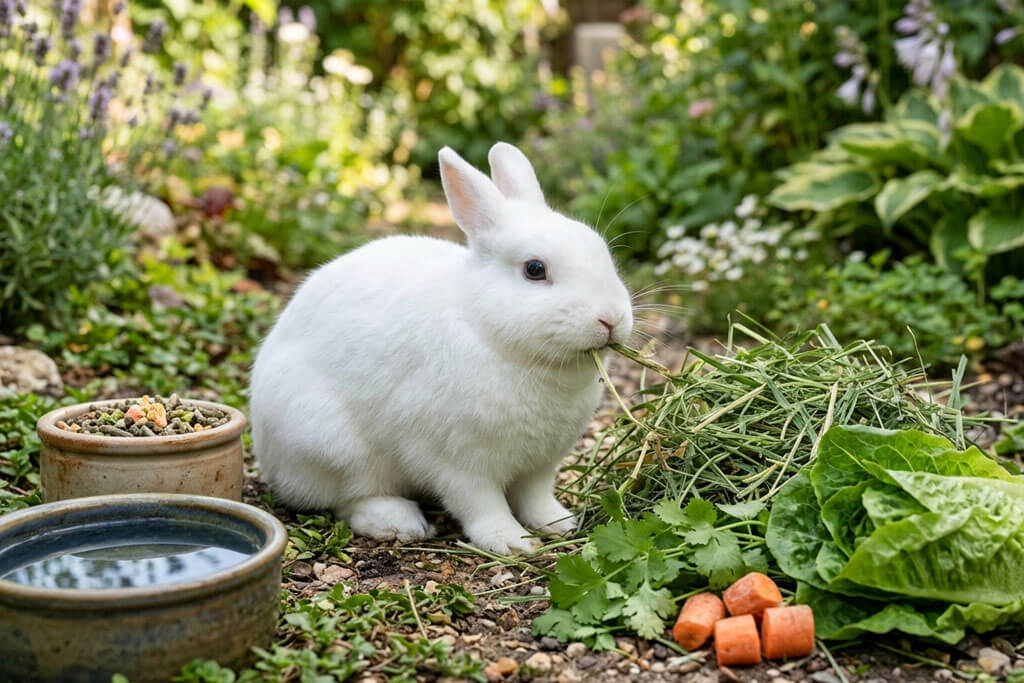
- Hay (most of the diet): unlimited fresh grass hay, such as timothy hay, keeps the gut moving and wears teeth down.
- Fresh greens: a daily helping of washed leafy greens such as coriander, mint, romaine lettuce or dill, introduced slowly.
- Pellets: a small measured amount of plain, high-fibre pellets.
- Water: always fresh, in a heavy bowl or a bottle.
- Treats: a small piece of carrot or fruit now and then, because they are high in sugar.
Never feed: chocolate, onions, garlic, avocado, bread, biscuits or other human snacks, and avoid iceberg lettuce. Never give a sudden change of food, because rabbits have delicate stomachs.
Building a safe rabbit home
- Space to hop: choose the biggest enclosure you can, plus a daily exercise area. A rabbit should be able to stretch out, stand tall and hop several times.
- Solid floor and soft bedding: avoid wire floors, which hurt feet. Add a hiding box and a litter tray filled with rabbit-safe litter and hay.
- Cool and shaded: rabbits overheat easily in hot weather. Keep their home shaded, airy and cool, and never leave them in direct sun.
- Safe from predators: dogs, cats, crows and snakes can frighten or harm rabbits. Choose a secure, predator-proof home.
- Rabbit-proofing: cover cables and keep houseplants and chemicals out of reach.
- Chew toys: offer untreated wooden blocks, cardboard tubes and hay balls.

How to handle a rabbit gently
- Sit on the floor and let the rabbit come to you.
- Stroke the forehead, cheeks and back. Many rabbits dislike a hand coming over their head from above.
- If you must lift, support the chest and hindquarters and hold the rabbit securely against your body.
- Never pick up a rabbit by its ears or scruff.
- Put it down gently and let it hop away when it has had enough.
Rabbit body language
| Behaviour | What it usually means |
|---|---|
| Binky (a jump and twist) | Pure happiness |
| Flopping on its side | Feeling very relaxed and safe |
| Soft teeth purring | Contentment, like a cat's purr |
| Nudging you with its nose | "Pay attention to me" or "move over" |
| Thumping a back foot | Fear, alarm or annoyance |
| Loud teeth grinding | Possible pain, so check with a vet |
| Freezing or hiding | Feeling scared; give it space |
Popular rabbit breeds
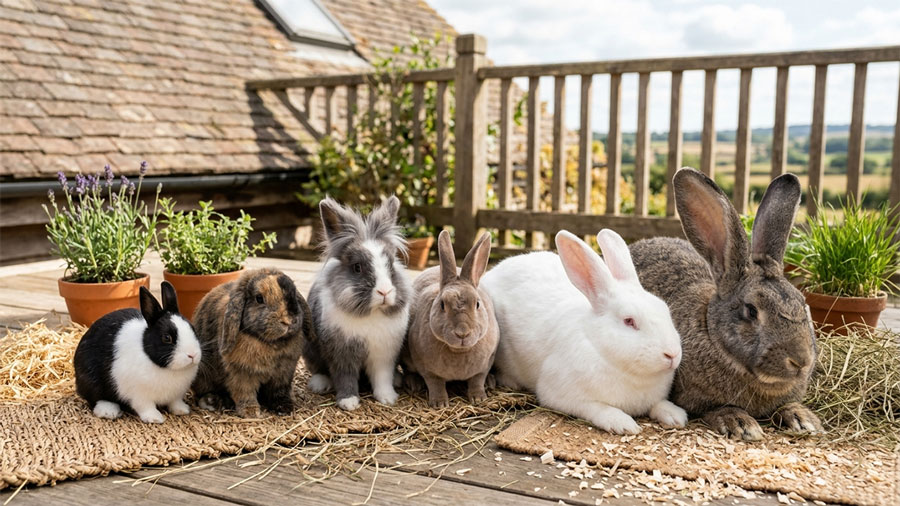
Weights are approximate adult sizes. Individual rabbits vary.
| Breed | Size | Look | Nature |
|---|---|---|---|
| Netherland Dwarf | Tiny (about 0.9-1.1 kg) | Small round face, short ears | Lively and can be shy |
| Holland Lop | Small (about 1.6-1.8 kg) | Drooping ears, compact body | Friendly and playful |
| Lionhead | Small (about 1.4-1.7 kg) | Fluffy mane around the head | Gentle and curious |
| Mini Rex | Small to medium (about 1.6-2 kg) | Velvety plush coat | Calm and affectionate |
| New Zealand White | Large (about 4-5 kg) | White, solid body | Mellow and sociable |
| Flemish Giant | Giant (about 6.5-10 kg) | Very large, long body | Gentle giant |
Keeping a rabbit healthy
- Find a rabbit-savvy vet for check-ups, vaccinations where recommended, and neutering or spaying.
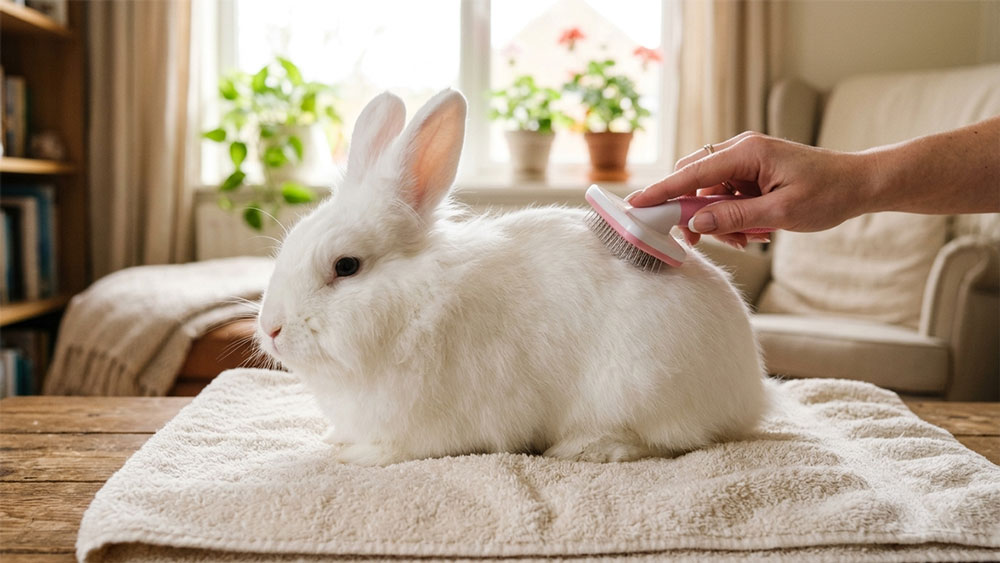
- Groom regularly: brush more often when your rabbit is shedding, and ask an adult to help with nail trimming.
- Watch the droppings: small round droppings every day are a good sign.
- Do not skip hay: it protects teeth and tummies.
Emergency signs: not eating, no droppings for about 12 hours, a swollen tummy, hunched posture, or heavy breathing. Call a vet right away.
Daily rabbit care checklist
- Refill the hay and water.
- Give fresh greens and a small measure of pellets.
- Spot-clean the litter tray and remove wet bedding.
- Let the rabbit exercise and explore for several hours.
- Spend quiet time together and check the rabbit all over.
Frequently asked questions
What do rabbits eat?
Most of a rabbit's diet should be fresh grass hay such as timothy hay, available all day. Add a daily helping of fresh leafy greens, a small amount of plain pellets, and fresh water. Carrots and fruit are sugary treats, so give them only in small amounts.
How long do pet rabbits live?
With good care, pet rabbits commonly live about 8 to 12 years, so a rabbit is a long commitment.
Do rabbits need a friend?
Rabbits are social animals and are usually happiest with a rabbit companion, ideally neutered or spayed and introduced slowly. They also need plenty of time with their people every day.
How do I pick up a rabbit safely?
Never lift a rabbit by its ears. Sit on the floor, scoop one hand under the chest and the other under the hindquarters, and hold it close to your body. Rabbits have fragile backs, so a struggling rabbit can be injured if dropped. Many rabbits prefer to be petted on the floor rather than carried.
Why do rabbits thump their back feet?
Thumping is a warning sign. A rabbit may be scared, startled or annoyed. Stay calm, give it space and look for the cause.
Why are rabbits' teeth so long?
A rabbit's front teeth never stop growing. Chewing hay, grass and safe wooden toys wears them down and keeps them healthy.
When should I take a rabbit to the vet?
See a rabbit-savvy vet straight away if your rabbit stops eating, produces no droppings for about 12 hours, seems bloated, or sits hunched and quiet. Rabbits hide illness, and a gut slowdown can become an emergency very quickly.
Is it okay to keep a wild rabbit or hare?
No. Wild rabbits and hares should stay in the wild, and many wild animals are protected by law. Adopt a pet rabbit from a shelter, rescue or responsible breeder instead.