

Easter Celebration in Germany - Traditions, Symbols and Festivities
Germany's Easter celebrations combine Christian observance with ancient springtime traditions that symbolize renewal and rebirth. The holiday reflects a strong connection to nature, seasonal change, and family customs.
Why Easter Is Important in Germany
Easter is one of the most important Christian holidays in Germany. It celebrates the resurrection of Jesus Christ and symbolizes hope, renewal, and new life.
Church services are held throughout Holy Week, especially on Good Friday and Easter Sunday. Many German families attend special morning services and spend the rest of the day together.
Religious Services and Community Observance
Church services play an important role throughout Holy Week. Many congregations gather for sunrise services on Easter morning, symbolizing the resurrection and the arrival of light after darkness. Churches are decorated with spring flowers, and communities come together in a spirit of renewal.
Easter Bonfires
One of the most distinctive German traditions is the Easter bonfire, known as Osterfeuer. Large fires are lit in open spaces, villages, and hilltops to mark the end of winter and welcome the new season. This custom has ancient origins and represents purification, warmth, and new beginnings.
Decorative Traditions
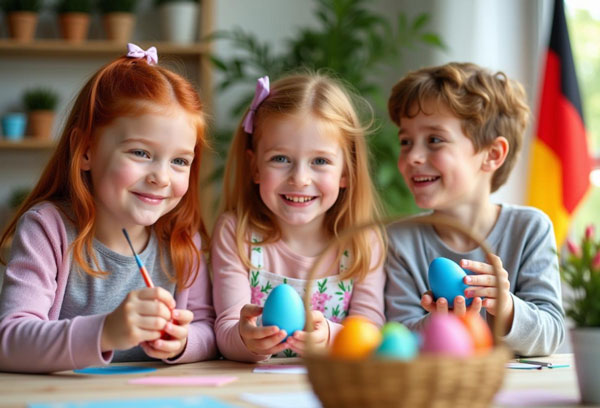
German families often decorate trees or branches with painted eggs in a tradition known as the Easter tree. Homes are decorated with spring symbols such as rabbits, flowers, and colorful eggs. Children eagerly participate in Easter egg hunts organized in homes, gardens, and community areas.
Traditional Foods
Festive Easter meals in Germany include roasted meats, breads, and sweet pastries. Decorated eggs remain an important symbolic food. Families gather for meals that emphasize togetherness and celebration.
Cultural Significance
German Easter celebrations reflect harmony between religious faith and seasonal symbolism. The combination of church observance, outdoor traditions, and family customs creates a warm and meaningful holiday atmosphere.
The Story of the Osterhase (Easter Bunny)
Germany is believed to be the birthplace of the Easter Bunny, known as the Osterhase. According to tradition, the Osterhase hides colorful eggs for children to find on Easter morning.
German immigrants later brought this custom to other countries, including the United States, where the Easter Bunny became widely popular.
Children prepare small nests or baskets for the Osterhase to fill with decorated eggs, sweets, and chocolates.
Decorating Easter Eggs and Trees
Decorating eggs is one of the most loved Easter traditions in Germany. Eggs are painted in bright colors and beautiful designs to represent new life and spring.
Some families decorate small trees or branches with hanging Easter eggs. These are called "Osterbaum" (Easter trees). The colorful eggs hanging on branches create a cheerful spring display in homes and gardens.
Family Celebrations and Church Services
On Easter Sunday, families gather for festive meals and egg hunts. Many attend church in the morning and enjoy outdoor activities later in the day.
Spring flowers such as daffodils and tulips decorate homes and churches, reminding everyone of renewal and fresh beginnings.
German Easter traditions combine faith, family, and festive fun, making it a special time of year for children and adults alike.
 Back to School
 Craft Ideas for Kids
 Benefits of Yoga for Kids
 Fun and Jokes
 Stories for Kids
 School Projects & Homework Help
 Hobbies

Try out the other sections