

Easter Around the World: Easter Traditions Around the World by Country
Easter around the world is celebrated with unique traditions, festive foods, and cultural customs that vary from country to country. From sunrise services in the United States to Semana Santa processions in Mexico and spring bonfires across Europe, this global guide explores how easter traditions around the world are observed across continents.
This page provides a structured overview of worldwide Easter celebrations, with links to detailed country pages so you can explore traditions region by region.
Explore Easter Traditions by Country:
- Easter in Italy - Scoppio del Carro & Holy Week
- Easter in Germany - Bonfires & Easter Trees
- Easter in Spain - Semana Santa Processions
- Easter in Poland - Święconka & Wet Monday
- Easter in Greece - Orthodox Easter Customs
- Easter in the Philippines - Salubong Ceremony
- Easter in Africa - Easter Vigil Traditions
- Easter in the United States (USA)
- Easter in Australia - Hot Cross Buns & More
- Easter in Europe - Bonfires & Regional Customs
- Easter in Mexico - Semana Santa & Pascua
How Easter Is Celebrated in Different Countries
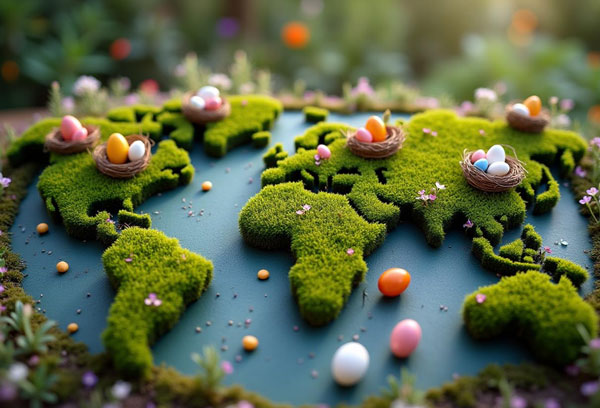
Easter, a joyous occasion for Christians globally, celebrates the resurrection of Jesus Christ, symbolizing life's triumph over death. This holiday honors his sacrifice and is a testament to his love. While Easter eggs, bunnies, and chocolate are common symbols worldwide, the date of Easter varies. Most Western churches observe it on the first Sunday after the first full moon following the spring equinox, connecting with global spring celebrations. Eastern Orthodox churches, using a different calculation, often celebrate Easter later.
Many Easter traditions are shared across cultures — Lenten observances, carnivals, egg exchanges, festive meals, egg decorating, egg hunts, Passion Plays, and Easter parades. However, individual countries also have unique customs that make easter traditions around the world wonderfully diverse. Explore our country-by-country guides below to discover how Easter is celebrated around the globe.
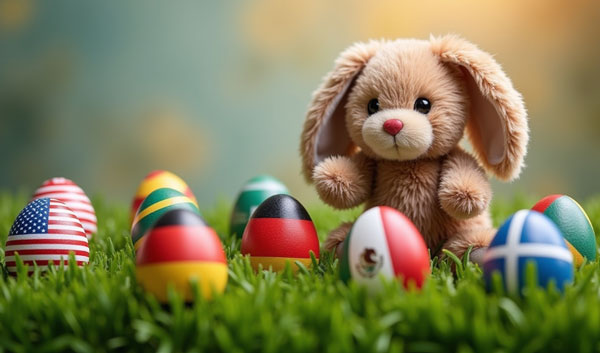
Easter in Italy: Traditions & Celebrations
Easter in Italy is one of the most important religious celebrations of the year, marked by elaborate church ceremonies, historic traditions, and festive family meals. Holy Week events are especially significant, with processions and reenactments held in many cities and towns.
Notable traditions can be seen in Rome, Florence, and Sicily. In Florence, the famous Scoppio del Carro (Explosion of the Cart) ceremony symbolizes prosperity and good fortune. Across Italy, families gather for a traditional Easter feast that often includes lamb, sweet breads, and decorated eggs.
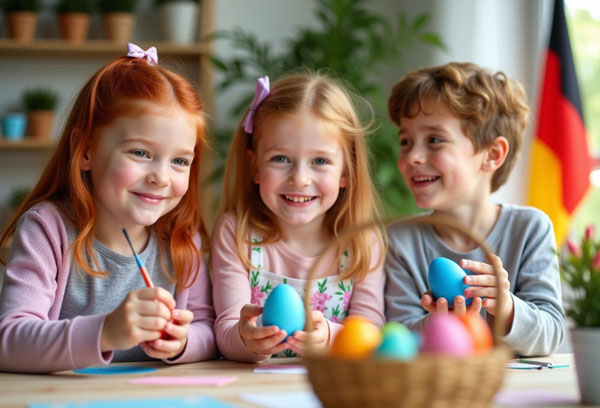
Easter in Germany: Bonfires, Egg Trees & Spring Traditions
Germany has deeply rooted Easter customs that combine religious observance with springtime symbolism. One of the most recognizable traditions is the Easter bonfire, lit to mark the end of winter and the arrival of new life.
Many German families decorate Easter trees with colorful eggs, and children participate in egg hunts organized in homes and community spaces. Regions such as Bavaria and Lower Saxony are particularly known for preserving traditional celebrations and festive markets.
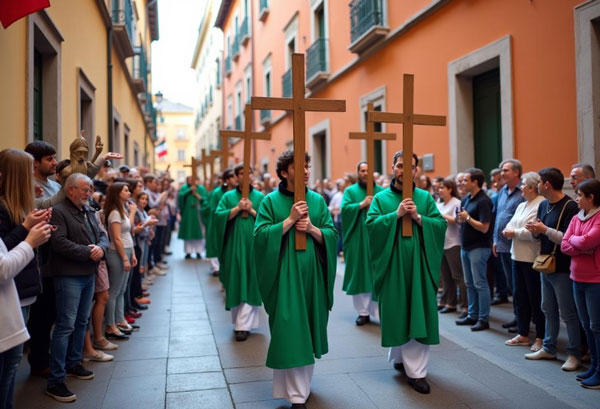
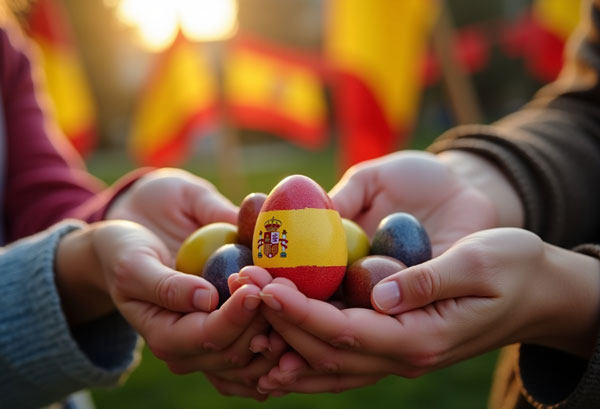
Easter in Spain: Semana Santa Processions
Spain observes Easter with dramatic and deeply spiritual traditions during Semana Santa (Holy Week). Cities such as Seville, Málaga, and Valladolid host solemn processions featuring religious statues carried through the streets.
These processions are accompanied by traditional music, ceremonial robes, and large public gatherings. Easter Sunday then shifts to a more joyful atmosphere with family meals and community celebrations.
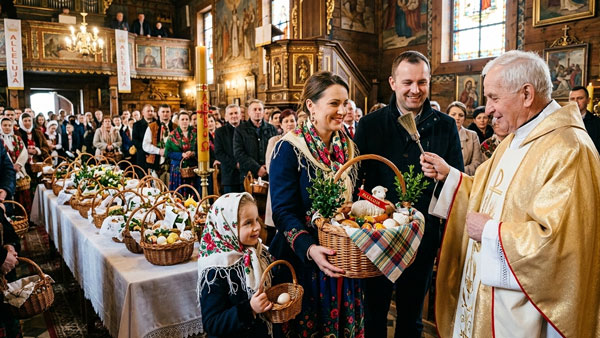
Easter in Poland: Święconka & Wet Monday Traditions
Poland celebrates Easter with meaningful religious customs and colorful folk traditions. One of the most famous practices is Święconka — the blessing of Easter baskets filled with symbolic foods such as eggs, bread, and sausage.
Another well-known tradition is Śmigus-Dyngus, also called Wet Monday, when people playfully splash water on one another as a symbol of renewal and cleansing. Families gather for festive meals that highlight traditional Polish dishes.
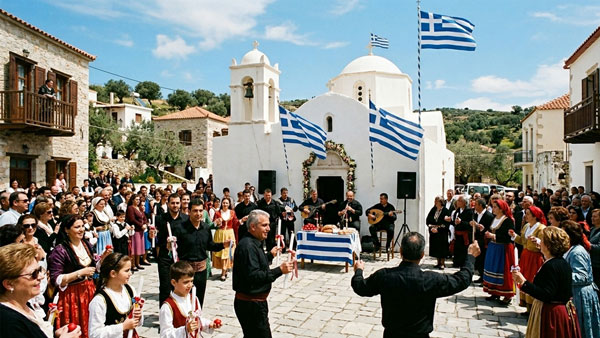
Easter in Greece: Orthodox Easter Customs & Traditions
Easter is the most significant religious celebration in Greece and follows the Orthodox Christian calendar. Holy Week includes candlelit processions, midnight church services, and symbolic rituals that mark the resurrection.
A distinctive tradition is the cracking of red-dyed eggs, representing new life and renewal. Celebrations are especially vibrant in Athens, Corfu, and other historic regions where community participation is central to the festivities.
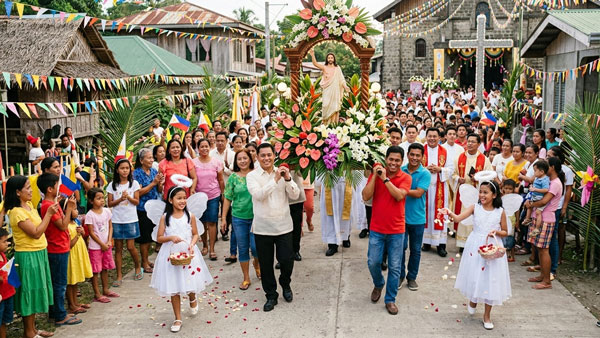
Easter in the Philippines: Salubong & Holy Week Observances
The Philippines observes Easter with deeply devotional practices influenced by strong Christian traditions. Holy Week includes public reenactments, processions, and church services attended by large communities.
One of the most meaningful events is Salubong, a pre-dawn ceremony symbolizing the meeting of the risen Christ and Mary. Across cities and provinces, Easter Sunday brings joyful celebrations, family gatherings, and festive meals.
Explore Easter in Philippines »
Easter in Africa: Easter Vigil & Christian Traditions
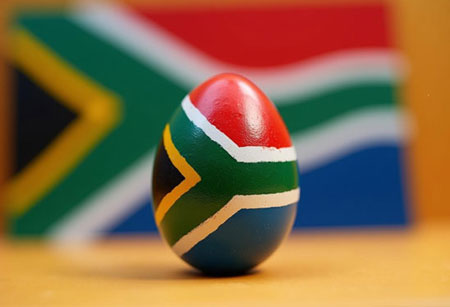
In Africa, Easter holds significant importance for Christian communities, marking it as a central event in their religious calendar. The Easter Vigil is a particularly notable occasion where congregations come together in large numbers, transforming church buildings into hubs of spiritual activity. These vigil services often take place in the late afternoon, usually starting around 3 PM and concluding as evening falls at approximately 6 PM.
Explore Easter traditions in Africa »
Easter in the United States: American Easter Traditions
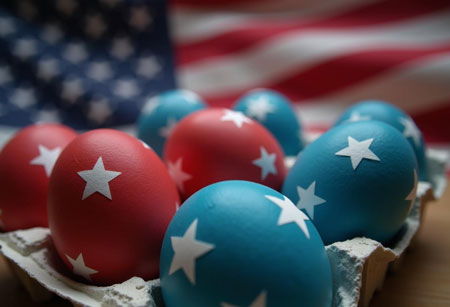
Easter in America is celebrated much like in other Christian countries, but often with greater fanfare and more elaborate celebrations. A notable trend is the increased number of weddings that take place during this season. Easter Sunday services are particularly well-attended, often surpassing Christmas in popularity.
Easter is also a major holiday for candy consumption in the US, second only to Halloween.
Some uniquely American Easter traditions include the sunrise service held at the Lincoln Memorial by Capitol Church in Washington D.C. Many other churches also hold vigils the night before or special early morning services to greet the rising sun on Easter Sunday, symbolizing the resurrection of Christ.
Explore How Easter is celebrated in the USA »
Easter in Australia: Hot Cross Buns & Easter Traditions
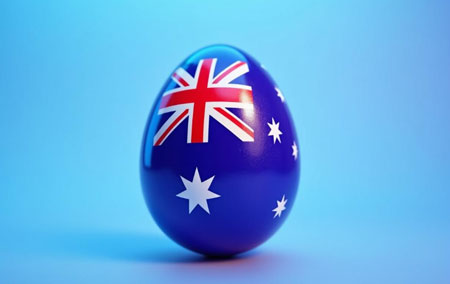
Australia, known for its rich cultural diversity, celebrates Easter in unique and varied ways. For many families, particularly those of Anglo-Irish descent, the focal point of the holiday is Easter Sunday. Traditions often include attending church services and enjoying a breakfast of hot cross buns — a delightful sweet fruit bun traditionally adorned with a cross. In addition to these customs, children eagerly participate in the exchange of Easter eggs, predominantly made of chocolate.
Explore Easter traditions in Australia »
Easter in Europe: Bonfires, Judas Fires & Regional Customs
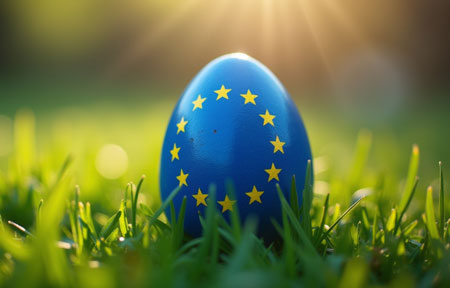
Easter is celebrated as a significant national festival across Europe, with various traditions taking place. One noteworthy custom involves lighting large bonfires on hilltops and in churchyards on Easter Eve. Often referred to as "Judas fires," these bonfires sometimes include effigies of Judas Iscariot. While these practices are now associated with Easter, the tradition of bonfires predates Christianity and originally marked the arrival of spring, with the burning effigy symbolizing the end of winter.
Explore European Easter traditions »
Easter in Mexico: Semana Santa & Pascua Celebrations
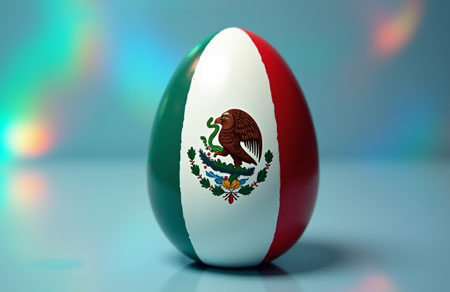
Easter in Mexico is a vibrant and meaningful celebration, encompassing two major observances: Semana Santa (Holy Week) and Pascua (Easter Week). Semana Santa spans from Palm Sunday to Easter Saturday, while Pascua celebrates the period from Resurrection Sunday to the following Saturday.
For many Mexicans, this two-week festivity is regarded as a significant vacation period, providing opportunities to connect with family and community. It's a time marked by traditions, rituals, and shared joy, making it one of the most important times of the year in Mexican culture.
Explore Easter celebrations in Mexico »
Frequently Asked Questions About Easter Around the World
Do all countries celebrate Easter the same way?
No. Easter traditions vary widely. Some countries focus on religious ceremonies, while others emphasize family gatherings, food traditions, and cultural festivals.
Why is Easter celebrated on different dates worldwide?
Western and Eastern Christian churches use different calendar calculations, which is why Easter may occur on different Sundays depending on the region.
Which country has the biggest Easter celebrations?
Countries with large Christian populations, including the United States, Mexico, Italy, Spain, and Greece, hold major Easter observances and public celebrations.
What are common Easter traditions worldwide?
Common Easter traditions around the world include church services, decorated eggs, festive meals, spring festivals, and community gatherings.
Updated: April 02, 2026
 Back to School
 Craft Ideas for Kids
 Benefits of Yoga for Kids
 Fun and Jokes
 Stories for Kids
 School Projects & Homework Help
 Hobbies

Try out the other sections