

Easter Celebration in Greece - Greek Orthodox Traditions and Holy Week
Easter is the most significant religious celebration in Greece and is observed according to the Orthodox Christian calendar. The holiday is marked by profound spiritual rituals and vibrant community participation.
Why Easter Is Important in Greece
Easter is the most important religious celebration in Greece. It celebrates the resurrection of Jesus Christ and symbolizes victory of life over death. Most people in Greece belong to the Greek Orthodox Church, and Easter is celebrated with deep faith, family gatherings, and national traditions.Greek Orthodox Holy Week Traditions
Holy Week in Greece begins on Palm Sunday and includes church services every day. On Good Friday, people attend a solemn procession called the Epitaphios. A flower-decorated bier representing Christ's tomb is carried through the streets while people follow with candles.
Church bells ring slowly, and the atmosphere is quiet and respectful.
Holy Week Observances
Holy Week includes daily church services, candlelit processions, and symbolic rituals commemorating the Passion and resurrection. Midnight services on Easter Eve are especially meaningful, marking the moment of resurrection.
Symbolic Traditions
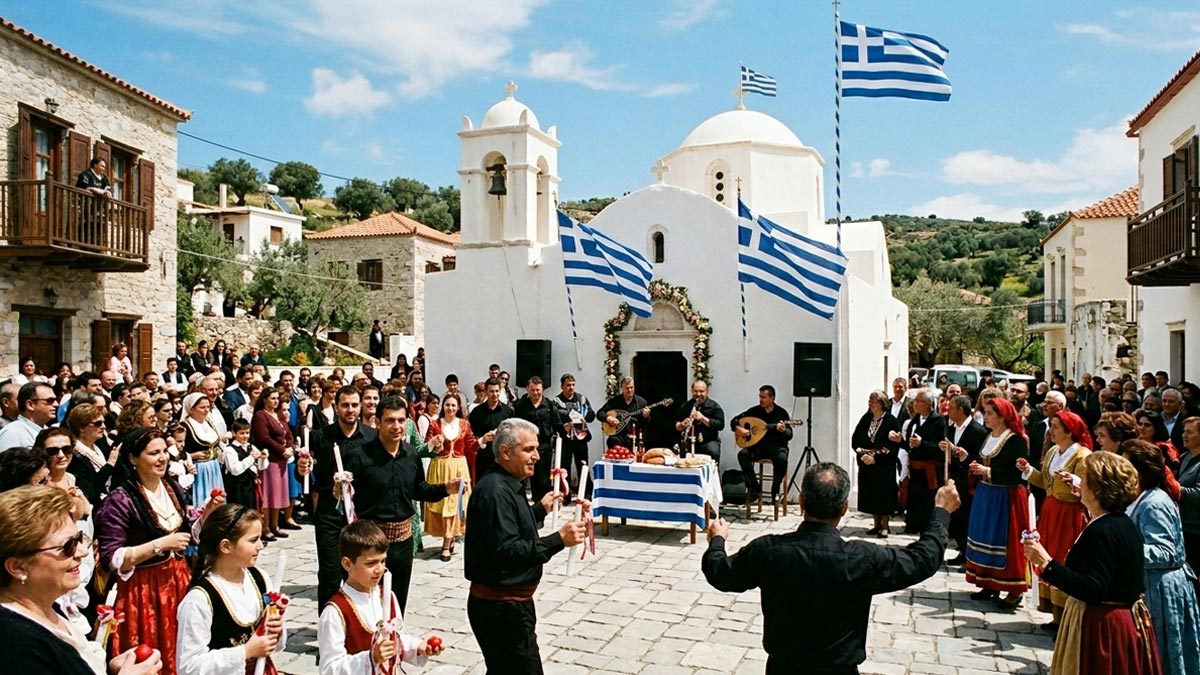
A distinctive Greek custom involves red-dyed eggs that symbolize life and renewal. Families participate in traditional rituals that emphasize faith and continuity.
The Midnight Resurrection Service
One of the most exciting moments happens on Holy Saturday night. Just before midnight, churches are filled with people holding white candles.
At midnight, the priest announces "Christos Anesti!" which means "Christ is Risen!" Fireworks light up the sky, church bells ring joyfully, and people greet each other with smiles and hugs.
Families then return home to enjoy a special meal together.
Red Eggs and the Tsougrisma Game
Eggs play an important role in Greek Easter. They are dyed red to represent the blood of Christ and new life.
Families play a traditional game called "Tsougrisma." Each person taps their red egg against someone else's egg. The person whose egg does not crack is said to have good luck for the year!
Community Celebrations
Easter Sunday is celebrated with family gatherings, festive meals, and community events. Towns and cities become lively with music and social celebrations.
Traditional Foods
Greek Easter meals often feature traditional dishes prepared specifically for the occasion. Food symbolizes abundance, renewal, and communal joy.
Cultural Atmosphere
The transition from solemn reflection to joyful celebration defines Greek Easter. The holiday reflects both spiritual devotion and strong community bonds.
Easter Fireworks and Celebrations
In some parts of Greece, especially on islands like Corfu, unique traditions take place. In Corfu, people throw clay pots from their balconies on Holy Saturday morning to welcome new beginnings.
Across Greece, fireworks, music, dancing, and family gatherings make Easter Sunday a joyful and colorful celebration.
 Back to School
 Craft Ideas for Kids
 Benefits of Yoga for Kids
 Fun and Jokes
 Stories for Kids
 School Projects & Homework Help
 Hobbies

Try out the other sections