

Easter Celebration in Italy - Traditions, Food and Festivities
Easter in Italy is among the most deeply rooted and visually striking religious celebrations in Europe. The observance combines solemn church traditions with centuries-old cultural customs that reflect Italy's strong Catholic heritage. Holy Week, known as Settimana Santa, is the most important period leading up to Easter Sunday and is marked by religious processions, public ceremonies, and community participation across the country.
La Pasqua is the Italian name for Easter.
Why Easter Is Important in Italy
Italy is home to Italy and the heart of the Roman Catholic Church. Since Jesus Christ is honored during Easter, the celebration holds deep religious meaning for many Italian families. Easter marks the resurrection of Christ and symbolizes hope, renewal, and faith.
Because Vatican City is located within Rome, many important Easter ceremonies are led by the Pope and attended by thousands of visitors from around the world.
Religious Observances and Holy Week
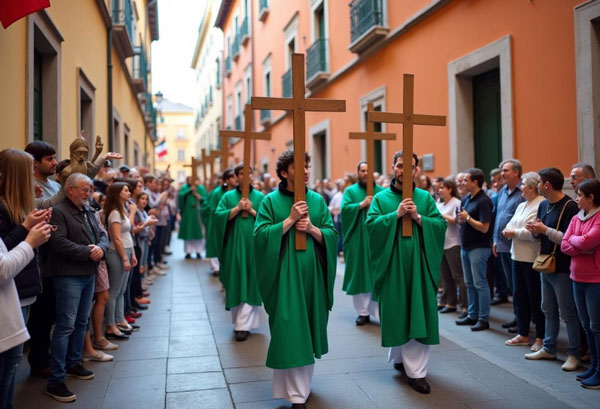
Throughout Holy Week, churches hold special services that commemorate the final days of Jesus Christ's life. Many Italian towns organize solemn processions featuring participants dressed in traditional robes who carry statues representing scenes from the Passion. These processions often take place in historic streets and can last for hours, drawing large crowds of worshippers and visitors.
Rome holds some of the most significant observances, including major services attended by thousands of pilgrims. Churches across the country are beautifully decorated, and bells that remain silent during Good Friday ring again on Easter Sunday to symbolize resurrection and renewal.
Traditional Customs and Celebrations
One of the most famous Easter traditions in Italy takes place in Florence. The Scoppio del Carro ("Explosion of the Cart") ceremony features a decorated cart filled with fireworks that is ignited in front of a large crowd. This event symbolizes prosperity, peace, and a successful harvest season.
Families gather on Easter Sunday for extended meals and social visits. Public squares, churches, and neighborhoods come alive with festive gatherings, creating a strong sense of community.
Easter Foods in Italy
Food plays a central role in Italian Easter celebrations. Traditional dishes vary by region but commonly include roasted lamb, symbolic of sacrifice and renewal. Special sweet breads are prepared in decorative shapes, often incorporating colored eggs baked into the dough. Chocolate eggs are widely exchanged, particularly among children.
Cultural Atmosphere
Easter in Italy blends reverence with celebration. The transition from the solemnity of Good Friday to the joy of Easter Sunday is marked by music, bells, gatherings, and festive meals. The holiday reflects both spiritual devotion and the importance of family traditions in Italian culture.
Easter Monday - La Pasquetta
The day after Easter Sunday is called La Pasquetta (Little Easter). Families and friends go outdoors for picnics, games, and celebrations. Parks and countryside areas are filled with people enjoying spring weather together. It is a joyful continuation of Easter festivities.
 Back to School
 Craft Ideas for Kids
 Benefits of Yoga for Kids
 Fun and Jokes
 Stories for Kids
 School Projects & Homework Help
 Hobbies

Try out the other sections