

Easter Celebration in Poland - Traditions, Food, and Śmigus-Dyngus
Easter is the most important religious holiday in Poland and is celebrated with meaningful traditions that combine faith, symbolism, and family customs.
Why Easter Is Important in Poland
Easter is a major religious holiday in Poland. It celebrates the resurrection of Jesus Christ and symbolizes hope, renewal, and new life.
Since most people in Poland are Roman Catholic, Easter is celebrated with deep faith, family traditions, and special church services.
Holy Week Traditions in Poland
Holy Week begins on Palm Sunday. Polish families bring handmade palm branches to church to be blessed. These palms are often decorated with colorful ribbons and dried flowers.
On Good Friday, many churches hold quiet and solemn services. People reflect on the final days of Jesus' life and prepare for the joyful celebration of Easter Sunday.
Blessing of Easter Baskets
A central Polish tradition is the blessing of Easter baskets, known as Święconka. Families prepare baskets containing symbolic foods such as eggs, bread, and other traditional items, which are taken to church for blessing on Holy Saturday.
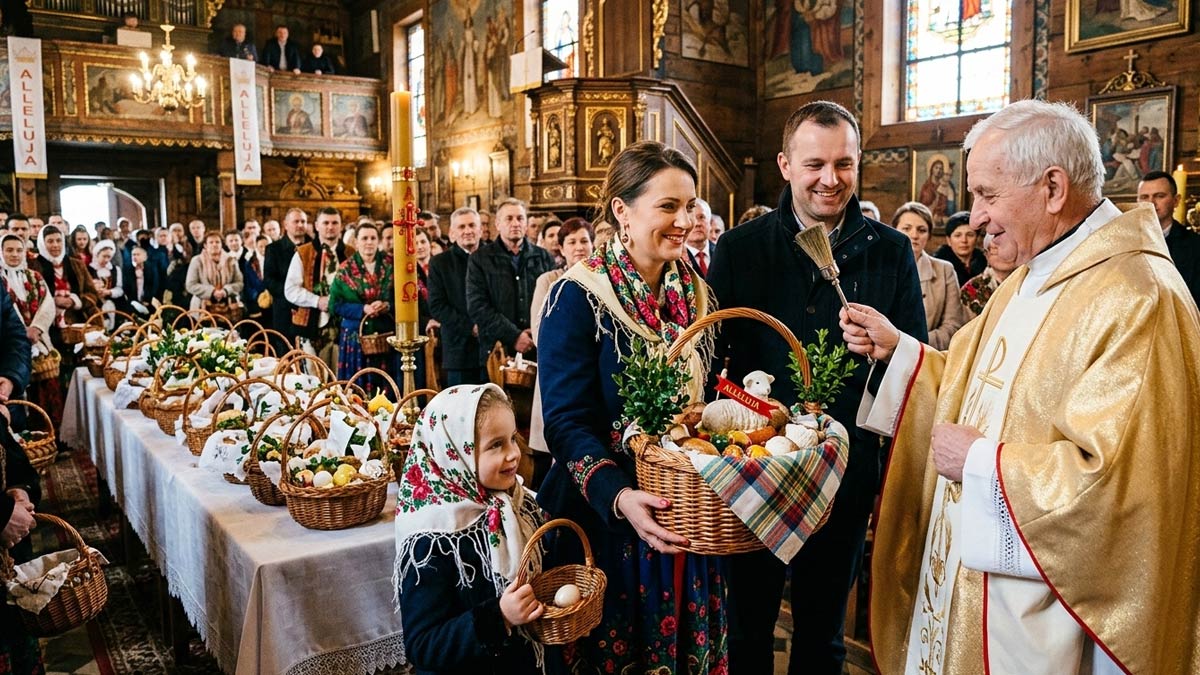
Religious Observance
Church attendance is high during Holy Week, and services emphasize reflection and renewal. Easter Sunday begins with special services followed by family celebrations.
Wet Monday Tradition
One of Poland's most well-known customs is Śmigus-Dyngus, or Wet Monday, when people playfully sprinkle water on one another. This tradition symbolizes purification and new life.
Easter Meals
Polish families gather for festive meals featuring traditional dishes prepared specifically for the holiday. Meals emphasize abundance, renewal, and community.
Cultural Meaning
Easter in Poland reflects strong family bonds, religious devotion, and symbolic traditions that celebrate life, renewal, and hope.
 Back to School
 Craft Ideas for Kids
 Benefits of Yoga for Kids
 Fun and Jokes
 Stories for Kids
 School Projects & Homework Help
 Hobbies

Try out the other sections